From a red metal box, Trevor Lawrence picks out a lump of what looks like plasticine, the shape and size of a tennis ball.
Two hundred grams of military-grade plastic explosive, on its own relatively safe, but with a detonator inserted, the charge is lethal.
To place the detonator, Trevor works alone, limiting the risk of accident to just one man.
A former British Army bomb disposal officer who served several tours of Northern Ireland and led de-mining work in Iraq, Trevor is used to this lonely walk.
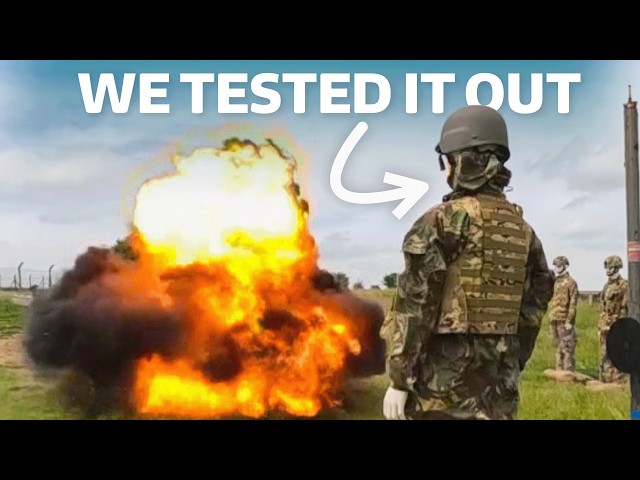
Job done, he takes position in the control tower and detonates the charge. Even behind thick concrete walls we can feel the blast as a dull thud in the chest.
By military standards the explosion is small, about the size of a hand grenade, but it is powerful enough to create the phenomenon that we have come to see.
Trevor's team at Cranfield University's explosive test centre on Salisbury Plain have installed high speed cameras around the range.
In super slow motion, they clearly show the primary blast wave, a hemispheric wall of energy moving outwards from the seat of the explosion at the speed of sound, compressing the air in front to create a pulse of overpressure.
It is this pressure wave that scientists now believe is damaging soldiers' brains, even when they fire their own weapons in training.
Professor Ben Dunkley, who has studied blast exposure in Canadian soldiers and veterans, explained: "That shock wave is hitting the body and then that energy is being transmitted into the brain and it's just like being shaken around.
"It can cause shearing damage, injure the cells and over time they can degenerate and die off."
Now, for the first time, Nato has issued guidance to member states on how much blast overpressure troops should be exposed to in training.
For the UK, where there are currently no restrictions at all and where the government treats soldiers' brain health as an area for research rather than action, the report represents a significant step.
The Nato guidance is for armies to limit overpressure in training to four pounds per square inch (Psi) for a single exposure and a cumulative daily total of 32 Psi. The alliance says it may revise these guidelines as the science evolves.
• Subscribe to ITV News on YouTube:
http://bit.ly/2lOHmNj
• Get breaking news and more stories at
http://www.itv.com/news
Follow ITV News on TikTok
https://www.tiktok.com/@itvnews?lang=en
Follow ITV News on Instagram:
https://www.instagram.com/itvnews/
Follow ITV News on Facebook:
https://www.facebook.com/itvnews/
Follow ITV News on X:
https://twitter.com/itvnews 




























































































































































































Comments (0)