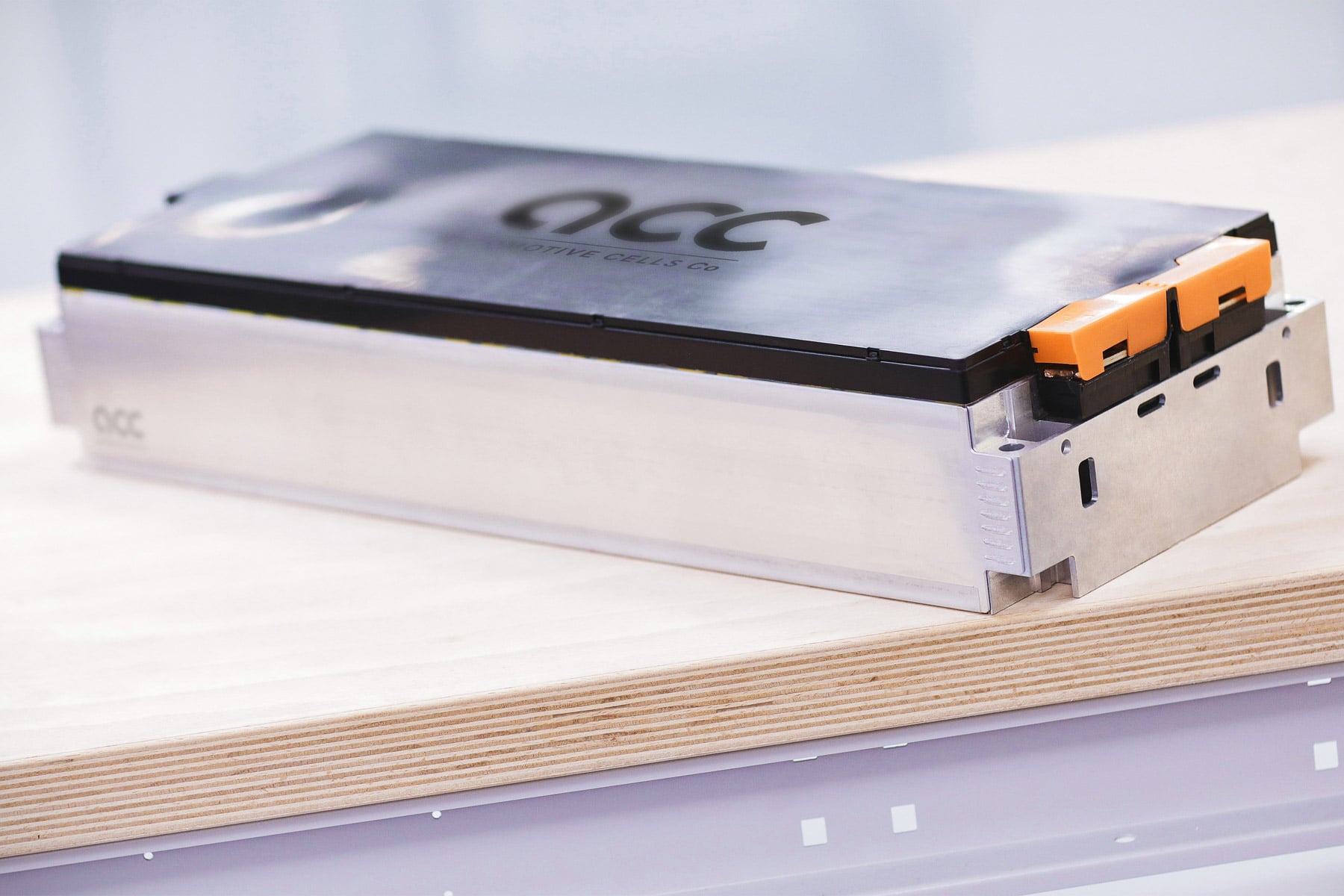
ACC labels construction of new battery factories as ‘completely irresponsible’
The market for electric vehicles is growing more slowly than anticipated, according to a statement addressed to ‘public authorities and private innovators.’ “As a result, European car manufacturers (including our two customers Stellantis and Mercedes) are suffering from the high level of uncertainty surrounding this market, which has been made unstable by fierce competition from China,” the statement continues. However, to date, only Stellantis has sourced battery cells from the limited output of ACC’s sole factory in Douvrin. Mercedes-Benz, despite holding a stake in the joint venture, has yet to deploy ACC cells in its vehicles.The tone of the statement is remarkable. Typically, companies in ACC’s position avoid commenting on media reports or limit themselves to brief statements. However, the management of the French joint venture has addressed the situation in detail, also highlighting the broader challenges facing the European automotive industry: “The future of the automobile is therefore electric. But one crucial question remains: who will manufacture the batteries for European cars? Asian players, particularly Chinese giants, as is already the case for 99% of them? At the risk of putting the strategic independence of European car manufacturers solely in the hands of BYD, CATL, LG, etc.?” ACC asks. “ACC’s 2,300 employees have been fighting every day for more than five years now to show that alternatives exist.”However, the industry’s initial optimism has given way to a ‘certain form of pragmatism and even caution,’ which is now impacting ACC. Part of the team is working flat out to ramp up production in Douvrin. “Meanwhile, the other part of ACC, the ‘upstream’ part, made up of teams based in Bordeaux-Bruges and Nersac, is experiencing a decline in activity proportional to the delay in our portfolio of future products. We know that this decline is temporary, but it requires the adoption of appropriate measures, such as the use of short-time working.”The management then addresses the recently cancelled projects in Kaiserslautern and Termoli. “Committing to building new Gigafactories in Germany or Italy would be totally irresponsible, in such a context,” the statement reads. “Especially when we know for certain that new Gigafactories will not be ‘loaded’ with new products for years to come.” For this reason, ACC has recently “initiated a constructive dialogue with the German and Italian teams to negotiate the conditions for a possible termination of our projects in Kaiserslautern and Termoli.”Regarding the existing battery factory in France, ACC states: “The ramp-up of our Gigafactory in Hauts-de-France is taking longer and costing more than anticipated, and is weakening our financial position. But we are too close to our goal to give up now.” Recent reports suggested that bottlenecks in battery production at Douvrin were straining Stellantis’ EV production and causing longer delivery times. There were also reports that ACC had brought in a team of experts from China to boost production and reduce high scrap rates.The production lines in Douvrin are now producing twice as many modules as they were two months ago. “Our scrap rates, the lifeblood of this industry, are steadily decreasing thanks to the many actions we have taken and the internal and external resources we have mobilised,” the company states. However, the team from China is not explicitly mentioned.“We have repeatedly said that the European battery industry is at a turning point in its young history… and this is now the case,” ACC concludes, calling for greater support and faster action from policymakers. “In September 2024, the Draghi report had already reminded Europeans that reindustrialisation means first and foremost investing heavily in strategic sectors. Eighteen months after this diagnosis, the Competitiveness Compass, the central political translation of this report by the von der Leyen II Commission, is still only a framework for guidance. There is an urgent need for action to turn it into a massive financial instrument worth €750-800 billion per year, as recommended by the former central banker.”acc-emotion.com