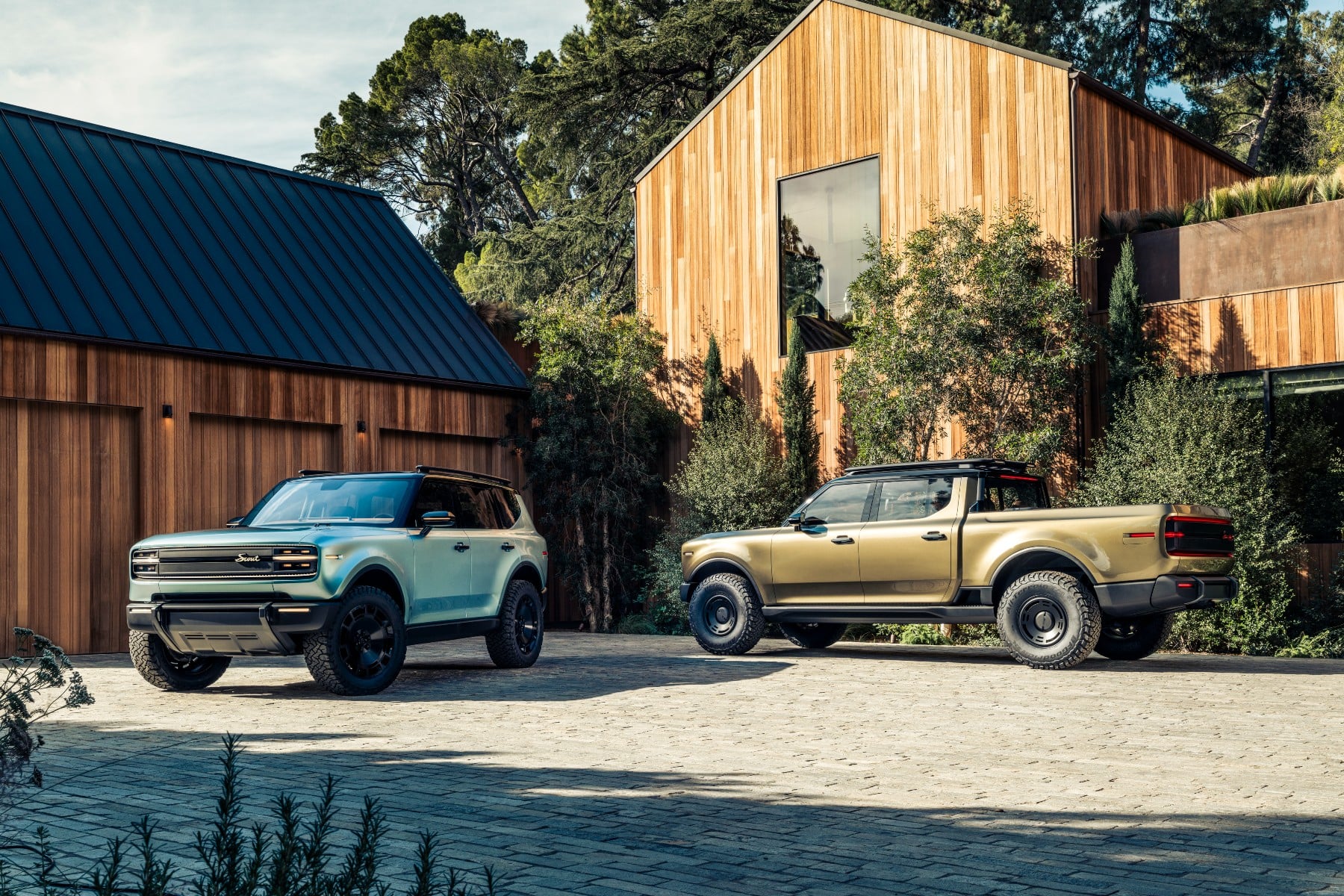
VW’s U.S. Scout comeback reportedly delayed to mid-2028
One of the key challenges surrounding the relaunch of Scout emerged weeks ago: as early as October, the German Manager Magazin speculated that the first two Scout models – a pickup and an SUV – would not initially launch as pure battery-electric vehicles, contrary to VW’s earlier announcements. Instead, they would first be equipped with a range extender. These are vehicles with an electric motor that also include a small internal combustion engine, which acts as a generator to recharge the battery. However, the range extender does not directly drive the vehicle. Nevertheless, this technology introduces additional development effort – more on that below.This strategic shift, intended to differentiate the vehicles from those of US partner Rivian, is causing a domino effect that is expected to delay the production launch. According to Der Spiegel, the pickup and SUV will no longer be built at the new Scout factory in Blythewood, South Carolina, from 2027, but instead from summer 2028. The report also suggests that a new premium SUV from Audi, codenamed ‘Rugged’ for the US market, will face delays. This model, which is also set to feature a range extender, is based on the Scout platform and is to be manufactured by Scout.Two main factors are reportedly causing the delays: first, a range extender requires additional installation space. In range-extender vehicles, Scout must install the engine in the rear, unlike in fully electric models. According to Der Spiegel, no space was planned at the front for a fuel tank or exhaust system – a setback that is expected to push development back by several months.The second issue lies with the software: it was originally intended to come from the joint venture between VW and Rivian, founded in 2024. However, Rivian has so far focused exclusively on battery-electric vehicles, and the contracts between the two parties only cover work on BEVs. Even though a range-extender vehicle is technically similar to a BEV – as it also includes a traction battery and is driven by an electric motor – Rivian is apparently unwilling to prioritise the software for a range extender to the extent required by VW. Instead, according to Der Spiegel, VW’s software division Cariad is now tasked with integrating the control of the Scout’s combustion engine into the Rivian architecture, adding further complexity and costs.VW’s decision to prioritise range extenders over BEVs for Scout is reportedly driven by the shifting political climate in the US. While the Biden administration previously incentivised electric vehicle purchases with a tax credit of $7,500, the Trump administration allowed this scheme to expire on 30 September 2025. Additionally, US President Trump relaxed emission regulations for internal combustion engines, making petrol-guzzling trucks and SUVs more attractive again. In response, Ford has already discontinued its all-electric pickup, the F-150 Lightning, and plans to introduce a range-extender variant alongside the combustion-engine versions of the F-150.spiegel.de (in German)