Xpeng reveals GX as new flagship SUV
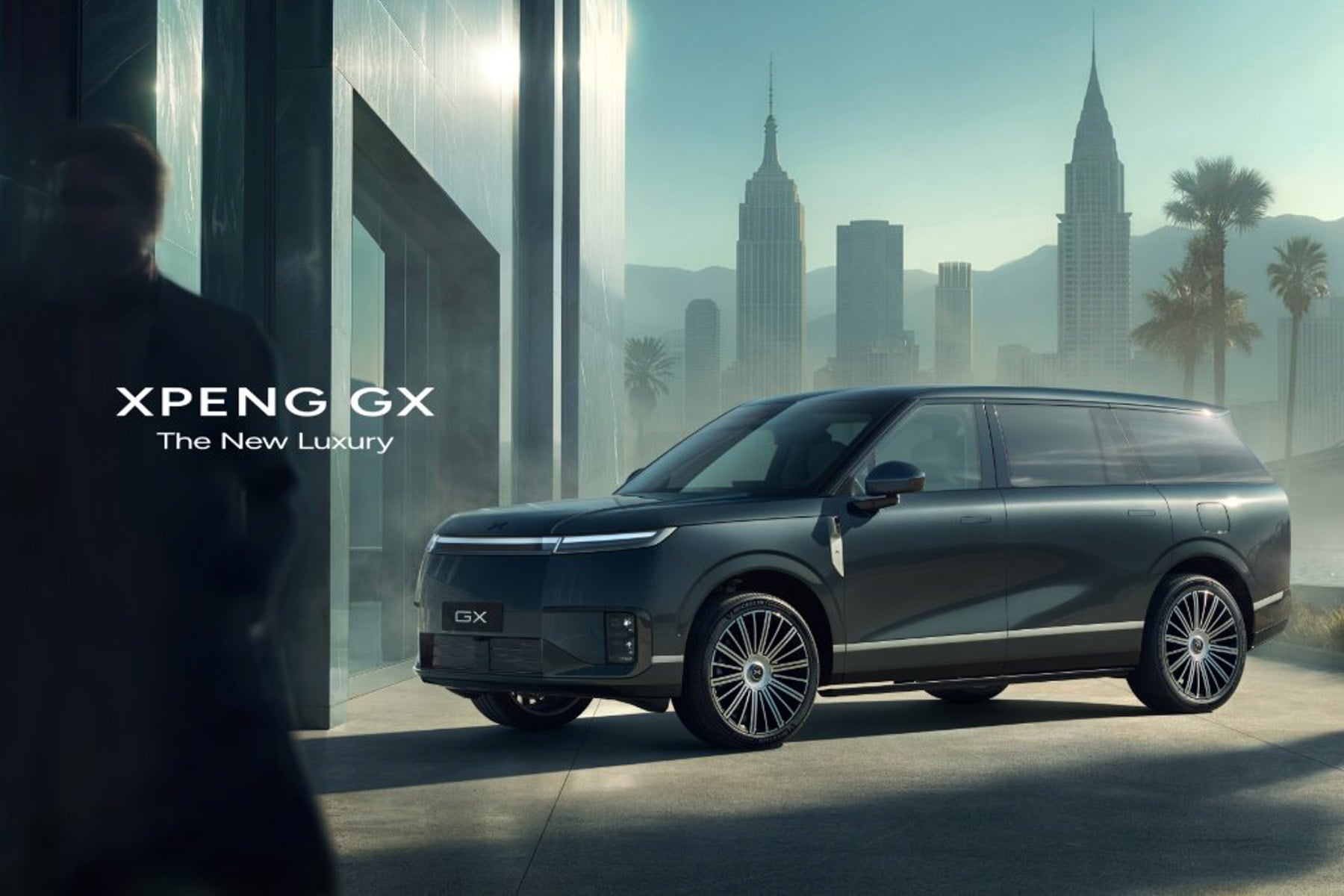
With the G9, Xpeng already offers a large premium SUV, but it is at most a five-seater and, at 4.89 metres in length, falls well short of the five-metre mark. However, in China, there is a strong market for particularly luxurious SUV models with comfortable individual rear seats. Xpeng aims to fill this gap with the GX.The company has listed the new model in the February edition of the Ministry of Industry and Information Technology’s vehicle catalogue, a move that typically signals an imminent market launch in China. Xpeng founder and CEO He Xiaopeng has already announced that the model will be unveiled within a few months.In the vehicle catalogue, Xpeng lists six GX variants – three as range-extended EVs and three as battery-electric models. The BEV versions use either a 270 kW rear motor or a dual-motor all-wheel-drive set-up combining the rear unit with an additional 160 kW motor at the front axle.With the GX, Xpeng is also diverging from its recent battery strategy. While the G6, G9, P7 and P7+ have all moved to LFP cells, the new flagship will offer both LFP and a ternary lithium-ion option – the term commonly used in China for NMC chemistry. The catalogue does not disclose energy capacities, as regulators do not require the figures. However, it names CALB as the supplier for both LFP and NMC cells.Xpeng’s latest models support 5C charging with quoted charging times of around 12 minutes. The company has yet to confirm figures for the GX, but it would be surprising if the flagship failed to match the existing 5C standard.
Image: Xpeng
Image: Xpeng
Image: Xpeng
Image: XpengThe EREV variants also use batteries from CALB, but exclusively with LFP cells. peng combines a 210 kW electric motor at the front with a 160 kW unit at the rear. A 1.5-litre petrol engine supplied by Harbin Dongan Auto Engine delivers up to 110 kW and acts as a generator. At 63.6 kWh, the battery capacity is comparatively large for a range-extender system. Even so, the EREV versions tip the scales at 2.84 to 2.89 tonnes, making them heavier than the battery-electric variants, which weigh between 2.69 and 2.82 tonnes.Xpeng representatives have previously stated that the GX will support Level 4 autonomous driving, allowing the driver to fully delegate control to the vehicle at times. To achieve this, the GX will be equipped with four in-house-developed Turing chips for AI applications, delivering over 3,000 TOPS (trillion operations per second) of computing power.The Xpeng GX measures 5.27 metres in length, 2.00 metres in width, and 1.80 metres in height, with a wheelbase of 3.12 metres. The vehicle will be manufactured at Xpeng’s factory in Guangzhou. Pricing details are not yet available—portal CarNewsChina estimates a broad price range of 400,000 to 500,000 yuan, currently equivalent to €49,000 to €61,000 euros. Whether the flagship model will also be launched in Europe remains uncertain.carnewschina.com, cnevpost.com, x.com