Labour MPs are getting organised on student loans
Labour backbenchers are preparing their campaign on student loans after being galvanised by the damascene conversion of Kemi Badenoch’s Conservative Party towards recognising the injustice of the “unfair debt trap” of the Plan 2 system. “The Pandora’s box is open,” said one Labour MP.
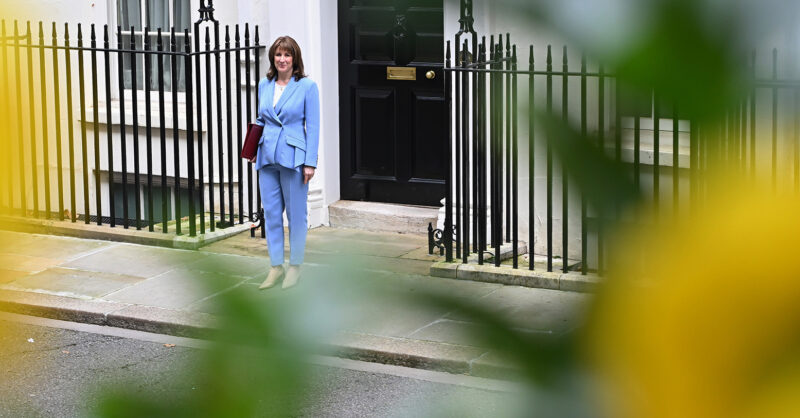
High interest and repayment rates for Plan 2 student loans have become a flashpoint in British politics after the Chancellor Rachel Reeves raised the repayment threshold in her November Budget. Under the loans – which were introduced by the coalition government in 2012 – graduates must repay 9 per cent of their income above the repayment threshold. Currently, two-thirds of graduates aren’t even paying off the interest on their loans.
A group of Labour MPs is currently working with several think tanks to develop a policy proposal for the reform of the student loans system intended for presentation to ministers. The Good Growth Foundation – the think tank founded by the former Labour parliamentary candidate in Islington North, Praful Nargund – has been speaking to members of the Parliamentary Labour Party and the Treasury to explore the potential costs and impacts of different options, including raising the repayment threshold and extending the repayment window, cutting the repayment rate, and a one off interest write-off. The think tank is also organising a group within the PLP to make the case for these reforms.
The Institute for Public Policy Research and the Institute for Fiscal Studies have also been working on modelling different policy options. Like the Good Growth Foundation, IPPR has been in discussion with MPs and government departments about a possible new proposal on Plan 2 loans. Its latest report found that under the current system, once tax, national insurance and pension contributions are included, graduates face effective deduction rates of between 42 per cent (for those earning between £28,470 and £50,270) and 76 per cent (for those earning between £100,000 and £125,140). The IPPR report also found that reducing the government’s repayment rate from 9 per cent to 4.5 per cent would put “£5.8bn into people’s pockets in 2026/27”.
Subscribe to the New Statesman today for only £1 a week.
In a recent report, the IFS modelled a proposal put forward by the Labour MP Luke Charters which suggests offering graduates a new set of terms, with a lower repayment rate and a longer repayment period.
Several Labour MPs – some of whom are themselves on Plan 2 loans – have been privately agitating behind the scenes, telling the government that without fast act it could be outflanked by other parties on this issue. This argument was intensified by the success of the Green Party in the Gorton and Denton by-election. One Labour MP speculated that the graduate contingent of the party’s core base could be endangered by the Green Party’s victory. (The data seems to back this up. A poll from YouGov on Tuesday 3 March revealed the Green Party is now the top choice among 25-to-49-year-olds, the age group on Plan 2 loans).
As I have reported previously, Reeves’ description of the system as “fair and reasonable” attracted particular criticism. One MP told the NS they thought the Chancellor should have distanced herself and the government from the current repayment model, rather than condoning what is now being widely criticised as a broken system.
Badenoch’s announcement that the Conservatives would cut the interest rate on some loans has encouraged Labour MPs to be more outspoken. Some have pointed out that, as the architects of the student loan system, the Conservatives should have been allowed the political upper hand. One backbench Labour MP quipped: “Never in my life did I think I’d live to see the day when the Tories were better on student loans than us.”
Charters, the MP for York Outer – who has a Plan 2 loan himself – described the system as a “dog’s dinner” and accused the Conservatives of building the system “while completely abandoning young people”. He added that the Tories’ “crocodile tears just aren’t serious”. Similarly, Chris Hinchliff, the MP for North East Hertfordshire, said: “As a Plan 2 graduate myself, I know how ridiculous it feels to make your student loan payments only to watch the debt grow because of exorbitant interest rates. The system of increasing them above inflation was always unjustifiable.” He called for “urgent action now, and long-term reform that puts social justice at the heart of higher education”.
Rebecca Long-Bailey, a former Labour leadership hopeful and member of the Socialist Campaign Group, wrote to the Chancellor last week calling on her to reverse the freeze to repayment thresholds. She asked Reeves to come up with a plan that would “develop a sustainable model for Higher Education” which included the “abolition of tuition fees” as a long-term goal.
The government has revealed little about its thinking on student loans other than the confirmation from both Keir Starmer and the Education Secretary, Bridget Phillipson, that ministers plan to look carefully at potential reforms. Any movement to ease the burden on graduates is likely to mean a cost to the Exchequer. (Reeves did not mention student loans in her Spring Statement on Tuesday.) A catastrophic by-election loss and the ongoing conflict in the Middle East have likely distracted attention. But inside parliament, Labour MPs are getting organised, and it won’t be long until they come up with a solution. But will the government be ready to listen?
[Further reading: Was the Chancellor’s Spring Statement dead on arrival?]
Content from our partners
Related