The old internet is gone but we can still save the new one
“On the Internet, nobody knows you’re a dog.” If this quotation means nothing to you, you are probably either too old or too young to have been online through the first glorious boom of the World Wide Web in the nineties and early noughties. It’s the caption of a cartoon by Peter Steiner in The New Yorker in 1993, depicting two dogs at a computer, revelling in their online anonymity. It quickly became far more than that – an adage, a meme, a mantra, exemplifying the core joie de vivre of the early Internet, back when it still had its capital “I”.
We have come a long way from those whimsical days to the UK government consultation launched on Monday to explore “children’s digital wellbeing”. On the internet back then, nobody knew you were a teenager. Or not even quite yet a teenager. I was 12 when I took my first tentative digital steps into online message forums and blogs – a fact I’m certain would have horrified the adults across the world I quickly began interacting with. Precocious and using a pseudonym, I was welcomed without question.
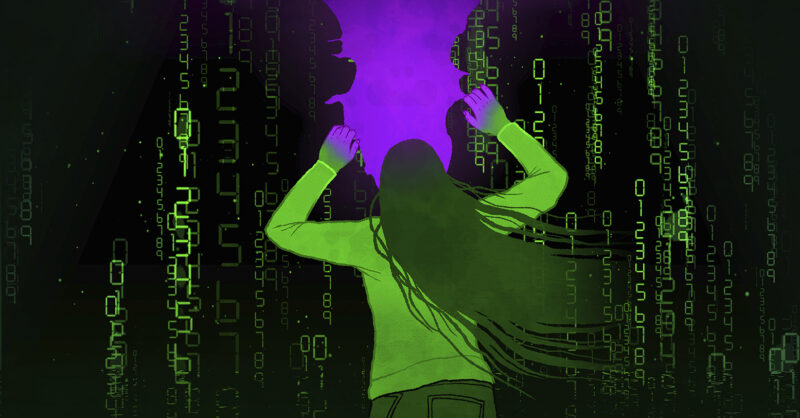
Now, of course, the opposite is true. Our online personas fused with our real-life identities long ago, thanks to Mark Zuckerberg and the rapid proliferation of social media from computer screens, to phone screens, to every aspect of modern life. I just bought a scratching post for my cat and the checkout site tried to convince me to link my purchase with my Facebook profile. Once upon a time, the internet was a place to escape to. Today, it’s something to try to escape from.
This is my starting point when considering the debate over online safety and the proposed ban on social media for children under the age of 16 to be examined by th consultation. Because unlike many of the politicians and pundits loftily opining on the matter, I remember what it was like to be under 16 and left to my own devices in a space the adults around me did not venture. I understand how that space shaped me and laid the foundations for my post-adolescent outlook on life. And I understand how it has changed.
Subscribe to the New Statesman today for only £1 a week.
From the politicians’ perspective – across the political divide – that probably doesn’t matter. The British public have rarely encountered a ban they didn’t like the look of, and the only issue routinely deemed more worthy than protecting children is protecting animals. According to YouGov, 74 per cent of people somewhat or strongly support restrictions on under-16s’ internet use, including a clear majority in all age brackets (except under-16s themselves, who have not been asked). My own cohort of those aged 25-49, who came of age with the internet, are the second most supportive, after over-65s. Social media is dangerous, case closed.
We’ve all read the lists of harm caused to teens by too much time online – eating disorders, self-harm, relentless cyber-bullying, mental health issues. We’ve seen the studies purporting to show long-term damage to brain function and attention span and been terrified by them, even if much of the data is still being hotly argued over. The most tragic stories, the ones that end in young people taking their own lives, are shocking and heart-breaking. Of course bereaved parents are advocating for change. Of course we want to spare others that fate.
But something is missing in this debate. It comes down to amnesia, about what the internet used to be and how it took over our lives, and why that is so destructive for all of us.
What was it like, being young and online in the immediate aftermath of the broadband revolution? It’s surreal to recall how, from the age of 12, I would spend hours after school each day arguing on Lord of the Rings forums about obscure Middle Earth lore, reading copious amounts of fanfiction of dubious quality, discovering niche subcultures (mostly inspired in some way by Douglas Adams or Terry Pratchett) and bonding with people I would never meet “IRL” (in real life) about our shared passions. By 15, I had graduated (somewhat) to one of the many blogging communities doomed to be wiped out by Facebook. I had friends there that were more real to me than anyone I knew face-to-face. Some of them lasted – but, just as crucially, most did not. I would dip in and out of communities, try personas and perspectives on for size, then move on when they no longer suited me. Usernames were dispensable. Identity was a construct.
This is, after all, what growing up is all about. Or it used to be. When Facebook went mainstream, opening access to anyone 13 and over with a valid email address in 2006 and surpassing the behemoth that was MySpace in 2007, the rules of the game changed. Usernames became real names – or was it the other way around? Instagram, Snapchat and TikTok followed the same trend. Even if you didn’t use your real name, your real friends would know where to find you. And so would anyone else looking to track you down. An account wasn’t like a new makeup trend, to be experimented with then discarded. It was more like an identity card, stamping you with its imprint for life.
I am not trying to argue that, because I was left unsupervised on the internet at an impressionable age two decades ago and turned out relatively okay, there is nothing for anyone to worry about now. The opposite, in fact. Because part of what makes social media – which has essentially eclipsed the thorny, organic wild west that came before it – so damaging is that it forces users to set themselves in aspic, assuming an identity that can be traced and found by anyone and everyone they might encounter.
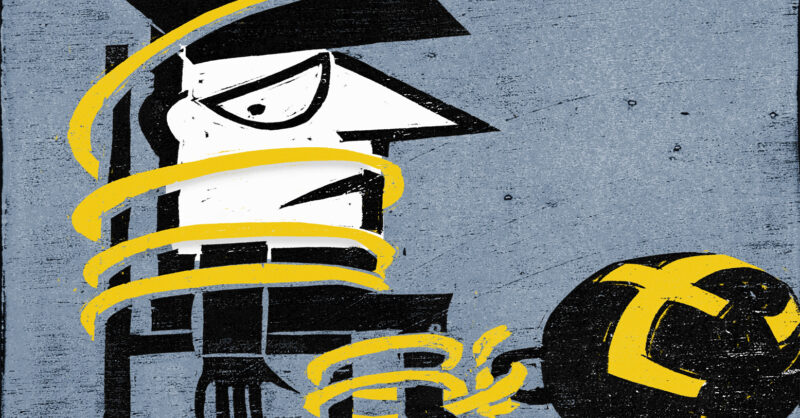
Journalist and author Marie le Conte writes about this flattening of online identity in her 2022 book Escape: How a Generation Shaped, Destroyed and Survived the Internet. “We have all been squished into the same dashboards, timelines and feeds, and we have no idea how to deal with it,” she argues. “We are, after all, not meant to be the exact same person to everyone we encounter, not because people are inherently duplicitous but because that is how we function.” Teenagers today trying to work out who they are, with pliant identities full of potential futures, are being framed through their smartphone screens into tightly curated boxes, trapped in pixels and put on display to the world. No wonder they’re in crisis.
This is far from the only issue with the internet as it is now versus 20 years ago. There was a brief blissful period when corporations didn’t know how to make money off this strange new technology – now, every click is monetised and data farming is multi-billion-dollar industry. The issue with the harmful, radicalising, soul-destroying slop served up in teenagers’ feeds isn’t that it exists (it always did) but that it has become so profitable, making outrage and attention a currency. Psychological trauma used to be a hazard of the internet. Now, it’s a business model.
The key thing, though, is that all this is as true for adults as it is for impressionable teenagers. That’s something politicians eyeing up the “ban” button don’t want to confront. Naomi Alderman, who writes dystopian tech-futurist novels, described today’s online world as a park full of broken glass. “You can’t just ban children from the play area and call the problem solved. 1) they now have no play area 2) everyone else is still getting cut to ribbons… 3) children still want to play and they will end up in the non-play-area bit that is still full of broken glass.”
I got to play in the park before it got covered in glass. Without that opportunity, I would be a radically different version of myself; were I the parent of a young teen today, there’s no way I would let them set foot in what the internet has become. These things are not contradictory or hypocritical. We have become so used to the damage inherent in online spaces that we treat it as inevitable. Then we act horrified when that damage becomes apparent for young people, but not horrified enough to realise it is actually harming all of us.
We’re never going back to a world where nobody knows you’re a dog on the internet, but we could have a more honest conversation about how the online world has degraded and what we could do to repair it. It doesn’t have the same catchy ring as simply banning social media for under-16s – but if we could all start to untether ourselves from the toxic online avatars we’ve allowed to consume us, it wouldn’t just be teenagers who benefit.
[Further reading: The Online Safety Act humiliates us all]
Content from our partners
Related