Trump, Iran and America’s years of iron
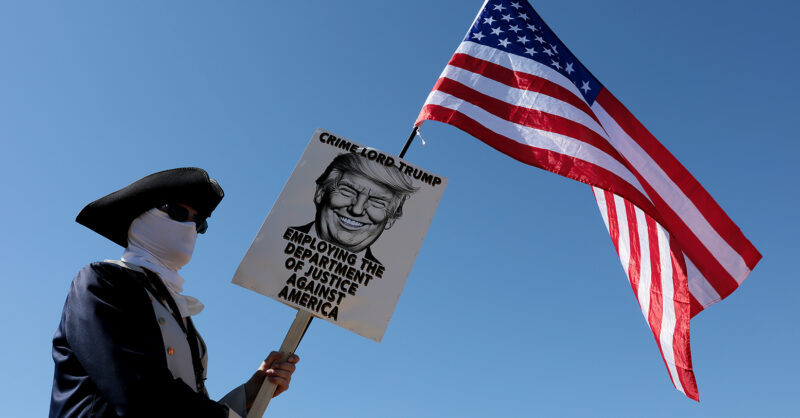
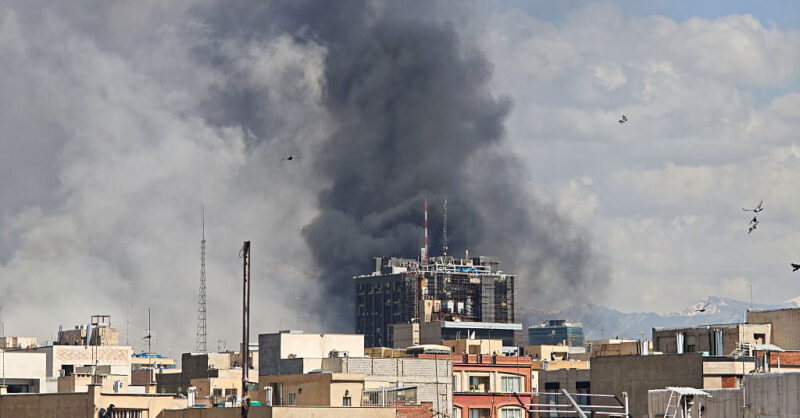
Geopolitical issues aside for the moment, one element of Donald Trump’s senseless, purposeless attack on Iran should be in the forefront of people’s minds: Trump’s foreign policy is the handmaiden to his domestic ambitions. In the days and weeks leading up to the joint US-Israeli attack on Iran, Trump declared his intention to have his face engraved on a gold coin that would commemorate American’s 250th anniversary. He has had an enormous banner displaying his face hung over the façade of the Justice Department building. He is pushing plans for a massive statue of himself to be erected at a Trump golf course in Florida. This attack might be the most dangerous burst of megalomania we’ve seen, but it’s hardly the first.
As American missiles and bombs fall, much commentary is being made about the absence of justification for a war with Iran, and rightly so. Swelled by his easy triumph over Venezuela, Trump clearly believes that “decapitating” Iran’s regime by killing Iran’s Supreme Leader will have the same effect as abducting Nicolás Maduro. Perhaps because he has inflated his own importance, Trump thinks personalities run the world. As if Venezuela’s 150,000 to 300,000 troops could compare to the well over one million military personnel in Iran. As if Venezuela’s small arsenal of weapons could compare to Iran’s ballistic reserves. As if a small Latin country had the same power and influence as Iran, an ancient civilisation that has become a Middle Eastern powerhouse and a major destabilising influence in the world.
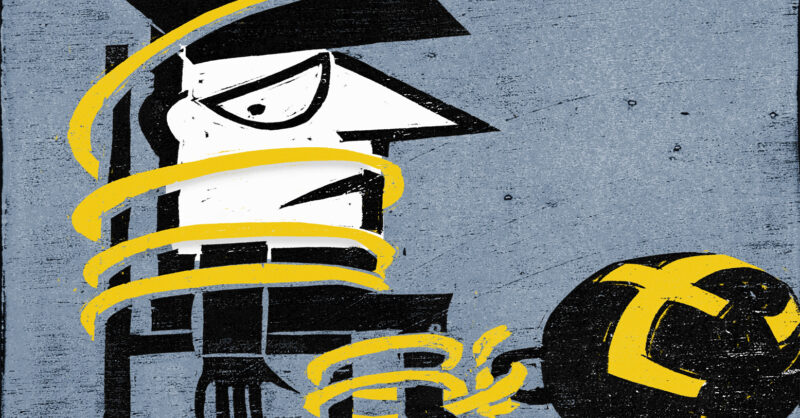
Yet if all this has not occurred to the daft and distracted Trump, surely it is known to his advising lackeys, who will share the facts with their boss, perhaps between his naps. That fact is Trump couldn’t care less. His goal abroad is twofold: to create overseas the disabling chaos he has fomented at home, and to institutionalise American-created violence and chaos abroad in order to make an iron hand seem inevitable, even patriotic, at home. Even if the worst-case scenario happens in Iran, Trump will, in his twisted mind, succeed. Anarchy and civil war in Iran? With their arsenals destroyed, the Iranians will be capable only of inflicting violence on themselves. Iran will become – in this view – a rump state not unlike Gaza before the Israeli invasion, with the Iranian Revolutionary Guards playing the role of a brutally repressive Hamas.
A devastated Iran becoming the incubator of new terrorist groups? Keep assaulting them with missiles and bombs. Forget settler colonialism. This is colonialism from the air, no settlers required. The claim that Trump is a neo-conservative after all seems an apt and intelligent one to make, but the truth is that the neocons, as ruinous as their foreign policy was, believed – as did the liberal hawks – they were inflicting regime change in order to “make the world safe for democracy”, as the supposedly isolationist Woodrow Wilson famously put it. Trump’s rote, peremptory instruction to Iranians to “take over your government” seems almost like deliberate parodies of the neocons’ elaborately deceptive rhetoric leading up to the Iraq war.
Subscribe to the New Statesman today for only £1 a week.
The same goes for Trump’s casual, off-the-cuff claims of the threat Iran posed to the United States; contrast that to the painstakingly constructed groundwork of “weapons of mass destruction” the neocons falsely claimed Saddam Hussein possessed before the Americans went in. Trump is not interested in the neocons’ nation-building. He is interested in the shallow, performative gesture of nation-building as a pretext for decimating a nation into either a compliant business partner, as in Venezuela, or a weakened entity capable of doing no harm, regardless of whether that entity is functional or not.
As for terrorist attacks in Western Europe and the United States, that would have the welcome effect, for the Trump gang, of empowering the populist right in both places. America invaded Iraq beating its breast, with Bush making a grave address to the nation from the White House on the eve of war. Trump announced the attack on Iran via a video made at Mar-a-Lago, after a night of dancing at a gala, making the barest reference to the Iranian regime’s recent mass slaughter of protesters. In his view, nothing momentous could go wrong. In fact everything could go wrong. The more Trump takes up residence in his head, the less he is aware of possible reactions to his actions. That is, you might say, the downside of a thrilling megalomania. Trump constantly overplays his hand. It has not yet had a conclusive effect because, as president of the United States, he has so many hands to play. But with Iran, he is up against an opponent every bit as desperate, resolved and indefatigable as the North Vietnamese were. The Iranians are now widening the conflict as much as they can in hope of eventually isolating America, bombing Arab neighbours fearful of civil strife, as well as sending drones into a British base on Cyprus, and disabling the flow of oil and liquid gas. Trump childishly believes he is the cunning master of chaos. But his bumbling bursts of disorder are no match for the chaos of war that he has brainlessly unleashed. His empty, emotionally numb, barely coherent address to the nation yesterday (2 March), where he ended by talking about his redecorations of the White House, only made the chaos worse.
It is hard to imagine that the Iranians do not have in mind the spring of 1980, when Jimmy Carter authorised the use of military helicopters to free the 52 Americans still being held hostage by students who had taken over the American embassy in 1979. The mission was aborted after two of the helicopters crashed in the desert, with the ultimate loss of eight American soldiers. Even one American pilot taken captive now would, in an instant, turn the situation on its head. Americans taken hostage by Iranian proxies anywhere in the world would have a similar effect – on Sunday (1 March) Pakistani security forces rebuffed an attack by rioters on the American embassy in Karachi.
The effect of such an event might be to strengthen the grip of the populist right in America. It could also have the effect of outraging the Americans who support Trump, and whose children die for their country in greater numbers than other groups. And one stunningly destructive blow, like the Iran-sponsored bombing of an American barracks in Beirut in 1983, which killed 241 American soldiers, could have the effect of changing the Trump crowd’s calculations. Reagan vowed not to withdraw American troops from Lebanon. After the bombing, he withdrew them.
Trump is now bragging that the Iranians want to talk and make peace. It’s hard to imagine and, if true, it is difficult to see what type of peace that would be. Members of the old regime have taken new power. The opposition groups in Iran exist in a state of paranoia and mutual suspicion, often accusing each other of being the pawn of foreign powers. Reza Pahlavi, the Shah’s son, who is the best-known opposition figure, has only the most tenuous relationship with Iranians, based solely on his appearances from America on a screen. And the constitutional monarchy that Pahlavi would be sure to create would most likely be some version of his father’s. But the fact remains that “peace” in Iran would be very unpeaceful to enforce. Surely neither the Europeans nor the Gulf states would want to enforce it. They don’t want to send troops to enforce peace in Gaza. That leaves Americans confronted with an Iraq-style occupation.
Trump’s endgame is not in the Middle East. He is leaving that, to a great extent, up to Israel. Trump’s purpose and objective is here at home. “I came, I saw, I conquered,” is the beginning and the end of Trump’s foreign policy. Cuba will be next, almost certainly by the midterms. A world in Trump’s iron, if sclerotic, grip is an America at his feet. History is driven by climates of opinion and by collective moods. The climate of opinion in America is, barely discernibly, but slowly and surely, turning to the iron momentum of imperial force abroad and imperial enforcement of order at home. And the collective mood in America, as in Iran – even among most Iranians, who suffer under and despise the mullahs’ rule but mistrust American motives, regardless of their gratitude for Trump’s intervention – is resignation to a greater force, and a determination to fight on in some small way.
[Further reading: When Donald Trump bombs, Keir Starmer obeys]
Content from our partners
Related