The Iran war, oil and gas prices, and a potential new inflation spike
Vladimir Putin launched his invasion of Ukraine in February 2022 at a critical moment for the European gas market. Prices had already been rising, and in the winter of 2021-22 the gas stored in Europe’s underground storage facilities had been at its lowest level for more than a decade. This allowed Putin’s invasion to deal an economic blow to Ukraine’s allies, as a massive spike in wholesale gas prices imposed inflation across Europe. In the UK, inflation peaked at over 11 per cent and the British government spent £78.2 billion on energy subsidies and cost-of-living payments. This week, Donald Trump launched an attack on Iran that risks causing a similar pattern to develop.
Once again, Europe has been caught out at a moment when gas reserves are low. Again, the sudden outbreak of war has cut off some energy supplies, forcing prices upwards. Drivers in Britain will notice higher petrol prices this week as the jump in crude oil prices caused by the strikes on Iran by the US and Israel is translated by fuel suppliers, but oil prices have been low in recent months and the price of crude is a minor component of the cost of a litre of petrol (the biggest element is tax).
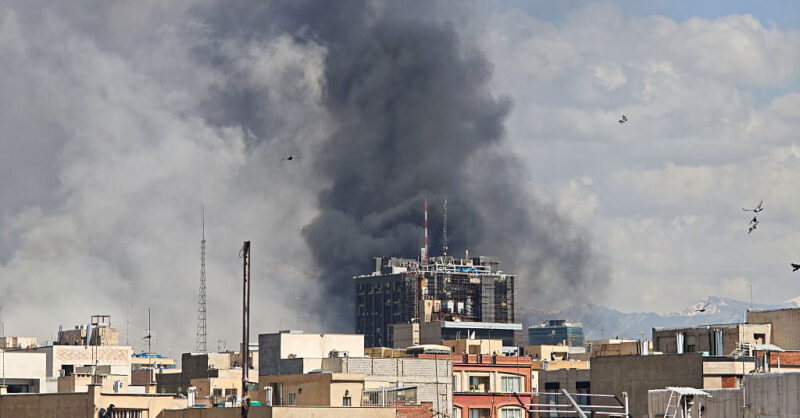
Again, then, the more important story is gas. This is the fuel for almost all the UK’s domestic heating and a third of our electricity generation. The gas price sets the wholesale price of electricity and the price of fertiliser for food crops. Yesterday, Qatar stopped production at the world’s biggest liquefied natural gas (LNG) facility, the Ras Laffan plant, after it was targeted by Iranian drones. Ras Laffan produces almost a fifth of the world’s LNG. Around 150 tankers are currently anchored in the Persian Gulf, having been warned by Iran not to attempt crossing the strait; Iran has already claimed to have attacked three of the tankers that have attempted the journey.
While the UK currently buys relatively little gas from Qatar, these threats have pushed up wholesale prices across the world. Most of the gas market is composed of contracts to buy gas in the months to come, and the most important in inflationary terms are the contracts to supply gas next winter, which rose by about 25 per cent between the end of last week and Monday. This is very concerning, but it is much less concerning than the spike in gas prices that followed the invasion of Ukraine. Gas bills will not jump immediately – in fact they are going to fall, as the energy price cap is reduced on 1 April – but a couple of weeks’ disruption of gas supply will develop into higher inflation in the UK and Europe, as countries seek to rebuild their stocks of stored gas over the summer.
Subscribe to the New Statesman today for only £1 a week.
At the moment, energy markets seem to be assuming that the disruption to energy supplies will be relatively short. Current prices imply disruption of energy supplies for a week to ten days, which analysts say would not have a huge effect on household bills. The forecast from Capital Economics is that “moderate disruption” could reduce global GDP by 0.1 percentage points and raise inflation in the Eurozone by about 0.4 percentage points; not great, but not terrible.
Does Donald Trump have a detailed plan for this war? This question is now crucial not only to the people of Iran, but to the economies of the UK and Europe, because a longer conflict would have much more significant effects. Disruption of the Strait of Hormuz for a month could cause LNG spot prices to more than double, according to Goldman Sachs. And for all the firepower of the US and Israel, they do not have long to restore order to the world’s most important energy channel, a thin strip of sea that Iran has overseen for decades.
For the UK, the worry is that we are even less economically prepared for an energy crisis than we were last time. The last thing the UK economy needs at this point – with growth barely visible, little sign of better productivity and unemployment at a five-year high – is a negative supply shock. Businesses have spent much of the last 18 months complaining about the cost of labour; a shock to the cost of energy would further dent their desire to hire and invest, as well as reducing the spending power of consumers, especially those in the lowest income deciles. With the threat of higher inflation it’s unlikely the Bank of England’s policymakers will feel moved to cut interest rates, and the state, having spent so heavily on previous crises, is not in a position to bail the economy out. And like Europe, we have to keep buying the gas; our reserves are less than 30 per cent full.
The nightmare scenario, as outlined by the New Statesman three years ago, is that Donald Trump begins to exercise control over European gas supplies. This is a power handed to him by Joe Biden, who made America the world’s biggest exporter of LNG. If he decides to divert gas to reduce prices in the US, or to impose tariffs on gas exports, or simply to restrict exports because we won’t accept his desire to invade Greenland, he could end up imposing inflation on Europe in a similar manner to Putin, and for a similar reason.
[Further reading: How Putin is backing Iran’s war effort]
Content from our partners
Related