Rasmus Jarlov: If the US attempts a military takeover of Greenland, “then we are at war”
Seated beneath an elegant Venetian chandelier in the finance committee’s meeting room inside Christiansborg Palace, also known as Borgen, Rasmus Jarlov weighed the prospect of a US military takeover of Greenland. As chair of the Danish parliament’s defence committee, he told me he found it “absurd” and “insane” to confront the idea that the most immediate threat to Denmark’s security now comes from one of its closest allies. He still does not believe that an American military assault on Greenland is the most likely scenario. But given Donald Trump’s repeated threats, it is a scenario that Copenhagen must take seriously, and he wants to make clear that it would not be the bloodless walkover many commentators are predicting.
“If the Americans actually invaded Greenland military… if they were trying to take over the society, take over the police, take over the courts, and run Greenland as an American territory,” Jarlov said, “that would mean war.” He cautioned against assuming that Danish military personnel in Greenland, however outnumbered they might find themselves, would simply surrender to an American annexation force. “Danish soldiers that are up there would have to fight back against the Americans. So they [the US military] would have to gun down people that had done absolutely nothing to the Americans ever, except being a very, very loyal ally.” (Fighting alongside the US in Afghanistan, Denmark lost more soldiers as a proportion of the population than any other US ally.)
“I would have to go to funerals,” Jarlov continued. “I would have to look into the eyes of mothers and fathers whose sons would have been gunned down in Greenland by Americans for absolutely no reason. So this is not a joke. This is not something we take lightly. It is very serious.” He said the message from the recent US military campaign in Venezuela was clear. “The Americans showed that if you’re a hostile nation to the United States, they will come after you. Now they’re also showing that if you’re a loyal ally to the Americans, they will also come after you, so what are your options? Why would you want to be an ally of the Americans if you are being attacked and treated like we are at the moment?”
I asked Jarlov whether he was really serious that Denmark would be prepared to go to war with the United States to defend Greenland, given the overwhelming military superiority they could expect to face. “We would never go to war against the Americans, but we are in Greenland and if American soldiers move in and try to remove our soldiers and our police, then we are at war,” he explained. “That is the definition of a war. So yes, people would die, and it would be a disastrous situation, not just for Denmark and Greenland, but also for the entire western alliance.”
New year, new read. Save 40% off an annual subscription this January.
Denmark, a founding member of Nato, could invoke Article Five of the North Atlantic Treaty, which commits Nato allies to treat an armed attack on one as an “attack against them all.” But the US, which is also a founding member, could veto a collective military response, leaving individual powers to decide by themselves how to response. “Nato would be finished,” Jarlov said. “Then [the US] would have destroyed the most powerful, most successful military alliance in history for no reason… Russia and China would be very happy, no doubt about that, but this would be the biggest self-inflicted wound to the western world, maybe ever.”
Pressed as to what sort of response Denmark would expect from the UK and other European powers, Jarlov said he didn’t want to escalate the situation by speculating about how a conflict might play out. “I would say, we are not stupid. We understand that we are a small country. We have a relatively small military… so, of course, we are aware of the fact that we wouldn’t be able to stop the Americans,” he added. “But if they think that they can just send in a ship or a few diplomats and then declare that they now rule Greenland, they are wrong. There would be a war, and there would be fighting, and you would have to shoot people to get Greenland.”
This does not mean there would, necessarily be a war. It makes sense for prominent Danish politicians to be trying to raise the cost, in the minds of their US counterparts at least, of an American military intervention and push back the smug assertion from White House deputy chief of staff Stephen Miller that “nobody’s going to fight the United States militarily over the future of Greenland.” Jarlov, 48, is a Conservative MP and former Danish minister for industry and financial affairs. He is in political opposition to prime minister Mette Frederiksen, who leads the Social Democrats and whom he has criticised in the past for failing to stand up more robustly to Trump. He does not speak for the government.
But Danish media outlets have reported in recent days that a standing order to Danish troops, dating from 1952, remains in place, requiring them to “immediately take up the fight” if Danish territory is attacked. Frederiksen, too, has warned of the devastating consequences of a US assault. “If the United States were to choose to attack another Nato country, then everything would come to an end,” she told Danish broadcaster DR on 5 January. “The international community as we know it, democratic rules of the game, Nato, the world’s strongest alliance – all of that would collapse.” Diplomats from Denmark and Greenland have fanned out across Washington in response to the Trump administration’s latest threats to deliver the clear message that Greenland is not for sale, and that any legitimate security concerns the US might have can be addressed within the terms of their existing treaty. Almost three quarters of Americans surveyed in a YouGov poll on 7 January also said they were against using military force to seize Greenland (including 60 percent of Republicans). However, 28 per cent – and 51 per cent of Republicans – were in favour of buying Greenland.
Back at Borgen, Jarlov contemplated the most effective means to deter an American military attack. He was flanked by two incongruously pastoral paintings by the Danish expressionist Jens Søndergaard: on one side “Golden Landscape”, depicting the windswept hills of Jutland, on the other, “Evening by the sea” showed the sun setting over idyllic farmland. It was painted in 1949, the same year Nato was founded.
“I’m not a psychologist, so I don’t know how we convince the Americans,” Jarlov ventured. “We are trying to put the facts on the table. We are trying to inform the Americans and the American public about the facts; that we have a defence agreement [signed in 1951] so the Americans already have full military access to Greenland and therefore don’t need to invade or annex it.” He said Denmark was also trying to convey to Washington that the US was welcome to “put up the investments and start mining in Greenland if that’s what they want to do.”
He believes the most likely approach is for the US to step up its efforts to cultivate sympathetic individuals in Greenland and stoke divisions with Denmark, amplifying stories about the terrible mistreatment of Greenlanders during Denmark’s colonial past, with the aim of strengthening Greenland’s independence movement. (Polls consistently show a majority of Greenlanders support eventual independence, but only once its economy is resilient enough to dispense with the annual block grant from Denmark, which amounts to around $700 million.) Last year, Trump administration officials reportedly discussed the possibility of offering Greenland a Compact of Free Association (Cofa) agreement, similar to the relationship with Palau, Micronesia, and the Marshall Islands, which would give the US exclusive military access in exchange for financial support.
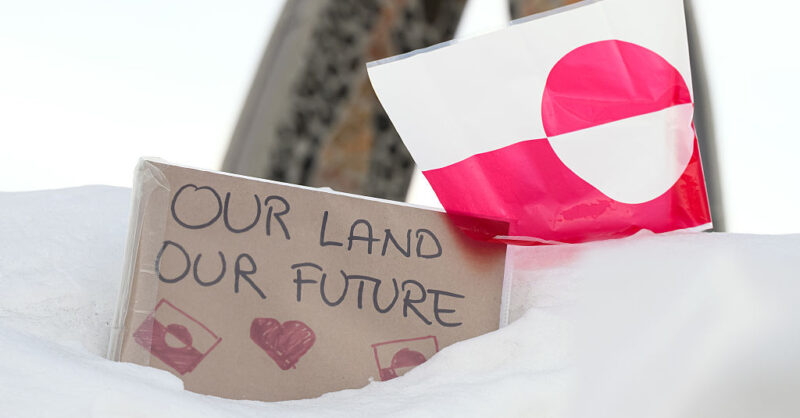
Pele Broberg, the leader of Greenland’s opposition Naleraq party, which secured almost 25 per cent of the vote in 2025 and advocates a rapid transition to independence, suggested on 8 January that Greenland should enter direct talks with the US, accusing Denmark of “antagonising both Greenland and the US with their mediation.” (While Greenland has autonomy in terms of domestic governance and the right to call an independence referendum, Copenhagen retains responsibility for foreign affairs, monetary policy and defence.) But support for independence in Greenland is not the same as support for becoming part of the US, which 85 per cent of Greenlanders rejected in a January 2025 poll, before Trump ramped up his claims to the territory. On 9 January, the leaders of all Greenland’s main political parties, including Broberg, issued a joint statement calling for the “US contempt for our country” to come to an end. “We do not want to be Americans, we do not want to be Danes, we want to be Greenlanders,” said the statement released by Greenland’s prime minister, Jens-Frederik Nielsen.
After centuries of bitter experience of colonial rule, which ended only in 1953, it seems unlikely that Greenlanders would now rush to exchange their current status for a new era of de facto colonisation. Especially given Trump’s nakedly extractivist approach to Venezuela, and the glee with which some of the US president’s backers have been appraising Greenland’s rich deposits of rare earth elements, critical minerals, oil and gas. There has even been talk about US tech billionaires eyeing Greenland as a potential hub for AI and cryptocurrency ventures, alongside large-scale mining operations.
“We are struggling to understand the motivation behind this obsession with Greenland,” said Jarlov. “Because there really won’t be any benefits to the United States that they can’t already get from the arrangement we have today. They have full and exclusive military access to Greenland, they also have access to extracting minerals if they want to put up the investments.” Looking at the situation from Copenhagen, he concluded, “we can’t really see what the benefits would be except for a need to put your name on a map, and if that’s what’s driving the Americans, of course, that’s difficult to argue against.”
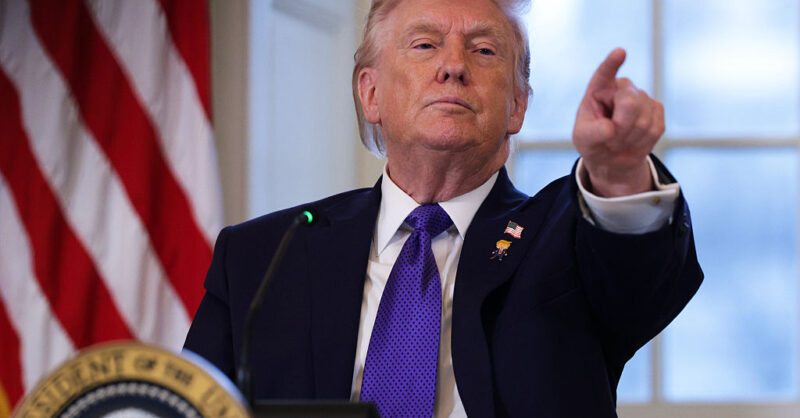
Unfortunately for Greenland and Denmark, that does, indeed, seem to be a significant impetus for Donald Trump. Reporters from the New York Times asked the US president on 7 January why he felt he needed “ownership” of Greenland when the existing arrangement already gave him what he claims to need in terms of the ability to protect US national security. “Because that’s what I feel is psychologically needed for success,” Trump replied . “I think that ownership gives you a thing that you can’t do, whether you’re talking about a lease or a treaty. Ownership gives you things and elements that you can’t get just from signing a document.” Two days later, during a meeting with oil and gas executives at the White House, Trump doubled down on those threats. “We are going to do something on Greenland,” he said. “Whether they like it or not.”
[Further reading: Trump’s push for Greenland could destroy Nato]
Content from our partners
Related