Trump’s push for Greenland could destroy Nato
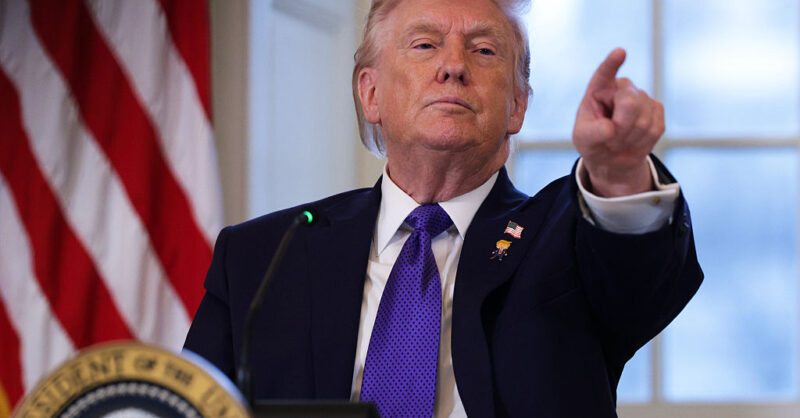
Every now and then in Britain’s relationship with America there come moments when the British government must stand its ground. What happens to Greenland has been correctly defined by Keir Starmer as one of these moments. Now that the Donald Trump White House appears to be considering the use of military force to acquire the territory, against the wishes of the Danish government and the people who live there, I fear we could be facing the breakup of Nato itself.
In principle, there is every reason for Denmark to bring the issue of Greenland’s defence to the highest council in Nato, involving the US, for a collective decision as to what is the best – short- and long-term – solution and I am glad initially the US Secretary of State Rubio is visiting Denmark next week. This issue cannot be handled in the same pre-emptory way as Venezuela. There is no question that Nato has not given enough attention to Greenland. It is highly possible that the US has serious grounds for believing that enemies of Nato see Greenland as vulnerable and a highly desirable strategic target. Not just Russia: China too is taking an ever-increasing interest in the navigable Northern Passage as the ice melts for ever longer periods, opening up a strategic and profitable trading route.
In many ways it is amazing that Nato has not taken an interest and position on Greenland earlier. The European members have been remiss in letting this issue become one of military significance without prioritising it in Nato decision making.
For some years now I have been worried at Nato’s lethargy – its creeping ideology of not rocking the boat by discussing sensitive and important issues. In the early years of Nato the regular meetings in Brussels dealt with matters of real substance and its representatives were very senior and wise people. Now, meetings of heads of state have become ritual showpieces. Discussions centre on the failure of European members to pay their share of the Nato budget, reinforcing America domination. Slowly and almost haphazardly Nato has been upstaged by unilateralism or bilateral discussion among strategic thinkers in a few capitals. To a very great extent the blame for that lies with Nato’s European members – and Bush and Blair’s adventurism in Iraq, which paid little or no regard for the views of other Nato members, let alone the UN Security Council.
New year, new read. Save 40% off an annual subscription this January.
Unfortunately, the damage was mostly felt in the UK. America was strong enough to be seen to have behaved badly but never faced real consequences. Britain, by contrast, did lose respect and power in Nato and has not regained it.
Regime change can never be ruled out but there are international bodies whose sole purpose is to try and achieve multinational agreement. Too frequently the UN Security Council is the last port of call for America with Britain and France acquiescing. Britain has over the years benefited from permanent membership of the Security Council. Historically that carried with it a responsibility to be seen by other friendly countries to be listening and learning from other nations. Britain and France used to be good at this, in our case with the Commonwealth, which had no formal position in the post-World War Two structures. Sensing this disparity we were at pains to consult Commonwealth countries. Our permanent representatives in New York were of high quality and their counsel respected in capitals. But that relationship has begun to hang in the balance as ministers act in advance of their consultation by going direct to Washington.
Venezuela presents a classic case of the need to forge agreement among many smaller countries which have interests and fears that need to be addressed. Modern methods of communication should make this easier. The world is getting smaller and issues like Venezuela have a far greater outreach than hitherto. The challenge is to rethink the world order and recognise that our forebears were right to forge effective international bodies for resolving the issues of peace and war in 1945. The US has not acted within that framework and that spirit. And it has failed to do so under many presidents, not just Donald Trump.
[Further reading: Clare Short: “There’s no place for people like me” in Starmer’s Labour]
Content from our partners
Related