Stop overintellectualising pop
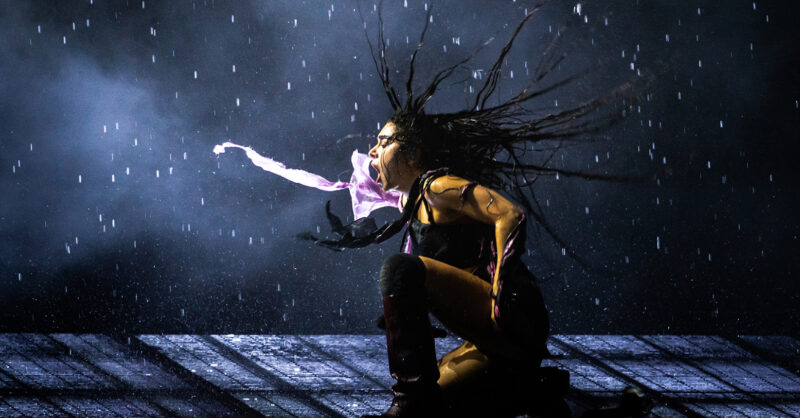
Mockumentaries work because they grasp something basic about fame: once a cultural object becomes visible enough, it begins to parody itself. Charli XCX’s new film, The Moment, released in the UK on 30 January, understands this instinctively. The film satirises the runaway success of Charli’s 2024 album, Brat, which escaped its maker almost as soon as it arrived, spawning memes, slogans, fashion cycles and political interpretations far beyond the album’s party-girl intimacy, its clubby hooks and sloppy glamour.
The joke is that very little needs exaggerating. The Moment doesn’t invent absurdity so much as rearrange what already happened. In real life, Kamala Harris’s presidential campaign briefly reorganised itself around Brat: campaign graphics dipped into Charli’s acidic lime green; the album’s typography appeared wholesale; “Brat summer” was floated as a mood of national renewal. Elsewhere, the album bled into themed club nights, corporate brand accounts, HR away days, wedding dress codes, airline departure-board memes and protest placards. Brat sold vodka sodas, sunscreen, tote bags and vague political optimism. I once saw it repurposed to display Bible verses at an anti-abortion protest. It became a floating template, an aesthetic plug-in for anything that wanted relevance for five minutes.
This is the world The Moment mocks: not fame itself, but the speed with which contemporary culture metabolises and redistributes it. Charli had already articulated this unease. In a Substack essay published last November, she wrote that when Brat became mass-market, for her it died. Catering to the commercial so that you make “something for everyone,” she argued, “is the moment that coolness dies.” It is a familiar complaint and not an unintelligent one. But it rests on a peculiarly modern faith in scarcity: the idea that art loses its charge the moment it becomes legible to too many people. Popularity, in this account, is a vulgarising force, to be widely loved is to have failed aesthetically.
Half a century earlier, Sylvia Plath imagined the same trajectory not as dilution but as apotheosis. Plath, who craved nothing less than world-altering, magnanimous fame, understood visibility as annihilation and seduction in equal measure. “Dying / is an art, like everything else/ I do it exceptionally well”, she wrote in Lady Lazarus, calling herself “the girl who wanted to be God.” Fame, for Plath, was never a compromise with commerce but a totalising ambition. She promised that for it she “would slave and slave and slave to get into those slicks”, the glossy magazines that represented, in mid-century America, the apex of cultural power.
New year, new read. Save 40% off an annual subscription this January.
That fame arrived only after her death. But a recent book, The Slicks, by Maggie Nelson, treats Plath’s ambition as seriously as her poetry, reading her as the metaphorical progenitor of the world’s most famous person: Taylor Swift. Nelson tangles Plath and Swift together into a defence of a certain kind of female excess. Swift is granted Plath’s poetic gravity; Plath is retroactively aligned with Swift’s industrial reach. The book is sharp and often compelling, but its insistence on binding two starkly divergent artists together reveals something anxious beneath the admiration.
Nelson’s move reflects a broader cultural reflex: the intellectualisation of pop in order to justify liking it. Where Charli mourns popularity as death, Nelson treats it as something that must be redeemed through seriousness. Taylor Swift, in Nelson’s argument, is not simply one of the most commercially successful artists in history; she is a poet, a myth-maker, a Plathian figure wrestling with authorship and death. Some of this may be true. But the effort to prove it – to drag Swift through the academy until she emerges respectable – betrays a discomfort with mass pleasure itself.
We are living through a boom in high-low cultural criticism. There’s a book by a Harvard professor on the “Poetic and Musical Genius of Taylor Swift”. Across Ivy League campuses there are classes on Swift and Beyoncé, a cursory JSTOR search will surface dissertations on the labour dynamics of The Real Housewives franchise, or essays arguing for the radical immigration politics of Emily in Paris. But it rests on the assumption that popularity is suspicious unless redeemed by gravity. Mass pleasure must either be mourned or explained.
This anxiety is disproportionately gendered. The cultural forms treated as most in need of rescue – pop music, celebrity, fandom, melodrama – are those historically associated with women, particularly young women. These are forms defined by excess, deemed too emotional, too commercial, too sincere. Intellectualisation becomes a kind of moral laundering, a way of saying: I don’t just like this, I understand it. Camille Paglia could write rhapsodically about Madonna as a pagan sex deity, Beyoncé must be framed as a feminist theorist, Swift as a confessional poet. The implication is not subtle: women’s pleasure is only legitimate once it looks like work.
Consider, by contrast, the world of sport. Male athletes achieve unimaginable levels of fame, conquering stadiums and continents. Fans buy merchandise, chant, weep, riot. This devotion is rarely subjected to the same anxious scrutiny. No one insists that football be justified through semiotics before it can be loved. There is something assumed to be primal, noble, about sporting allegiance. Its excesses and often violence is taken at face value.
Why then are Swifties different? Why must the love of pop be translated into the language of politics or poetic analysis to be taken seriously? In her recent documentary, The End of an Era, a shiny Disney+ vehicle, Swift frames her career as an act of deliberate overproduction: “I wanted to overwhelm them with how far I was going to push myself”. There is nothing coy here, nothing in need of metaphorical elevation. It is the naked logic of success.
The supposed “war” between Charli XCX and Swift is instructive precisely because it is so flimsy. Online, they are made to stand in for competing archetypes of excess: the hyper-popular mean girl and the quirky, diaristic ingénue. Who occupies which role shifts depending on the observer. Both are punished, and punish each other, in different ways, for scale. Charli mourns the death of cool at the hands of mass appeal, Swift is endlessly asked to justify hers. The Moment sits uneasily between these positions, both mocking mass visibility and conceding its threat.
Roland Barthes understood this dynamic long before Substack or X. In Mythologies, he wrote that “the cultural work done in the past by gods and epic sagas is now done by laundry-detergent commercials and comic-strip characters”. Popular forms, he argued, are not the enemy of meaning but its contemporary vehicle, and to dismiss them is undiscerning and nostalgic.
Perhaps the more interesting position now is simply to like what is popular without apology. To accept that mass pleasure can be shallow, contradictory, excessive and still worthwhile. We do not need Taylor Swift to be a great poet for her to matter. We do not need Charli XCX to remain obscure for her work to retain its charge. Sometimes it is enough to recognise the feeling something gives us, and to trust that this, too, is a form of meaning. The popular, like any pleasure, should not require our defence so much as our permission to let ourselves be moved without explanation.
[Further reading: God loves Lily Phillips]
Content from our partners
Related