“There is a 50-50 chance Iran will detonate a nuclear weapon within the next three years”
Departing for Islamabad on Friday (10 April) for negotiations with Iranian officials, JD Vance said he was optimistic about the path ahead. “I think it’s going to be positive,” the US vice president told reporters as he boarded his plane. “If the Iranians are willing to negotiate in good faith, we’re certainly willing to extend the open hand.” But even as talks began on Saturday, the fragile ceasefire between Iran and the US remained under threat. James Acton, co-director of the nuclear policy program at the Carnegie Endowment for International Peace, spoke to the New Statesman about how Tehran is likely to approach negotiations with the US, why Iranian officials believe they have significant leverage, and whether Iran could now make a dash for the bomb.
(The conversation has been lightly edited.)
Katie Stallard: Heading into negotiations between Iran and the US, who do you think has the better cards?
James Acton: The way you get leverage in a negotiation like this is by credibly threatening to go back to fighting, by making the threat that if you don’t give me a good enough deal here, the negotiation is over, and we’re going to go back to fighting. So, the question you have to ask, when it comes to the United States and Iran, is who is more willing to go back to fighting? In my opinion, that’s Iran, and it’s frankly not close.
Subscribe to the New Statesman today and save 75%
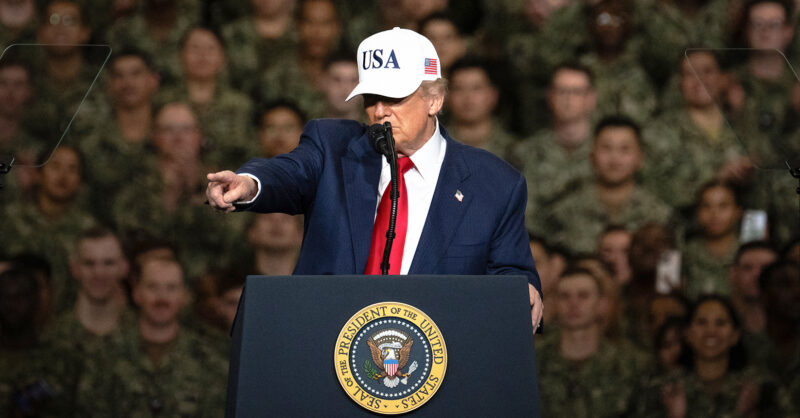
President Trump has indicated very clearly that he’s tired of this war. He has paid a big political cost for this war. I see no evidence whatsoever that he has any interest in going back to fighting. By contrast, I don’t think Iran wants to go back to fighting – this has been a very costly and damaging war – but the stakes are so much higher, they are existential for Iran, so I think Iran is willing to go back to fighting if it doesn’t get a good enough deal. I think Iran has more leverage than the United States right now, and we are likely to see that reflected in the way that negotiations proceed.
What are Iran’s demands in terms of the Strait of Hormuz, and how that should function from now on?
Iran is saying, in principle, that it is happy to reopen the strait, but at least some of the versions of the 10-point plan that has been floating around say that it wants a $2 million payment for every crude carrier going through the strait, or $1 for every barrel of oil. Given that some of the very large crude carriers can handle about 2 million barrels, that’s about $2 million [per tanker]. Iran has said it will accept payment in cryptocurrency, which is a way of avoiding US financial sanctions. So, this is a negotiation on Iran’s terms. It has demonstrated that it can close the Strait of Hormuz and the US has pretty much demonstrated it can’t reopen the strait, so that gives Iran quite profound leverage over this situation.
Now, the one thing I would say is that there is a real risk from an Iranian perspective of overplaying their hand. If they start to impose a toll, keep the strait closed for a prolonged period, the Gulf countries may start to look to alternative means of transporting crude, such as pipelines to other ports. That’s expensive, it’s time consuming, and it hasn’t been an attractive option before this closure, but post-closure, that may start to change.
What about Iran’s nuclear program – what do you think Iranian officials will hope to achieve from these negotiations on that front?
For me, this is the big question. The Trump administration’s position coming into this was, basically, that Iran needed to give up almost the entirety of its nuclear program. The public statements the US had made were unclear, and in some places contradictory, but it appeared to be that Iran had to give up all its enriched uranium stockpile, especially its highly enriched uranium, and it had to dismantle its facilities. So the US had a very maximalist position, which was not the position the Obama administration, for example, when it came to the Joint Comprehensive Plan of Action [JCPOA, aka the Iran Nuclear Deal [which was agreed in 2015, and Trump withdrew the US from in 2018].
Iran’s position going into this negotiation appears to be that the United States has to recognize their right to enrichment. Now, in practice, I think Iran may be more willing to compromise. The question is, how far are they willing to go, and my sense is the answer may be: not very far.
If the US could get Iran to agree to give up its highly enriched uranium, that would be an enormous success. I think they could have got that before this war. They are going to pay a much higher price for it now, and I’m skeptical they can achieve it, but I think a positive outcome I could imagine plausibly coming out of this is a limit on the level to which Iran enriches [uranium], for example, that it won’t go above 5 percent or above 20 percent. This was always the fundamental problem with withdrawing from the JCPOA – the idea that you were going to get a better deal was almost certainly not going to be true. If there is a deal, and I am by no means convinced there is going to be a deal, then I think it’s likely to be a lot worse than the JCPOA.
We talked last year after the strikes on Iran’s nuclear facilities about the fate of its stockpile of highly enriched uranium. Donald Trump has since said it is “nuclear dust”, essentially unretrievable, and that the US can monitor the site via satellites to make sure the Iranians do not attempt to dig it up. What is the most credible evidence as to where that material might be and whether it does remain accessible in some form?
The Iranian nuclear site at Isfahan has very deep tunnels beneath it, where most of Iran’s highly enriched uranium is believed to be stored, and they were too deep to be destroyed by the US and Israel. People might have an image of these tunnels collapsing on top of the cylinders of highly enriched uranium, which are now under tons and tons [of rubble]. Forget that. That is just wrong. The highly enriched uranium at Isfahan is sitting there, entirely un-squashed, in very deep tunnels. What the US did during the last war, and again during this war, was to attack the tunnel entrances. But Iran had buried the tunnel entrances preemptively, and if you cover the tunnel entrances with sand and dirt, it’s actually a very effective way of protecting them against being bombed. Bombing that is literally like pounding sand.
Digging technology is not very difficult, this is not cutting-edge technology. What Iran does have to worry about – and this is a fair point that Trump has made – is that the United States might detect that activity and then attack Iran. So, then you get into questions about whether we know where all the tunnel entrances are, and whether there are other underground facilities that Iran could tunnel from.
So they could potentially tunnel into those tunnels?
Exactly. So, there is potentially going to be a prolonged game of cat and mouse. There was some reporting before the war, for example, that Iran was building a centrifuge facility down there inside those Isfahan tunnels, so it wouldn’t have to move that highly enriched uranium. I have no idea whether that’s true or not, but if you don’t want to see the spread of nuclear weapons, the knowledge that there is a bunch of highly enriched uranium sitting in tunnels in Iran, not under safeguards or inspections, is an incredibly disquieting one.
What about the rest of Iran’s nuclear program, and the expertise and technological capabilities they have built up?
The strikes last June destroyed pretty much everything that could be destroyed, with the exception of their nuclear reactors, so much of the program has been destroyed, but not all of it. Iran had a big stockpile of centrifuge components prior to the June war. Those ceased to be under IAEA monitoring when the Iran deal collapsed, and I see no credible reports of attacks against centrifuge components, which is a big part of a reconstitution capability. There was one centrifuge production facility that I believe was destroyed last June, but others may have been too deep. There is a facility at Pickax Mountain, for example, which is deeply buried, beyond the range of US bombs, and we don’t have a clear sense of what goes on there.
Then you have the expertise. Israel has been killing Iranian scientists, but the number of Iranian technicians at a lower level who know how to do enrichment is very high. It is reprehensible, but I also don’t think it’s practical to go and kill all of them. You can certainly slow the program by killing scientists, but you don’t know exactly how many of them are left, and how many of them get trained again.
Overall, there is no question that the strikes were a setback to Iran’s nuclear program. The claim that the US and Israel have made that it would take years to build back is true, but also irrelevant. It would take years and years to build back a program of its previous size, but to build a bomb, Iran can have a much smaller program. I do think Iran still has a credible pathway towards a nuclear weapon, and that’s not 10 to 15 years away, that could be a much shorter period of time.
How short a period of time?
The first step that has to happen is for Iran to make the political decision [to build a nuclear weapon. They could just continue sitting on the threshold as a [nuclear] hedging state for a prolonged period. But if the new Ayatollah was to say, tomorrow I want the bomb – he may have said that already for all I know – I think Iran could certainly do it in a crash program, in say a year or two. The slower they went, the harder they could probably make it for the US to interdict.
If they are willing to try to dig a new tunnel from some unknown location into Isfahan, it’s harder to be interdicted, but it’s also slower, so there is a trade-off there. But I’ve said before that I think there is a 50-50 chance that Iran will detonate a nuclear weapon within the next three years, and I still stick by that estimate.
When you say a 50-50 chance that Iran detonates a nuclear weapon – presumably in a testing phase – within the next three years, what would be the rationale from Tehran’s perspective to cross that threshold and go all out for the bomb?
To deter future attacks. The United States doesn’t attack countries with nuclear weapons. Why do we leave North Korea largely alone? Why is there barely any discussion of military action against North Korea? Because North Korea has a nuclear weapon, or at least this is how it looks from the Iranian perspective. What happened to Saddam Hussein after he was forcibly disarmed? What happened to Gaddafi after he gave up his nuclear program? They both ended up dead.
Now, that is a bit simplistic in some ways. North Korea had a very potent threat to annihilate Seoul with artillery even before it had a nuclear weapon, for example, and you can criticize that picture. But I think it’s basically true, to be honest. I think the Iranian calculation is that if they have nuclear weapons, they can deter being hit, and they’ve been hit repeatedly over the last couple of years. To be clear, the Iranian regime is an evil and malicious regime. It’s not like I wanted them to get the immunity of having a nuclear shield, but if I were an Iranian advising the supreme leader, that’s what I’d tell him to do at this point.
What message does this send to other countries beyond Iran, including US allies, about the value of having nuclear weapons?
If Iran gets nukes, Saudi Arabia has said overtly it will get nukes. There have to be concerns about Egypt and Turkey. There is a very live debate now in South Korea about the acquisition of nuclear weapons. There is a debate in Europe about new states acquiring nuclear weapons, whether that’s Germany or Poland. All of those states, apart from Iran, are US friends to some degree or another. Many of them are treaty allies. The fundamental problem is not the attack against Iran, but their complete loss of confidence in the US as a security guarantor. When you are in a world in which the US president is threatening to invade allies – which he did to some extent with Canada and very seriously with Denmark, in the case of Greenland – it is very hard to see how the US is a credible security guarantor right now, and if it’s not, then allies are likely to think about acquiring nuclear weapons.
The other big problem is that the US can no longer credibly negotiate a non-proliferation agreement with an adversary. We did that with the JCPOA. It wasn’t a perfect agreement, but it was manifestly better than any plausible alternative, and the US intelligence community assessed that Iran was complying with that agreement. Then the Trump administration walked away from it. We were negotiating, twice, with Iran, and while those negotiations were ongoing, we attacked Iran on two occasions. Who is going to negotiate a nonproliferation agreement with us? The US cannot credibly commit to maintaining its side of an agreement. Even if you have something like the Obama administration, that was clearly acting in good faith and negotiated a good agreement, then you have a change in government and then the next administration just tosses it all out of the window.
[Further reading: After Iran, America may turn against Israel]
Content from our partners
Related