How Paris’s mayor helped the city breathe again
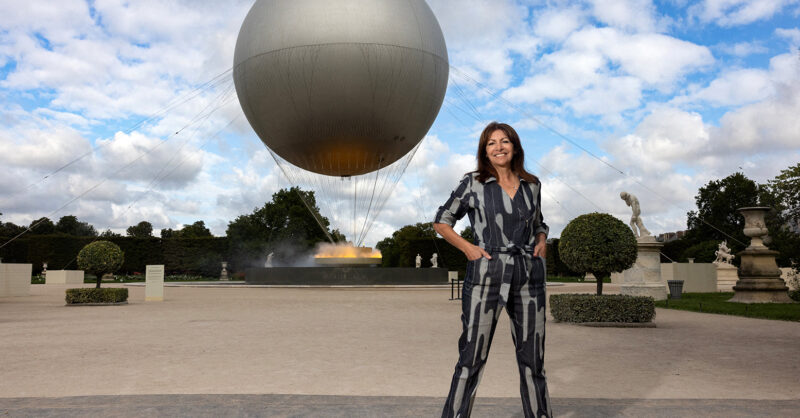
Moving through Paris on two wheels is not always a pleasant experience: Parisian cyclists can be aggressive and rude, and e-bikes regularly speed through red lights and zebra crossings. Mayor Anne Hidalgo has led a cycling revolution in the French capital, but some say the transformation has been too quick and disorganised. “Public space in Paris is chaos,” right-winger Rachida Dati said recently as she campaigned to succeed Hidalgo in mayoral elections. Dati’s proposals for the city include making it cheaper to park and getting rid of the low-emission zone in the city centre.
Yet Hidalgo’s push to rid Paris of cars has been celebrated around the world. And in the first round of the mayoral elections last Sunday – which are largely seen as a referendum on her bold mobility measures – it was clear her transformation of Paris retains strong public support. Emmanuel Grégoire, her former deputy and leader of a coalition of Socialists, Greens and other left-wing parties – emerged as the clear front-runner with 38 per cent of the vote. Dati did worse than expected, coming in second place with 25 per cent. The two will face each other in a second round of voting on Sunday (22 March) alongside far-left La France Insoumise candidate Sophia Chikirou.
A decade ago, getting around Paris on a bike required fighting for space on busy car lanes and breathing in fumes. Today, you can ride across the city almost entirely on bike lanes. In her two terms as mayor, Hidalgo has added over 1,000 km of cycling infrastructure and today more journeys are made by bike than by car. Parents taking their kids to school on cargo bikes, something previously associated with cities like Copenhagen or Amsterdam, have become a familiar sight. “The City of Lights has become the City of Bikes!,” reads the latest Copenhagenize Index, an evidence-based benchmark tracking how cities have “progressed to making cycling safe, convenient and mainstream”.
The truth is only a minority of Parisians wants to go back to a car-dominated city – and Hidalgo’s opponents know this. Despite being one of the car-friendly candidates, Dati said she will not get rid of bicycle lanes. She has also said she will not reopen the roads along the riverbanks – which Hidalgo turned into a vast pedestrian area in 2018 against much push-back – to cars either. Sarah Knafo, the far-right candidate for Reconquête, who came in fifth with 10 per cent of the vote – proposed building over the promenade along the Seine. Her proposal, estimated at €176m, involved constructing a raised promenade that would allow cars back onto the roadway without reducing pedestrian space, in what appeared to many as an admission that cycling and walking are, in fact, Parisians’ preferred way of getting around. Even the candidate for the Rassemblement National, Thierry Mariani, had to soften his approach.
Subscribe to the New Statesman today and save 75%
Parisians have realised that, in dense European cities, freeing up space dedicated to cars is necessary to improve quality of life. Hidalgo pushed her radical measures through fierce opposition, making entire neighbourhoods more pedestrian-friendly, banning heavily polluting diesel cars, and raising parking fees for SUVs. The pandemic and the Olympics helped speed things up, and one advantage of making these changes so quickly is that the memory of a greyer, noisier and more polluted Paris is still relatively fresh in people’s minds. In the past decade, air pollution has decreased by an average of 40 per cent, according to Airparif. And although this may not be solely thanks to her measures, their impact is undeniable.
Painting a picture of a credible alternative to this transformed Paris has proved challenging for opponents. Dati has promised cheap parking while also saying she would make traffic “more fluid”. But traffic and congestion have actually been falling since 2021, and Paris is no longer the most congested city in France. Just a year ago, Hidalgo pushed ahead with a controversial reduction of the speed limit on the péripherique or ring road to 50km/h, which right-wing candidates plan to reverse. Studies have shown that it has led to significant decreases in traffic congestion and accidents, as well as a reduction in noise pollution.
The case for cars makes less and less sense in a city where only about a third of households own one. While complaints have come from those driving in from the less well-connected suburbs, the city and broader region’s public transport system is also improving fast. Metro and train tickets are now cheaper for those travelling longer distances across the Greater Paris region, and an extended metro line connecting to Orly airport opened in 2024. Steps have been taken to improve road safety, too. In 2023, Paris became the first European capital to ban rented electric scooters when these became too dangerous.
Dati still has a chance in the second round of voting on Sunday. She has reached an agreement with Macron’s candidate, Jean-Yves Bournazel, while Knafo has stepped down and called on voters to prevent the left from retaining power in the capital. On Monday, Jordan Bardella also called to vote for Dati in the second round. “Paris needs to break free from the municipal socialism that has plunged this city into insecurity, traffic jams and financial mismanagement,” he said.
But without a defined mobility strategy, it is unclear what Dati is asking Parisians to vote for. The timing of this election might also work in Grégoire’s favour. As spring arrives, traffic is more likely to be found on bicycle lanes than on roads; people are flooding the pedestrianised riverbanks and will soon fill the café terraces that replace parking spaces for several months a year. In the Paris of 2026, car-free streets feel less like a policy experiment and more like a defining feature of the city.
[Further reading: Tucker Carlson vs Donald Trump]
Content from our partners
Related