America's liberal stronghold wastes $8m on electric buses that freeze in the cold
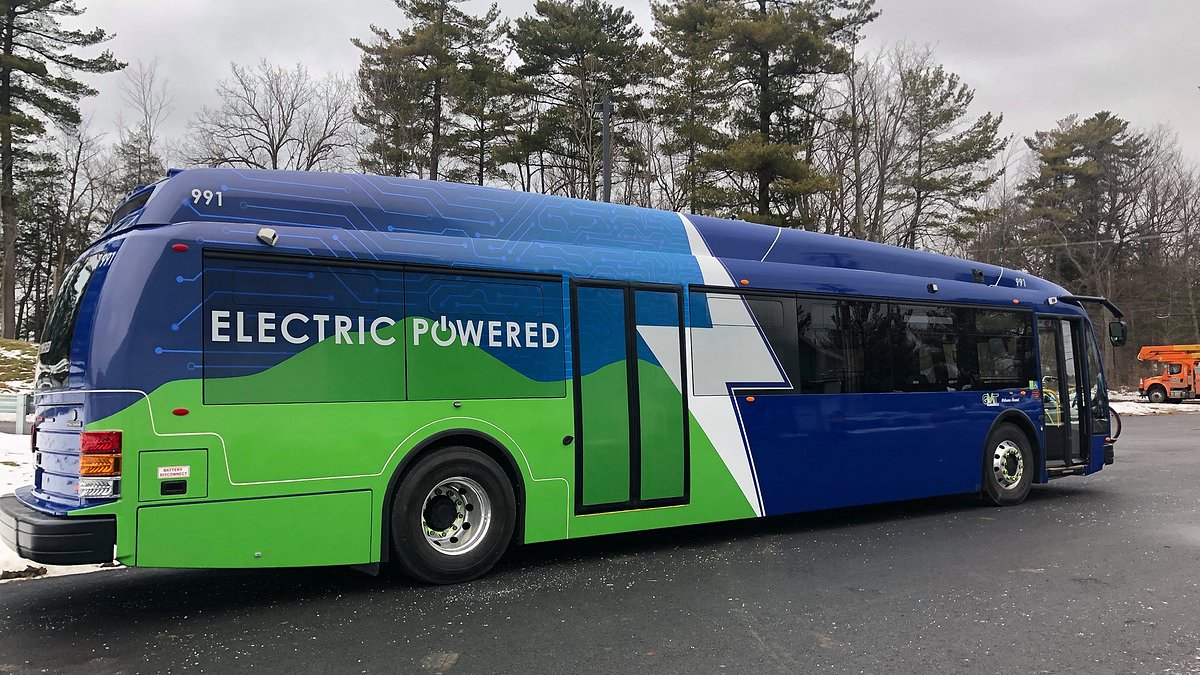
Vermont's push to make its cities eco-friendly and carbon-free has met with disaster as officials have just found their new fleet of electric buses cannot run in the cold. An $8.1 million project by Green Mountain Transit (GMT), the public transportation agency serving Burlington and surrounding areas, has gone bust. All five EV buses were deemed a fire hazard and unable to hold a charge in Vermont's frigid winters.The new buses have now been parked outdoors, out of service, and covered in snow thanks to issues with the welding in the battery components that could lead to overheating and a potential explosion.Moreover, the manufacturer of the buses, New Flyer, has said that the defective batteries will need to be replaced, but a fix for the Vermont fleet could take up to two years to complete. As of 2024, GMT was providing 2.7 million rides annually in Vermont's Chittenden County, which includes major cities like Burlington and Colchester. Over the last year, residents relied on GMT for roughly 7,300 rides each day. Vermont has been a Democratic stronghold for decades, voting 'blue' in every presidential election since 1992. The state's senior US senator, Bernie Sanders, has been a major advocate for radical changes to America's energy policies, aimed at combating climate change and ending the use of fossil fuels.'Vermonter here - we are governed by the stupidest people in the nation,' one local resident posted online.'Stupidity reigns supreme in Congress. So much money has been wasted to support EV in areas where it just was not a good idea,' another critic wrote. A Green Mountain Transit electric bus used in Vermont. The entire fleet of these is now unable to drive because their batteries are unable to charge in the coldCritics have continued to slam Vermont's green initiatives that target greenhouse emissions and carbon footprints across the state, noting that local emissions have actually gone up over the last two decades while the rest of the US has gone down.Larry Behrens, the spokesman for energy workers advocacy group Power the Future, told the Center Square: 'Taxpayers were sold an $8 million "solution" that can’t operate in cold weather when the home for these buses is in New England.'Until the batteries are replaced, New Flyer issued a software update that limits charging. Each bus battery can now only charge up to 75 percent capacity and only when the temperature is above 41 degrees Fahrenheit. Here is the problem: an extremely cold winter across New England has led to very few days that have even been above freezing.In fact, Burlington has only had eight days with a recorded high temperature at 41 degrees or higher since December 1, 2025, according to AccuWeather.Vermont unveiled the EV buses in the summer of 2024 in a push to use state and federal grant money to combat climate change and meet local lawmakers' vision of reducing carbon emissions.However, one cold winter has put the entire taxpayer-funded project on ice, and GMT's own executives have said they're struggling to find enough buses to keep service going for commuters.GMT General Manager Clayton Clark told the Vermont Daily Chronicle: 'It’s been literally down to our last bus, where if we have another bus that breaks or some other accident that happens, you know, we would have to start canceling service.'Join the debateShould taxpayers be footing the bill for green projects that fail in real-world conditions? US Senator Bernie Sanders (Pictured) has granted his state millions in funds aimed at fighting climate change, including converting to EV buses which cannot run in the coldRead More Top MIT scientist blasts 'climate hysteria,' says global warming fears are driven by money Due to the potential for electric buses to catch fire, Clark added that GMT cannot even keep them in their garage because the public transportation company does not have the proper fire safety equipment to handle this type of blaze.The problem with the five electric buses stems from their batteries being recalled in November 2025 due to a manufacturing defect that can cause the power cells to rupture and ignite.The batteries can overheat because a key metal connector inside, called a busbar, was not welded strongly enough during manufacturing. Over time, this weak spot can break apart or separate slightly, causing sparks and building up dangerous heat right at that spot.That heat can then spread and damage nearby parts of the battery, causing a 'thermal runaway,' where the battery experiences uncontrolled heating, potentially leading to smoke, fire, or in extreme cases, a fiery explosion.Multiple scientific studies have noted that electric vehicles struggle to perform at the same level they do in the summer months or in warmer regions where snow is rare.A 2025 report in the journal Energy Conversion and Management revealed that EVs were unreliable for cold-weather areas because their batteries age up to three percent faster each year - shortening their lifespan.In very cold weather, EVs were also found to use a lot more electricity per trip than they do in mild or warm weather, using an extra 4.5 to 17kilowatt-hours (kWh) of energy for the same distance driven - raising their carbon footprint. Green Mountain Transit has been forced to turn back to diesel buses, which the state's green initiative tried to phase outDespite Vermont being known as a major winter destination for skiers and snowboarders, officials in the heavily left-leaning state started the phasing out of diesel-powered public transportation in 2019. Six years ago, Sanders announced a $3million grant to kickstart the switch to electric buses, stating it would help Vermont reduce local air pollution, improve public health, and combat climate change.In 2020, Governor Phil Scott claimed: 'We know nearly half of the emissions that contribute to climate change come from the transportation sector, which is why efforts like this are so important.' However, the embarrassing bus problems have drawn fierce backlash and mockery from critics who claim politicians put green initiatives and climate change advocacy ahead of common sense engineering in the annually snowy state.