Is Bridget Phillipson really the most dangerous woman in Britain?
At St Andrew the Apostle secondary school in Barnet, north London, the pupils are doing my job for me. In an austerely tidy classroom, Bridget Phillipson answers questions from the student council, the words seeming to come to her almost without her registering them. What are the qualities of a good leader? “A healthy dose of humility,” she says. Respect for others. Being a team player. Who is her political hero? Marion Phillips, Sunderland’s first female MP, from the 1920s. What qualifications do you need to enter parliament? “You have to be 18,” she says, deadpan. “That’s about it.”
But then a teenage girl raises her hand: what three pieces of advice would you give to your 16-year-old self? It is the first time I have seen the Education Secretary even briefly at a loss. She casts her eyes down. Silence. She can’t think of three, she answers, finally, but there’s one: “Don’t question your own abilities; other people will do that for you.”
Phillipson has certainly faced her critics since she entered the Department for Education in July 2024. In October that year, when Labour’s manifesto promise to remove the VAT exemption on private-school fees was confirmed in the Budget, she was likened to a Nazi by members of a campaign group opposing the plans. The Children’s Wellbeing and Schools Bill, introduced to parliament two months later, drew a level of opprobrium that seemed to surprise No 10, including from the high-profile headteacher Katharine Birbalsingh, who derided Phillipson not as a Nazi, but a “Marxist”. The bill’s changes, which include requirements that academies follow the national curriculum and that their teachers be qualified (or working towards being so), were widely interpreted as an attack on Michael Gove’s legacy and even, to some, Tony Blair’s.
Then, in November last year, the final report of the Curriculum and Assessment Review Phillipson commissioned on entering office was published. Its recommendations included returning to a broader curriculum, with a universal entitlement to arts subjects, and the scrapping of the English baccalaureate – changes that were, again, considered a rebuke to Gove. For these and other challenges to the consensus that has emerged around the Conservatives’ education record, Phillipson has been labelled an enemy of progress who wants to cut down the tall poppies rather than help them grow. The Telegraph says she may be “the most dangerous person in government”; the Mail considers her “the most dangerous education secretary in living memory”.
Subscribe to the New Statesman today for only £1 a week.
She suffered another setback in October when she lost the deputy leadership race – in which she was widely seen as a No 10 stooge – to Lucy Powell. Phillipson and Keir Starmer are close allies. In a period of acute briefing against her last year, he reached out to reassure her that her job was safe. And on 9 February, as pressure mounted on the Prime Minister to resign over the appointment of Peter Mandelson, Phillipson volunteered to support him on the media round. (She was “extremely keen” to do so, a Labour figure says.)
Next, Phillipson faces two even more toxic challenges, the outcome of which will make or break her political career, and perhaps that of the government. First, the long-awaited schools white paper, delayed since last autumn, is expected in the coming days. Its most difficult proposals, reforms to special educational needs (Send) provision, have been months in the making: the result of painstaking work consulting across the sector and trying to build support among Labour MPs to avoid a welfare bill-style rebellion that could threaten the Prime Minister’s fragile grip on power. As the white paper’s release draws nearer, the briefing against her continues to intensify.
Second, as Women and Equalities Minister, Phillipson is responsible for delivering guidance on how organisations implement the Supreme Court’s ruling that, for the purposes of the Equality Act, a woman is defined by biological sex. Nearly a year after the decision, businesses and services are still operating under a code of practice last updated in 2011. Pressure is mounting on Phillipson to deliver its replacement – and fast. Anas Sarwar, the Scottish Labour leader, has pledged to ban trans women from female prisons “within days” if he wins the Holyrood election in May.
After an embattled 18 months, marred by scandal, U-turns and rebellion, Labour is on the brink. If Phillipson can steer through Send reform and the trans guidance, she could restore a sense of strength and confidence about this government – and perhaps even give it a sense of purpose. If she cannot, she risks becoming an emblem for a government that has neither a coherent vision nor the ability to communicate it; at once loathed and without the radicalism to justify such loathing. On Send reform in particular, the timing is crucial: Labour’s performance in the local elections in May could end Starmer’s premiership.
But who is the woman at the heart of these challenges – and what does she want? Is she a radical reformer, intent on ripping up the legacy of the Gove era to set a path of her own? Or is she a more conservative figure, seeking sensible tweaks to the system she inherited? Does she – and the government more widely – know which she wants to be? Most importantly, perhaps, can she grip the challenges ahead with enough strength to save Keir Starmer’s faltering government, before time and the last vestiges of goodwill run out?
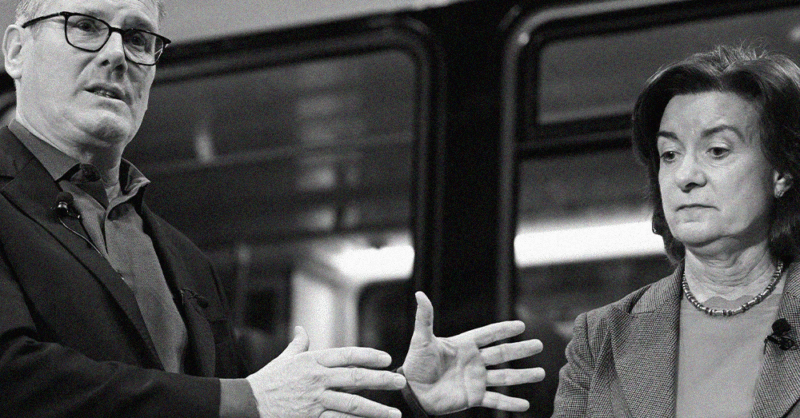
Photo by Justin Tallis/Pool Photo via AP
Waverley School, in Enfield, north London, provides a specialist setting for children aged three to 19 with severe learning difficulties. Here, education sometimes looks more like care. As in any primary school, brightly coloured coats on hooks line the walls, but there are neat rows of wheelchairs too. The needs of Waverley’s pupils are a world away from headlines about over-diagnosis and ADHD: many of them will never walk or talk. In one classroom, staff entertain pupils by filling the air with fake foam. In another, a teacher sings “The Grand Old Duke of York” while children slap out their own rhythms. I observe as Phillipson takes it all in quietly, watchful.
I am struck, as we tour the school, by how straight and still she holds herself, as if a ballet dancer at the barre. She wears what I come to recognise, over our several meetings in the following months, as her uniform: a smart, fitted work-dress, a blazer, patent heels. Her make-up is neat, her fingernails unpainted. As she walks ahead, talking softly with the headteacher, she periodically taps the index finger of her right hand against the pad of her thumb – a rare involuntary movement from a woman who is otherwise remarkably controlled.
Around two thirds of state schools like Waverley are operating over capacity. In 2014, under Gove, the Children and Families Act transformed the way children with Send are identified and supported. Its intentions were to improve coordination across schools, the NHS and social care and, through the creation of education, health and care plans (EHCPs), to establish legal duties for local authorities to provide support. But as school budgets and surrounding services were cut, capacity to accommodate less serious or undiagnosed needs fell, meaning more parents sought an EHCP to get help. The system effectively incentivised diagnosis. “I think parents have increasingly seen [an EHCP] as the means by which they will get the support for their child that they need because they don’t feel their child’s needs are otherwise being met,” Phillipson tells me.
In the past decade, the number of children with an EHCP has doubled, so that in the academic year 2024-25, 5 per cent of pupils in England had one. That same year, more than 1.2 million children who did not have an EHCP were identified as receiving Send support, some 14 per cent of all pupils. The rise in EHCP numbers does not reflect a rise in severe or medical needs – such as those catered for at Waverley – but an increase in autism spectrum disorder (ASD), speech and language needs, and social and mental health needs (including ADHD). It is a trend mirrored in high-income countries across the world.
Phillipson believes that part of the picture is an “overdue recognition” of conditions such as autism: “That’s a good thing,” she says. But the medical and educational establishment cannot agree on whether this alone explains the rise. Last March, the Health Secretary, Wes Streeting, lent his support to the idea that certain conditions are being “over-diagnosed”, but later rowed back. It is possible that the prevalence of conditions such as ASD is indeed rising, with mooted causes ranging from air pollution to older parents. There is also concern about a possible connection between screentime and behavioural problems.
When we talk about Australia’s ban on social media for under-16s, Phillipson expresses worry about the “amount of time that young children are spending on screens, and the potential damage… that can cause around children’s communication skills and relationships”. Some studies have found a positive correlation between screentime and ADHD risk. Phillipson believes the UK should consider how an Australian-style ban might work, and suggests that it could be introduced in a phased manner, as with the smoking ban. “There’s a question of how you draw the parameters and whether we might consider a phasing-in rather than a drop-dead point.”
Whatever the cause of rising need, the state system was unprepared to deal with the demand, and the private sector stepped in. Since 2014, there has been a 132 per cent increase in the number of children placed in independent specialist schools, costing local government £1.4bn in 2023-24. Phillipson considers this “a totally shocking rise in the private-equity-backed independent special school sector”. Many of these schools charge fees equivalent to the most expensive boarding schools in Britain. Some such providers, Phillipson says, “see vulnerable children as a means to a profit”. The New Statesman understands the government will impose a price cap on independent specialist provision, as part of the reforms outlined in the white paper. (A similar cap on children’s social care providers, this time on profits, was proposed in the schools bill.) But if it leads to school closures, there will be backlash from parents of displaced children.
Phillipson is aware how dangerous Send reform could be to her own career and to the government. As with the attempt to reform disability benefits, there is discomfort among Labour MPs about any changes that would reduce provision. Many – including Angela Rayner and the Chancellor’s sister, Ellie Reeves – have personal experience of how difficult it can be to access Send support for their own children. Phillipson says the Times report that No 10 has instructed Streeting to help steer the reforms through parliament is “overblown”. Given the crossover with health, she says, they have worked closely together on the plans, but “I’m obviously leading” on the white paper.
However, the challenge facing the government is significant. Though state funding for children with high needs rose more than 50 per cent in real terms between 2015-16 and 2024-25, it has not kept pace with the cost of rising need. Local authorities have accumulated huge Send deficits, totalling £3.2bn. An accounting fudge has temporarily kept these deficits off council budgets. Last October, Rachel Reeves confirmed that the cost of provision will move to central government balance sheets from March 2028, by which point, the Office for Budget Responsibility predicts, the deficit will be £14bn. The Treasury has said this cost will be spread across departments, rather than coming out of schools’ budgets. This month it was announced that central government would also write off 90 per cent of the Send deficits councils have accrued by 2025-26, at an estimated cost of £5bn.
Despite these figures, results for children with Send have not improved. Among children with EHCPs who finished primary school in 2022-23, only 8 per cent achieved the expected level of reading, writing and maths – the same percentage as 2016-17. By the end of secondary school, the attainment gap between a child with an EHCP and their peers without Send is more than three years. “There’s been a lot of discussion about the numbers and the money,” Phillipson says, “but if money were no object, we would still need to change the system to make it better. It’s just not working.”
Phillipson not only believes the system isn’t working, but that it is wrong in approach. She wants needs to be met fully and sooner – but also, crucially, more children to be supported within mainstream schools. In the 1990s, government and expert opinion was aligned: as much as possible, all children should learn together in mainstream settings. But today, more pupils with EHCPs are placed in specialist schools than educated alongside their peers. This shift occurred in part, Phillipson says, because, under the Conservatives, Send was thought of as “entirely separate” from schools.But“Send is not something that is separate or for some children”, she tells me. “This is about the diversity of children within all of our communities, in our schools. And if we’re not addressing that as a whole school-wide and a whole system-wide issue, then it’s not going to work.”
Phillipson’s frustration with the system, then, is not merely technocratic, but ideological. She believes that where possible children should be taught together, not divided based on diagnosis or, indeed, wealth. “We have to ask ourselves profound questions about why we’ve seen a very rapid increase in the number of children in specialist provision: what is it about the school system that is not delivering for more children?” she says. “And what does it say about the direction we’ve been [taking] in recent years that we think increasingly children should be in special provision, away from their friends and their neighbours?”
Phillipson declines to answer whether she plans to change the legal rights of those who already have EHCPs, or tighten the criteria to get one in future. She stresses that she’s “heard loud and clear” that parents consider EHCPs “an important protection”. “This is going to be a transition over many years… It’s about earlier and better support for children, not about taking away effective support.”
The white paper will lay out Phillipson’s plans to reverse the trend towards specialist settings and build provision in mainstream schools. She believes “the evidence is clear” that, in such settings, children with Send “get better outcomes”. The government has already announced £3bn for 50,000 new Send places in mainstream schools, and a further £200m for teachers to receive Send training. “Some children will always need specialist provision,” Phillipson says, “but we should be better at meeting children’s needs within mainstream schools.” Phillipson’s goal is a return to comprehensive education.
In this sense, at least, her proposals are the direct challenge to Gove’s legacy that many on the right claim. Phillipson does not hide her frustration at the Westminster orthodoxy that has emerged around the Conservative Party’s education legacy: that Gove’s school reforms were a universal success, and that to change them is to imperil England’s children. Yet, according to the international Pisa scores – which assess pupil attainment across different countries – performance has not been as impressive as the Tories often claim. In maths and reading, scores rose between 2009 and 2018, before falling to near-2009 levels in 2022, in part because of the pandemic. Over the same period, performance in science declined.
The Pisa scores also show that the attainment gap has not shifted in a meaningful way since 2010: England’s latest results show an 85-point difference in maths between the most and least disadvantaged, and 82 in reading. “The Tories might talk a good game on high standards,” Phillipson says, “but you can’t claim you’ve got a system of high standards if it’s a system that sees poor outcomes for a significant minority of children, whether that’s children with Send [or] white working-class kids.” The white paper is expected to announce two regional interventions, in the style of Labour’s early-2ooos London Challenge, focused on outcomes for white working-class children in the north-east and in coastal communities.
She believes Gove’s mistake was “to see schools as islands”: to think you could reduce support in other areas of family life – such as Sure Start – and imagine the impact wouldn’t be felt in classrooms. “We can have the best teachers in the world,” she says, “but if they’re having to spend their time picking up the cost of wider societal failure… children won’t achieve all that they should.”
In 2010, Gove took New Labour’s academies programme – intended to turn around underperforming schools by giving them autonomy from local authority control – and expanded it, so that high-performing schools could convert. The result was that today, more than 80 per cent of secondaries and nearly half of primaries are academies. But the Conservatives were, Phillipson thinks, “too complacent” in thinking that, if you intervene structurally, “your problems are solved”. Academisation “hasn’t worked in every school”.
She considers the changes in the schools bill “relatively modest”. “But I guess the Tories jealously guard their apparently brilliant record on education, and therefore any suggestion that there were problems and that not everything was working well was always likely to gain some kind of response,” she says.
What she finds frustrating about the criticism of her reforms, and of the schools bill in particular, is the idea that they are “somehow going against… a 30-year consensus or a 20-year consensus on education reform, which is a completely ahistorical view”. She does not accept that she must tread carefully around the Tory education reforms. Gove, she says, did not enter the education department and say, “‘Well, that Labour government, they did a fantastic job, all I need to do is carry on some of their reforms.’ He came in and completely upended a lot of what had been working.”
The national curriculum, for instance, was “meant to be a core entitlement for every child to make sure we didn’t see huge variation” between schools. Phillipson, who was five when it was rolled out, considers herself a beneficiary. Given that the national curriculum was introduced by Margaret Thatcher’s government, she thinks it ironic that “the Tories were vociferous in their opposition to the modest shift that we’re bringing around making sure [it] will apply in every school”.
It was Gove, she says, who abandoned the decades-long, cross-party agreement she is seeking to reassert – that “teachers should be qualified, the national curriculum should apply in every school”. She might well have added: that children with Send are educated alongside their peers in mainstream classrooms. Here, she begins to sound less like a radical reformer, and more like a conservative, or perhaps a nostalgist, looking backwards, seeking to revive an older model of state education.
Phillipson is walking towards me along the street in Washington, near Sunderland, where she grew up. The row of neat, redbrick terraces looks modern and well-presented now, sitting opposite a newbuild development. But when she was a child in the Eighties, Phillipson, now 42, says, they looked out on to a disused factory. Joyriders would race along the freight line at the end of the road, before dumping the cars.
Phillipson’s childhood was happy, but poor. Her mother was a single parent and couldn’t return to work until Phillipson started school. Despite the support of Phillipson’s maternal grandparents, who lived nearby, money was tight. At one point a neighbour posted money through the letterbox so her mother could buy her a coat. Phillipson was a shy child, so quiet “people used to think: did I just not really talk?” Her mother enrolled her in drama classes, to help build her confidence; this was how she ended up as an extra on Byker Grove.
Much of this story has become common knowledge in Westminster. Less well known is the story of Phillipson’s father, who left her mother when she was pregnant. Though he continued to work nearby as a teacher, he provided no financial support and never sought to meet his daughter. He died while Phillipson was at university. “I didn’t feel I lost out as a result.” She shrugs it off, a little too briskly. “He made that decision, he was an adult: not much I can do about that.” Gove, the man Phillipson has become defined against, was also rejected by a parent: given up for adoption by his mother as a baby.
Despite an apparent dispassion about her father’s absence, she admits she “did feel a sense of, as I got older… anger, frankly, that someone – an adult– could behave in such an irresponsible way: not least… because he was an otherwise responsible individual”.
Both Phillipson’s father and her maternal grandparents were Irish. This is, she says, an important part of her identity. She attended church with her grandparents and played violin in the folk band. Phillipson is not a practising Catholic, but she sees a strong alignment between the Church’s teaching and her Labour values: “The sense of social justice, about the value and worth in every individual, and a focus on alleviation of poverty both home and abroad.” She wears a small, Celtic-style crucifix around her neck.
Her mother, Clare, is a “formidable character with strong views”, as Phillipson put it to me, “a real fighter and campaigner”. Clare, less conventional than her daughter, left school at 15. She joined Labour in the late Seventies, around the time she became involved in the women’s movement. Through a local women’s group, she and her friends “discovered the extent to which women were facing violence in the home”. In 1983 – the year Bridget was born – Clare, aged 26, and others founded Wearside Women in Need, a domestic abuse charity. Once Phillipson started school, Clare took a paid job at the charity, which expanded to run multiple refuges. “She did lots of work with the council, with the police… shifting the culture around the understanding about violence against women in a time when it was still legal to rape your wife,” Phillipson says.
As we walk through Washington, Phillipson points out the old Miners’ Welfare Hall, where, as a child, she attended Labour meetings with her mother. Phillipson would play under the table, or out the front with her bike. Her mother is clearly a great inspiration in her life. At 15, she followed her into the Labour Party, and later became co-chair of the Labour Club at Oxford, where she read modern history. She was, she says, “quite bloody-minded” about being an outsider at university. “I always felt that I had just as much right to be there as anybody else. I’d worked hard, I was just as able as anyone and made the most of it.” This is a sense shared by much of the cabinet – the most working-class and state-educated ever.
Looking back, a career in Westminster looked certain: Phillipson, a social mobility poster-child of Blairite Britain, born and raised in poverty, state-educated, on to Oxford, and from there to whatever high-powered job in London she wanted. Only, the Education Secretary didn’t move to London after university. She went home to Washington, working first at Sunderland City Council, and then at a refuge run by Wearside Women in Need.
She says it was “an extraordinary privilege to be able to… help women and children at their most difficult time”. She describes not just the violence that many of these women had faced but the judgement, “sometimes by the people that were in their lives who were meant to be there to help them, and the lack of understanding that they’d experienced”. Even today, she says, “women are blamed for male violence, or [are] not supported around their parenting in the way that they should be”.
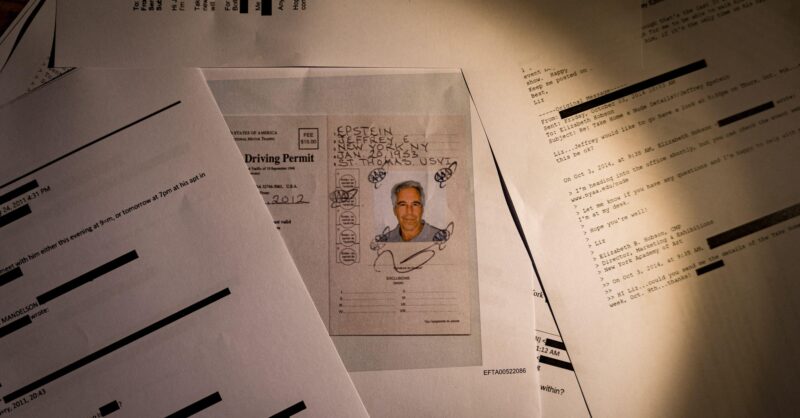
The Epstein scandal, she says, “sadly confirms what lots of women have always known, about how some men in positions of power and authority will behave when they think no one’s watching”. There are many more women still who suffer at the hands of other abusers who are “never brought to justice”. In 2009, she reflects, at the time Mandelson and Epstein were in frequent correspondence, she was running the refuge, and Starmer was director of public prosecutions, “focused on delivering a criminal justice system that better served victims”. The Prime Minister was right to apologise for appointing Mandelson, she says, but she feels “in all of this, we’re losing sight of the people who’ve been so badly harmed… by a clear network of very powerful men”.
Her time at the refuge inevitably informs her view on women’s right to single-sex spaces. “I’ve always believed that women deserve and have a right to services on the basis of sex,” Phillipson tells me, “and that does mean biological sex. After women have experienced appalling violence, sexual violence, from men… they deserve the time and space to be able to heal properly. The service that I ran was for women only; we could provide other options for trans women, but accommodation services had to be on the basis of biology.”
Phillipson’s views on the necessity of those single-sex spaces should make her an ally to gender-critical feminists such as JK Rowling. She tells me she is “a big fan” of Rowling’s work: “I’ve spent a lot of time reading Harry Potter over the years with my kids. I think she’s clearly a phenomenal writer, she’s a phenomenal campaigner, and the reason she cares so deeply about this issue is because of her own personal experiences. That’s why lots of women feel strongly about it: because we know how important it is to have access to spaces that are just for women.”
Yet last December, Rowling tweeted that the Education Secretary and others “determined to push their unfalsifiable ideas about gender on to the whole of society… will rightly be judged by history as having enabled harm to women and girls in service of a dangerous, quasi-religious ideology”.
The hostility Phillipson attracts on this subject is due, at least in part, to the time it has taken to approve the new Equality and Human Rights Commission (EHRC) code of practice. The guidance concerns how the Supreme Court ruling that a woman is defined by biological sex under equalities law is implemented by businesses and services. In September, the EHRC submitted its draft to Phillipson for approval, which five months later has yet to be granted. In the meantime, businesses following the guidelines promoted by LGBTQ+ organisations such as Stonewall – which recommend opening women’s spaces to anyone who identifies as a woman – may be breaking the law. Kishwer Falkner, who was, until last November, the chair of the EHRC, has been openly critical of the apparent delay, accusing the government of being “terrified of their MPs who would wish for trans self-identification or trans inclusion to prevail across all areas of society”.
In November, Phillipson concluded consultation with the devolved governments. Now the guidance sits with her “to go through it thoroughly and properly”. In this, she has the full confidence of No 10. Phillipson sees the Supreme Court’s ruling as “straightforward”, “but the [court] also said that the ruling should not be seen as the triumph of one group over another. And they did assert – and it is still the case – that trans people continue to have protections in law under the Equality Act.” This is a conflict inherent to the title of her “women and equalities” brief – the rights of one group can limit those of another.
Phillipson says accusations that the guidance is delayed are “flat-out wrong”. When I ask about the sticking points, she declines to share details. “There’s a process to follow. I’m moving as fast as I can, but there have been some challenges along the way, because of the approach taken by the previous leadership of the EHRC, and that’s made it harder than it should have been.” Under Mary-Ann Stephenson, who took over from Falkner as chair at the end of last year, there has been a change of approach. Stephenson, the government’s preferred candidate, was appointed despite the objections of two parliamentary committees, which lauded her women’s rights credentials but questioned her understanding of “issues facing groups with other protected characteristics”. Stephenson is reportedly more open to listening to concerns about the code’s practical implementation, such as costs to businesses, than her predecessor.
To Phillipson, on the EHRC guidance, as with Send reform, she is taking a pragmatic approach to a difficult policy area. Inside No 10, her handling of the issue is seen as exemplary, because it is no longer the source of controversy it was a few years ago, when Labour MPs were chased through TV studios and asked whether a man could have a cervix. The broadly positive response to the separate guidance for schools, published on 12 February – which includes that schools must protect single-sex spaces – is seen as evidence of this.
Yet, as with reforms to Send, the real test is not whether she can avoid controversy in the short term, but whether she can take difficult decisions, despite the risk they will alienate MPs and supporters. The animosity Phillipson faces from the right is not because she is radical in her beliefs, but because her attempt to balance conflicting rights is seen as a failure to take a clear direction and to move decisively, setting out exactly what she believes and why. In seeking to please all, she pleases none.
The week after our trip to the north-east, I meet Phillipson in her office at the Department for Education in Westminster. She sits across from me on a cream Chesterfield sofa. To our right is a console table bearing her red box, bedecked in tinsel. On the table between us is a can of sugar-free Irn-Bru (her favourite) and a copy of the New Statesman Christmas Special.
It contains an interview with Wes Streeting, in which he claims some credit for the child poverty strategy published on 5 December: “It’s no coincidence that in the cabinet, among the people pushing hard to abolish the two-child limit, were me and Bridget, because we have both lived through child poverty.”
“I think people ultimately know how this has come about, and shouldn’t try to rewrite history,” Phillipson says. “I have been there right from the beginning, co-chairing the task force, initially with Liz [Kendall], who’s been fantastic… and then more recently with Pat [McFadden].” Streeting’s name is conspicuously absent. Privately, Labour figures were more critical of him. “He never raised it at cabinet. He made an impassioned case for it after it had been agreed,” one said.
Lifting the two-child benefit cap is Phillipson’s proudest achievement in government so far. “We still have a job on our hands of making the case for why we’re [doing this],” she says, “but it was really special to be able to present it to parliament.”
Phillipson’s position within Labour is hard to pin down. She says she is – or was – viewed as being on the traditional right of her party, but she feels this fails to “entirely capture who I am as a person or as a politician”. While she refused to serve in Jeremy Corbyn’s cabinet, she is deeply sceptical of Blue Labour: she wrote in the New Statesman in 2018 that she is averse to social conservatism in the party because of her “suspicion that for people like me it would have been a social, cultural and economic prison”. She is a socialist, she says, because “I believe that the state should be there to give people freedom and control over their own lives, to set people free to make the choices that are right for them”.
If there is a guide to Phillipson’s politics, it does not come from the usual sources of inspiration: Blair or Brown; Europe or America. It lies in an obscure work by the former Labour Party deputy leader, Roy Hattersley, whose book Choose Freedom Phillipson discovered in the Commons library and holds up as the closest description of her thinking. In Choose Freedom, which was published in 1987, during the high noon of Thatcherism, Hattersley made a left-wing case for the concept of freedom. “The true object of socialism,” he wrote, “is the creation of a genuinely free society in which the protection and extension of individual liberty is the primary duty of the state.”
She feels conflicted talking too much about her life, because “there is a risk of highlighting the successes of a lucky few as a means of suggesting that everything’s working well”. For this reason, she doesn’t like the term “social mobility”, which “tends to focus on how one or two lucky people are plucked out and have… success”. She prefers “social justice”, with its focus on tackling systemic inequalities.
In Hattersley’s view, providing “the greatest amount of freedom for the largest possible number of people requires a limitation of the power enjoyed by the previously privileged minority”. Phillipson’s imposition of VAT on private schools is the clearest example of this approach to date. The £1.5bn the policy is projected to raise in 2025-26 might be small compared to the department’s £100bn budget, but it is still money that can benefit the state sector. Likewise, the cancellation of a planned Eton-backed free school in Middlesbrough is part of a package of savings worth £600m, earmarked for Send places. These are apparently pragmatic questions of prioritisation, but informed by ideology.
Phillipson’s critics on the right are so vocal, she says, because she is “clear about what I’m going to do and how I’m going to do it, and unfortunately, they don’t like it”. Her focus, she says, is on the state school-educated majority. “It doesn’t surprise me that the vested interests are against opening up opportunity for young people… It is about hoarding: they seek to hoard privilege and opportunity, whereas I want a society where it’s based on what you’re capable of, how hard you’ve worked, not where you’ve come from in life.”
For Phillipson, her brief is personal. Her post on X, at the height of the VAT debate, that, “Our state schools need teachers more than private schools need embossed stationery,” revealed how viscerally she feels the needs of the majority. She feels her class, and sees the world through its lens. “As I set out my vision for what I’m doing and lay out our approach,” Phillipson says, “I’m accused of being ideological.” But she does not reject this. “Gove was deeply ideological. That’s not a criticism: I think it is right that you have a clear sense of what you want to achieve, and how.”
In Choose Freedom, Hattersley criticised the “strange reluctance” within Labour to provide for British socialism an ideological foundation, because of the fear that ideology is an “electoral liability”. “But the time when Labour could take refuge in ideological agnosticism has passed,” he wrote. He could well have been rebuking Starmer’s government.
At the end of a week of persistent rain, we have been granted a bright, clear morning in north London, and Maisie, Phillipson’s Jack Russell, is off the lead, chasing squirrels. She and her family got Maisie during Covid; Phillipson’s children, now 14 and ten, made a compelling case for her via PowerPoint. The Education Secretary is dressed in skinny jeans, trainers, a grey hoodie and down jacket, and a pink bobble hat.
Those close to her describe Phillipson’s energy as relentless. Many in her job would spend their weekends recovering on the sofa. She spends them going to gigs – she’s an indie kid: Franz Ferdinand, the Futureheads, Maxïmo Park – or playing hockey. She is highly competitive. She’s a runner, and trains Hyrox-style (a race that combines running with functional exercises). She’d like to compete, but can’t seem to win a place in the ballot.
We are walking, discussing late Roman history – Phillipson’s specialist subject at Oxford – when Maisie runs to stand in front of us on the path, blood pouring from her mouth on to the concrete. As the Education Secretary squats over her, trying to identify the source and wiping her bloodied hands on the grass, I briefly think our plans to conduct our final interview will be kiboshed by a trip to the vet. Thankfully, it is just a flesh wound.
Ensconced in a quiet corner of a pub, we put in our orders for fish and chips, and Maisie hops up on to the Education Secretary’s lap. Here, out of uniform, her hair tucked behind her ear, she looks softer, less severe. I repeat to her the answer she gave to the teenage girl who sought advice for her 16-year-old self: “Don’t question your own abilities; other people will do that for you.” How did she learn that lesson? She pauses, and says what interviewees always say when stalling for time: “Good question.”
“I suppose the wider point I was making,” she says, finally, “is that there will always be people that will seek to question what you’re doing.” She describes the “snobbery” she has felt, at Oxford and elsewhere. “If you’re from my kind of background, you will have plenty of people who question who you are, what you’re doing, what you can achieve, and I think that’s especially true for young women.”
Being a secretary of state is an oddly public career for someone whose childhood shyness has never quite left them. This reserve sometimes comes across as inscrutability. On the media round Phillipson speaks without hesitation, but she can appear robotic. Perhaps this is why, in her words, she “often get[s] written up as a rather joyless, serious figure”. In private, one on one, she relaxes. She doesn’t think her public persona is “totally in line with who I think I am as a person”. This, she says, is what the public misunderstands about her: “I like to think I have can have a laugh.” But she also resists the expectation that “women are expected to be smiley, happy, there to please people” in a way men aren’t. It is in moments like this that she reveals her sharper edges: the drive, the frustration, the intelligence.
Last September, as rumours swirled that she would lose her post in the coming reshuffle, Phillipson said she had been the victim of “sexist briefings”. At its height, the briefing against her has been “upsetting”: “You’re not human if you don’t read that and think about [it].” Asked about the existence of a boys’ club in No 10 in the wake of the Mandelson scandal, she pointed to the number of women in the cabinet. “Every woman in politics has been on the receiving end of a load of nonsense, whether it’s how you present yourself, how you look, you name it,” she says. “That’s a wider reflection of what goes on across society.” But she is reluctant to dwell on the pressures of being a woman in politics, because she doesn’t want to put off others.
Though she considers herself resilient, she is not impervious to criticism. But there is a difference, she says, between taking flak from the right – who “don’t like what I’m doing, and I wouldn’t expect them to, because they don’t share my values” – and those she thinks of as natural allies. Her predicament is that even these natural allies often cannot see her for who she is. She is more left wing than she lets on, but was considered too much of a Starmer stooge by the party membership to defeat Powell; dedicated to single-sex spaces, but hated by gender-critical feminists who see her as stalling (or worse) on the trans guidance.
Looking to the year ahead, she is confident that she and her colleagues have put in the work to see the Send reforms through. “It won’t be easy, but then the most important things in life rarely are easy.” She returns to this refrain often in our interviews – on Send reform, on lifting the benefit cap, on the EHRC guidance. “I take the view that the right decisions for Britain’s future are not invariably the ones that are immediately and universally popular,” she wrote in a New Statesman column in 2016. Quite how unpopular her vision might prove, she is about to find out.
An essential tension exists within Phillipson’s character. At times, she seems an ideologue with a chip on her shoulder, steely and certain, waging class warfare; this is how many on the right see her. At others, she is cautious, seeking sensible compromises that do not lend themselves to compelling pronouncements about vision, and baffled by the animosity she attracts. Somewhere between these two caricatures is a real woman, driven by ideological conviction, yet naturally reserved, careful.
How Phillipson will be remembered depends on how skilfully she can guide the Send reforms and the trans guidance – neither of which will be easy for Labour MPs to accept – through parliament. The government already has a positive story to tell about child poverty; if Phillipson can also drive through sustainable Send reform and reduce the attainment gap, she will have achieved more than any education secretary since Gove.
If she cannot, her failure will become just another illustration of so much that is already felt about Starmer’s government: that it is too weak and too cautious in power, attracting hostility without much to show for it; unable to carry its MPs or the country with it, because it is unable to express what it is trying to do. Will the quiet radical prevail, or be defeated?
At the time of our last meeting, whispers abounded that Wes Streeting and Andy Burnham were positioning themselves for challenges to Starmer. Does Phillipson hold leadership ambitions of her own? “I always think it’s unwise to rule things out,” she says. “[But] I think if you’ve always got one eye on what’s coming next, not only do you risk not doing your job as well as you should, you risk not enjoying… the enormous opportunity that you have… So, never say never, but… it’s not something I spend time thinking about.”
And with that, Bridget Phillipson is heading home, Maisie leading the way. I suspect both are happy to be let out.
[Further reading: Starmer’s war with Big Tech]
Content from our partners
Related