Where have England’s health visitors gone?
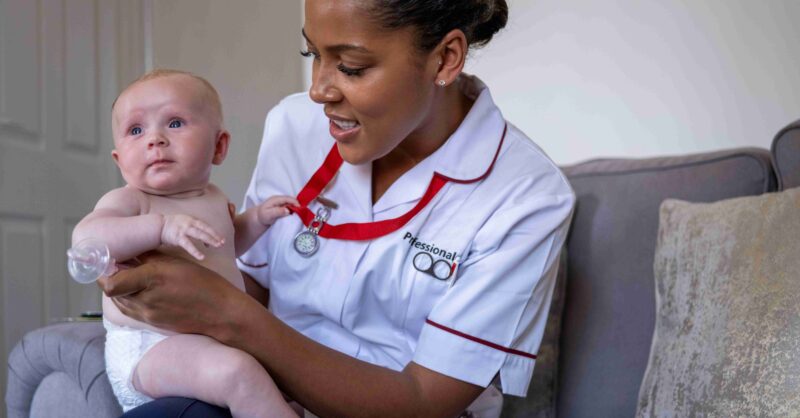
Twenty-one years ago, Nikki Freeman was struggling. A new mother, uncertain and overwhelmed, she found herself relying on outdated advice from well-meaning relatives. Then her health visitor arrived. This individual ran training sessions covering all aspects of raising a child. The sessions on dental care were so impactful, Freeman says, she “never gave my child any sweets for years because of all the pictures I saw.”That experience, she told Spotlight, inspired Freeman to become a health visitor herself. Today, she works in the same profession that once supported her. But the service she delivers bears little resemblance to the one she received.She adds that while the family centre offers some services, they don’t compare to the personalised support that health visitors used to provide. “We don’t do things like that anymore,” she says.Health visitors are no longer based in GP surgeries. The training sessions have stopped. The preventative work that once defined the profession has been replaced by crisis management and safeguarding referrals. What Freeman experienced as a mother is what she mourns as a practitioner: a service that has lost not just its resources, but its purpose.Health visitors are registered nurses or midwives with additional postgraduate training. They lead delivery of the Healthy Child Programme, the national preventative public health programme covering pregnancy and the first five years of life, aimed at giving every child the best start in life regardless of where they live. They – along with GPs – are often the only public service professionals who have contact with babies, young children, and the escalating complexities faced by families in early years. Despite this, only 45 per cent of health visitors in England reported being able to provide families with consistent care from the same health visitor all or most of the time — compared to 90 per cent in Scotland, 86 per cent in Northern Ireland and 85 per cent in Wales.The government published refreshed guidance for the Healthy Child Programme this month, reaffirming the importance of health visitors as qualified clinical professionals and maintaining that face-to-face contact is essential. The government is clear that every family should have a named health visitor to ensure continuity of care. However, it introduces no new statutory duties and does not commit additional funding to address the workforce crisis.England currently offers the fewest universal health visiting contacts – five as part of the Healthy Child Programme – compared to Scotland with 11 visits, 13 in Wales, and nine in Northern Ireland. It also delivers the lowest proportion of those contacts by qualified health visitors.This disparity “is really shameful and not equitable”, Freeman says. “Our families [in England] are not receiving the same contact that they are in the other countries.”Even the mandated contacts that do exist are being reduced, she says, because “commissioners are looking at how quickly we can do those visits, and almost like trying to fit it into a category that we can only take a certain amount of time.”Jason Strelitz, assistant director at The Health Foundation, argues this model has failed. In his previous role as director of public health at Newham Council, he advocated for health visitors to be used alongside family hubs and children’s centres. He believes the aims of health visiting – supporting children to be healthy, identifying risk early, and helping families access support – are paramount, but questions whether the current framework best serves those goals. “I’m not totally wedded to the five mandated visits. I think what’s important to ask is how to use that workforce and ask some deep questions about how we use what’s a really significant resource to best meet those aims [of supporting children].”Part of the reason health visitors are a precarious part of preventative health is the transfer of public health from the NHS back to local government three years after the 2012 Lansley reforms. Although regarded at the time as the right approach, spending increases have not followed. Figures show the public health grant has been cut by 26 per cent on a real-terms basis since 2015-16, with children’s services in England – the largest recipient – hit with a 25 per cent reduction. The NHS 10-year plan stresses a “shift towards prevention” and reducing demand on acute services by supporting people before problems escalate. Strelitz is concerned there is no equivalent commitment to increase the public health grant, and in turn, health visitors. “The indications right now are that the public health grant won’t keep pace with increased investment in NHS spending,” he says. “If the government were really serious about the shift to prevention I would expect the public health grant would grow at a faster rate than the overall NHS budget.”Strelitz notes that while some local areas have attempted to adapt the health visiting model, it has never undergone a “very disruptive” re-examination. He argues that the Healthy Child Programme and its mandated checks provide a clear policy framework, but that reduced funding now poses the biggest challenge. As budgets come under increasing pressure, he says local authorities often “just cut”, meaning that “you have the baseline, and you do less of the baseline, rather than actually thinking deeply: what are we trying to achieve here?”
Alison Morton, the chief executive officer for the Institute of Health Visiting, told Spotlight the transfer of health visitor responsibilities to local authorities was not inherently bad, but cuts to the public health grant during the austerity years were. “It was a poisoned chalice, really, taking on health visiting and cutting the budgets at the same time.”In England, health visiting services are not commissioned by the Department for Health and Social Care (DHSC), but instead by a local authority to a provider, such as NHS trusts, in-house local authorities, or private sector bodies. The result, Morton argues, is instability and an extreme postcode lottery in service quality and access. New birth visits can vary between 18.9 per cent in the lowest performing local authority to 99 per cent in the highest. This variation is not linked to deprivation, population need, or funding levels – demonstrating the lack of enforceable standards for health visiting.“Two families with the same need in different parts of England might get completely different responses,” Morton says. “That was never the intention of the service. In Scotland and Wales, there’s a clear remit and a sense that they’re in it for the long game.”Cuts have also had an impact on the quality of service. Under existing arrangements, a 45-second telephone call can be recorded as equivalent to a full, hour-long visit. Both types of contact – virtual and in person – are counted as fulfilling the requirement for a mandated visit, regardless of their depth or effectiveness.“How can you assess a child over the telephone if you can’t even see it, not even in sight. You know, babies are citizens in their own right. If a baby’s in distress, nobody’s going to see it. You can’t see neglect over the phone. You can’t hear the silence in a house.”Work-related stress, stemming from impossibly large caseloads, is one of many reasons for a reduction in health visitors in England. Those families, Morton says, may be part of a caseload that frequently reaches between 750 to 1,000 children per health visitor, making it “literally impossible to do the job.” A maximum caseload is recommended as one health visitor per 250 children to deliver a safe service. In comparison, midwives and social workers usually have a caseload between 25 and 35 children.The number of health visitors has been cut by more than 40 per cent since health visiting services were moved from the NHS to local authority commissioning in 2015. “There weren’t enough training places for health visitors. People were due to retire. It’s like running up an escalator coming down, losing people faster than you were training them. And that’s gone on for years,” Morton says.Freeman hasn’t personally considered leaving the profession, though she knows many other health visitors who have. She describes herself as someone who will overwork herself, but says, “I love health visiting. I would never want to leave, even though, at the moment, I feel very disillusioned.”The disillusionment, she’s clear, isn’t because of the NHS trust she works for. “I know it’s because of the funding and local government’s interpretation of what our role is,” she says. “And I don’t think they know what we do or the value of us. “They’re not going to get me down and I’m not going to leave. I’m going to stay until it gets back to where it should be – like it was when I had my son all those years ago.”All of this points to the loss of the “health” aspect of health visitors. Does Morton agree? “We’ve lost our identity,” she says. “Health visiting has become everything and nothing, and that’s partly why we’ve been so easy to cut.”Its original preventative public health ethos, Morton says, is being shifted towards safeguarding. Health visitors are helping more families impacted by parental or carer mental health issues, poverty, and families with babies or children with safety concerns.“We’re not social workers, but there is a paradox. If you’ve got a child with breathing difficulties or a persistent cough alongside a child with a safeguarding concern, it will always be the safeguarding concern that gets prioritised.”The consequences of this shift are becoming increasingly visible in hospital emergency departments. A&E attendance among under-ones in England has surged by 42 per cent over the last decade – a period that coincides almost exactly with the decline in health visiting numbers. In Scotland, where an enhanced health visiting pathway was introduced, A&E attendances among children have slightly decreased, while childhood vaccination rates remain significantly higher than in England.“We’re not judging parents. We’re saying people are going because they can’t get the help they need elsewhere. Parents clinics in communities where they can go and say, what’s the pimple on my child’s teeth? Why are you making this funny noise? But if parents are worried, they’ll end up in A&E, if there’s nobody there to help them,” she adds.
Subscribe to the New Statesman today for only £1 a week.