First Colossal BioVault Launches in Dubai as a “Backup Plan for Life on Earth”
For the first time, scientists are building a visible, working backup system for life on Earth, and the public will be able to watch it happen. At the World Governments Summit in Dubai, Colossal Biosciences and the United Arab Emirates unveiled a new project centered on preserving endangered species and genetic material at a global scale. The partnership will establish the world’s first Colossal BioVault and World Preservation Lab, permanently housed at Dubai’s Museum of the Future. The initiative represents a nine-figure investment in the UAE and is intended to serve as the foundation for a distributed global network focused on biodiversity preservation. Summit attendees were given an early look at the project through a preview exhibition at the event.
What Is the Colossal BioVault?
Dubai Future Foundation/Museum of the Future
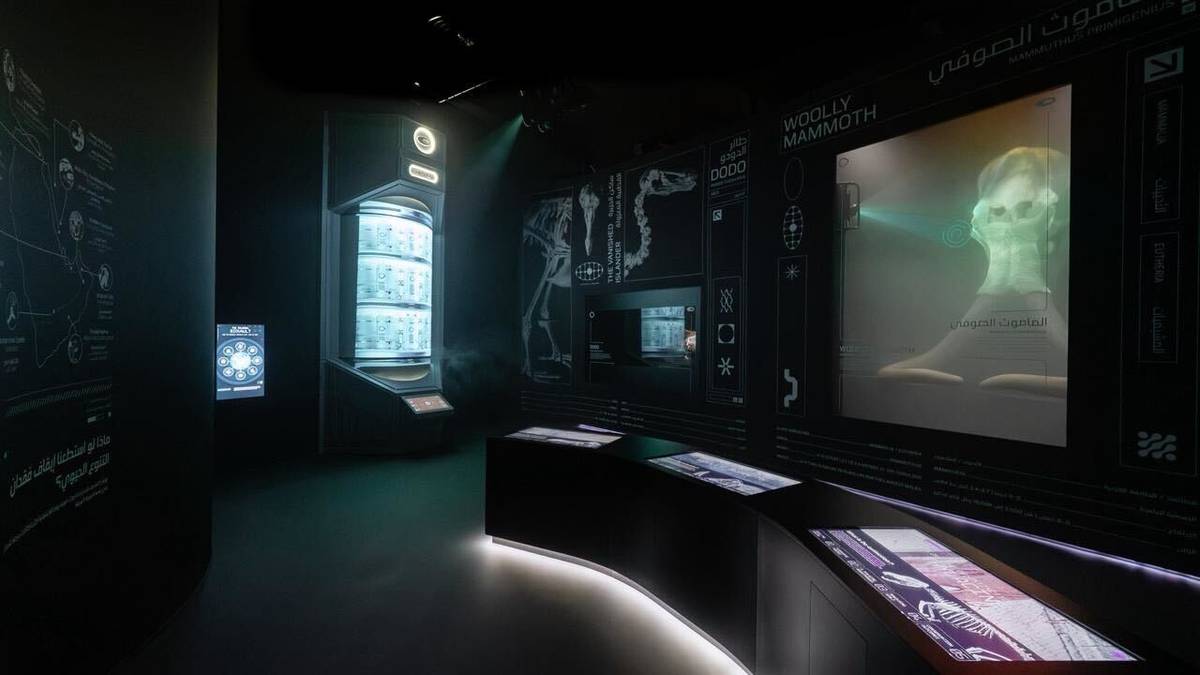
The Colossal BioVault is designed to preserve living cell lines, tissue samples, and genetic data from endangered species using cryogenic storage technologies. The facility will rely on robotics and AI-powered monitoring systems to manage biological material at scale. The BioVault is expected to store millions of samples representing more than 10,000 species, with initial efforts focused on the 100 most imperiled species globally and within the UAE. Beyond storage, the project aims to preserve genetic diversity within species by collecting multiple samples from different populations. The resulting data will support genomic research, including the creation of reference genomes for species that have historically been understudied. Non-proprietary data generated through the BioVault will be made available to scientists worldwide, positioning the facility as a shared research resource rather than a closed archive.
I believe the future belongs to those who harness technology and innovation to address our greatest challenges.
Museum of the Future Executive Director Majed Al Mansoori said the initiative reflects the museum’s focus on applying advanced technology to global challenges. “I believe the future belongs to those who harness technology and innovation to address our greatest challenges,” Al Mansoori said. “We are taking a bold step to advance science that safeguards our planet, restores ecosystems, and builds a sustainable legacy for future generations.” He added that during its first year, the project will prioritize “fieldwork and DNA research across species,” laying the scientific groundwork for future biodiversity protection and conservation efforts.
Why Existing Biobanks Aren’t Enough
Colossal co-founder and CEO Ben Lamm old ScreenRant that the BioVault is intended to address long-standing shortcomings in how endangered species are preserved today. “We are losing species at an alarming rate, and the world urgently needs a distributed network of global BioVaults, a true backup plan for life on Earth,” Lamm said. He added that “today’s biobanking efforts are underfunded, fragmented, and often inaccessible, lacking the collaboration and international support that this crisis demands.” Lamm also described the partnership with the UAE as a broader signal to governments worldwide. “Our partnership with the UAE marks the world’s first government-led collaboration of its kind,” he told ScreenRant. “The UAE is setting an important example. Other nations must also invest in critical bio-infrastructure if we are to prevent further biodiversity loss.”
Biobanking has been massively underfunded and not a national security focus, which must change.
According to Lamm, biobanking has not historically been treated as a strategic priority. “Biobanking has been massively underfunded and not a national security focus, which must change,” he said.
Related
Ben Lamm On Biobanking and Genetic Engineering
Exclusive: Colossal shares new photos and updates as Neka Kayda, the first cloned red wolf, turns one and marks a milestone for conservation.
Unlike most biobanking facilities, the Colossal BioVault - which they've discussed and listed on their official website for years - will operate as a visible, working laboratory. Located inside the Museum of the Future, the space will allow visitors to observe scientists conducting real-time research, including receiving tissue samples from the field, sequencing DNA, and cryopreserving cell lines. The facility is designed to function as both an active research environment and a public educational space, not unlike what I saw when previewing Colossal's new HQ in Dallas. Lamm said the public-facing design is intentional. “We don’t want biobanking done in the backrooms,” he told ScreenRant. “We want it upfront and wrapped with educational content to inspire the next generation to meet the biodiversity crisis. Kids are not only going to inherit our problems but how we respond to them.” The initiative comes amid growing scientific concern over global biodiversity loss. Scientists and global biodiversity assessments have warned of widespread species decline within the coming decades if current environmental pressures continue. By establishing a distributed network with redundant storage across multiple locations, the BioVault is intended to function as a long-term safeguard for biodiversity, ensuring preserved material remains secure even in the event of regional disruptions.
Funding The First Step of A Global Colossal BioVault Network
Dubai Future Foundation/Museum of the Future
As part of the partnership, the UAE led an initial $60 million investment in Colossal Biosciences, expanding the company’s most recent Series C funding round and bringing its total capital raised to $615 million. The nine-figure agreement also includes revenue tied to Colossal’s cryogenic preservation and reanimation platform, with additional funding rounds possible in the future.
The initiative is directed by His Highness Sheikh Hamdan bin Mohammed bin Rashid Al Maktoum, Crown Prince of Dubai, Deputy Prime Minister, and Minister of Defence of the UAE. Education and public engagement are central to the project’s design. By housing the BioVault at the Museum of the Future, the facility allows visitors to observe conservation science in real time and participate in educational experiences tied to citizen science and biodiversity stewardship. Colossal is inviting other nations to contribute biological samples representing their unique biodiversity. Lamm told ScreenRant that the Dubai facility is only the beginning. “Our partnership with the UAE is the first in a planned network,” he said. “We are actively engaging with other regions to expand locations.”