Is Keir Starmer simply too uncharismatic for TikTok?
Pity Keir Starmer – he can’t put a foot right online. This month the Prime Minister made a splashy debut on Substack and TikTok, two online platforms beloved by underemployed journalists and Gen Z respectively. On Substack, his debut post was titled “Politics that makes a difference”, which manages the feat of sounding both painfully banal and like a slogan for the Sainsbury’s Taste the Difference line. “I think I am the only world leader that has decided to communicate in this way,” Starmer writes. “So you probably want to know: why?”
It’s a good question. The initial response has not been good, particularly on TikTok. An overwhelming number of comments urge viewers to vote Reform (it’s unclear if the platform has cleaned up its Reform bot problem), a significantly smaller number urge people to vote Green, and there are too many calls for him to step down or call a general election to count. “Lovely Person, Bad Prime minister [sic],” says a user named B_Fisher08, in one of the rare positive comments. Talk about damning with faint praise. On Substack, the response has been more muted – partly because the comment section appears to have been closed entirely.
Of course, any politician venturing into the brave new world of social content is likely to come under fire. Where once they had to handle hecklers outside party conferences, they now have to deal with anonymous jokers with anime avatars who claim that leaving a bad comment will get you jail time. (It certainly doesn’t help that you can actually hear real-life hecklers in the TikTok clips filmed outside No 10.) Starmer’s press team were probably braced for some of this – they are sensible enough not to have hoped for the kind of rapturous reception that accompanies every single Zohran Mamdani clip online.
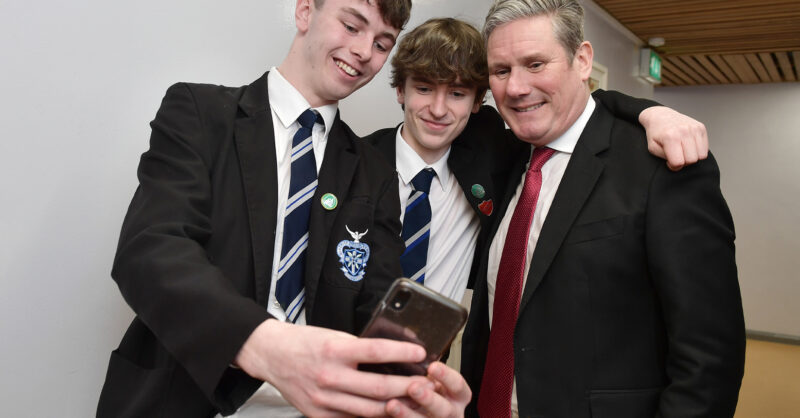
Part of that scathing reception surely has to do with the content of the clips themselves. The account has published around two videos a day since it was launched – the kind of consistency that most content creators would dream of achieving, though there is an argument that it is now quality, rather than quantity, that attracts views on the platform. But the videos themselves are a confusing mix: a professionally shot but poorly edited video of Larry the Cat “welcoming” embattled Ukrainian leader Volodymyr Zelenskyy to Downing Street (Larry actually scarpers about nine seconds in and never reappears in the clip); a photo montage of Starmer making the “6-7” hand gesture to a trending audio; an awkward welcome video of Starmer launching his TikTok before turning on the Christmas lights outside No 10. It’s not exactly the stuff of viral gold.
Treat yourself or a friend this Christmas to a New Statesman subscription for just £2
There are some encouraging signs – the most viewed clip is of Starmer simply gazing out of the window of his private plane at the RAF fighter jets accompanying him, set to moody electronic music. That one has been watched 1.2 million times, with one user approvingly describing it as “aura farming” (that’s the deliberate practice of doing things that make you look cool). If I were on Starmer’s team, I’d lean into this flattering behind-the-scenes angle and make original content that surprises people – fewer attempts to hop on the trending bandwagon with meme-based jokes, more insights into what it’s like to run a country outside of the typical handshaking with world leaders. (No offence to any political nerds out there, but there’s nothing more boring than watching a bunch of men in suits stand around talking – even if those people are Emmanuel Macron and Zelenskyy.) What does Starmer eat on the road? How many bodyguards accompany him in public? Can he do a people’s PMQs and respond to his haters’ comments on TikTok?
As experts have noted, Nigel Farage’s own TikTok leans heavy on a “bewildering” number of transport options – you can find him on tractors, helicopters, boats; all of which give the impression that he is a dynamic man on the go. What Starmer’s TikTok lacks is that same sense of momentum – a man who is getting out there and working for everyday people. It doesn’t help that some of the videos lack a clear beginning, middle and end – one begins promisingly with Starmer greeting his cameraman (the kind of fourth-wall breaking that delights TikTok viewers), only to trail off with him wandering around his office talking about football.
Understandably, Starmer’s TikTok success will always be limited by the inescapable fact that he is not the always-on, camera-ready Zohran Mamdani. (He’s not even a Zack Polanski.) When I profiled Starmer for British Vogue while he was on the campaign trail in 2024, I was struck by how hard it was to reconcile this reserved, slightly remote politician with the slick political maneuverer who had ruthlessly purged the hard left from his party. A stiff upper lip may be deeply English, but it is anathema to social media, which prizes above all relatability and emotional expressiveness, sometimes to the point of histrionics. If I were Starmer, I’d look to other influencers and public figures who have succeeded on TikTok and YouTube despite what you might diplomatically call a lack of natural charisma – Gymshark CEO Ben Francis comes to mind. And if nothing else, well – I hear Vine is relaunching, so he could try that next.
[Further reading: Inside the agency building Keir Starmer a TikTok army]
Content from our partners
Related