
Remember me




 Model of elderly Homo neanderthalensis man in The Natural History Museum of Vienna. Credit: Wikimedia Commons
Neanderthals disappeared as a distinct population around 40,000 years ago. But some of their genetic variants are still subtly shaping some human bodies today. We know, for instance, that Neanderthal DNA has been linked to differences in immune responses, skin and hair traits, sleep timing, and sensitivity to pain.
Now, a new study suggests that Neanderthals might even be influencing our muscles. Among modern people who carry a Neanderthal-derived version of the growth hormone, muscle cells respond more strongly to growth signals. The effects are small but significant: slightly greater height and lean mass, along with small differences in the jaw and teeth.
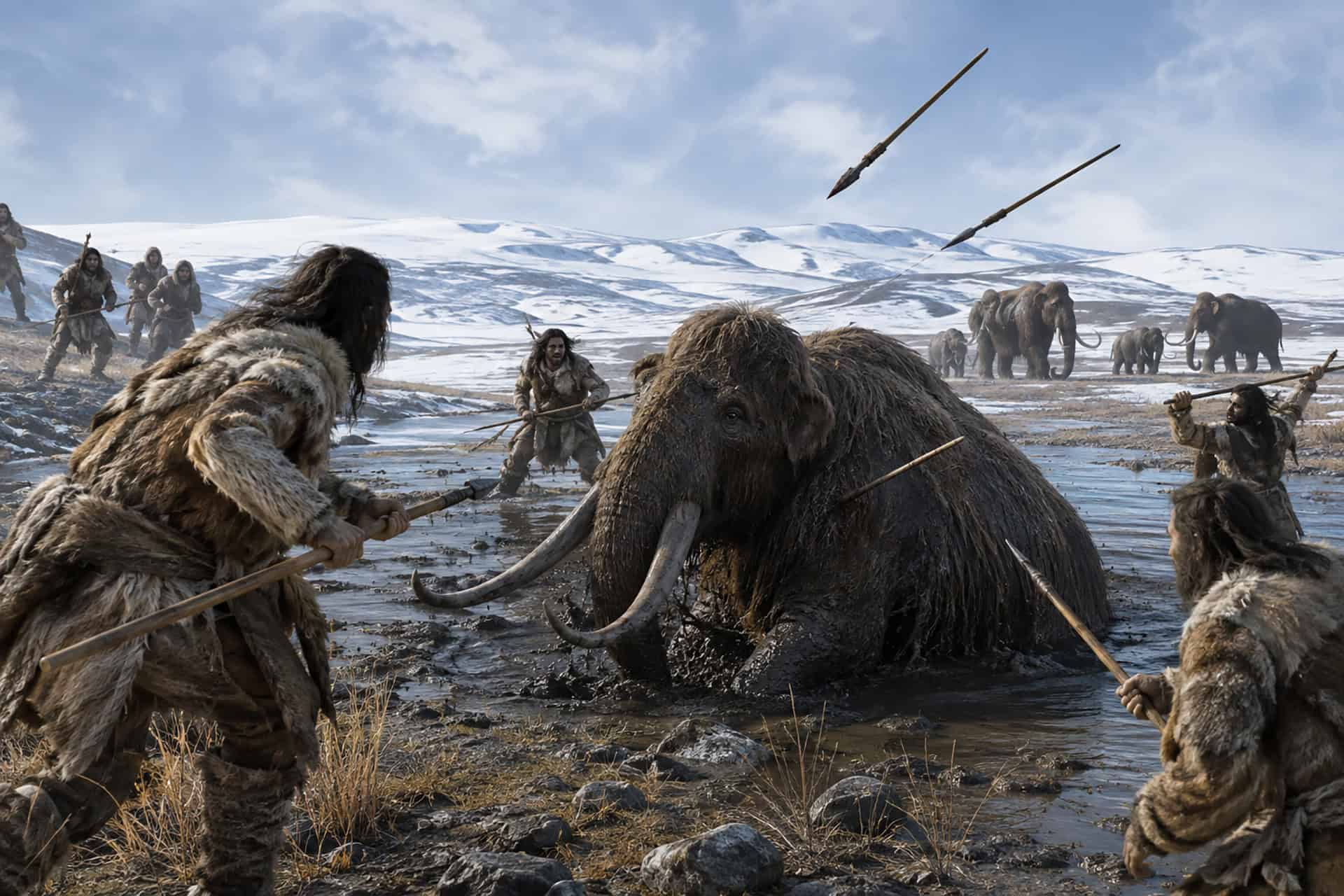
A Shared GeneNeanderthals lived across Europe and western Asia for hundreds of thousands of years, before disappearing roughly 40,000. Their fossils reveal broad chests, thick bones and pronounced muscle attachments, pointing to bodies that were generally stockier and more heavily built than those of modern humans.
The new research identifies one genetic variant that may have contributed to some aspects of that physique.
An international team led by researchers including Philipp Kanis of the Max Planck Institute for Evolutionary Anthropology and Hugo Zeberg of Karolinska Institutet focused on the growth hormone receptor.
Growth hormone is produced by the pituitary gland, a small organ at the base of the brain. After entering the bloodstream, the hormone binds to matching receptors on the surfaces of cells. That interaction activates internal signals involved in growth, metabolism and tissue development.
The researchers compared the growth hormone receptor gene in five reconstructed Neanderthal genomes with the version most common among modern humans. They identified two DNA differences. The Neanderthal-derived combination of variants appears to have entered the modern human gene pool through interbreeding tens of thousands of years ago.
Today, the variant is most common in parts of South and East Asia. The study reports particularly high frequencies in some South Asian populations, followed by East Asian populations. It’s uncommon in Europe and was not detected in the sub-Saharan African datasets the researchers examined.
×
Thank you! One more thing...Please check your inbox and confirm your subscription.
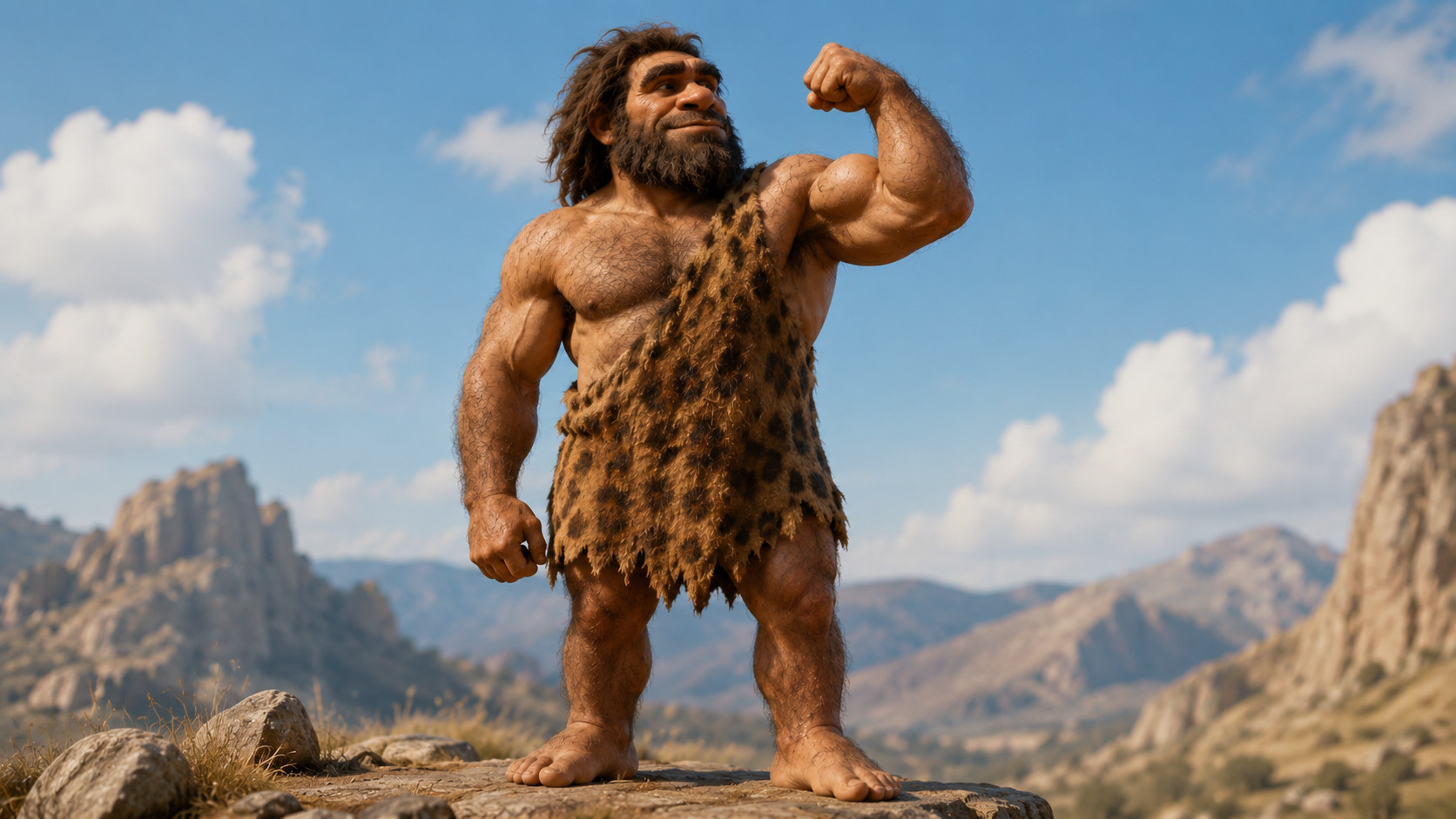
But What Does This Variant Actually Do? Neanderthals are flexing from beyond the grave. Illustration: ZME Science (AI-generated).
To test what the two changes actually do, the researchers engineered laboratory-grown mouse cells to produce either the Neanderthal version of the human receptor or the version most common in people today.
When exposed to growth hormone, cells with the Neanderthal receptor grew about 40% more over several days. Most of that stronger response traced back to one of the two Neanderthal-specific changes.
“What struck me most was that two very different types of evidence told the same story,” says Philipp Kanis, first author of the study and a postdoctoral researcher at the Max Planck Institute for Evolutionary Anthropology, in a statement. “Cells grown in the laboratory responded more strongly, while data from more than a million people showed signs of the same effect in the body. It is rare to see laboratory and population evidence fit together so clearly.”
The human evidence came from five biobanks containing genetic and health data from more than 1.1 million adults.
Across those datasets, carrying the Neanderthal-derived variant was associated with roughly 270 to 285 grams of additional lean mass and about 0.3 centimeters of extra height. These are averages across large groups, not changes that would necessarily be noticeable in any one person.
The researchers didn’t detect the same associations in more than 6,000 children aged 11 or younger. That result is consistent with the variant exerting a stronger effect later in development, possibly around or after puberty.
“As someone who does CrossFit, I found it fun to link Neanderthal genetics to muscle mass. But not even a Neanderthal growth hormone receptor can replace training,” says co-author Miriam Berreiter, in a Karolinska Institutet statement.
A Noticeable (but Small) Difference Image adapted from the study.
The variant also tracks with features that lean slightly toward Neanderthal anatomy. Carriers tended to have shorter tooth roots and a shorter ramus, the rear section of the lower jaw. Some also had a greater chance of an overbite.
Those links do not mean carriers look Neanderthal. Human height, build, face shape, and teeth arise from many genes and from environment, nutrition, and health. But it’s a present detail in some populations, and it also goes to show that Neanderthals still live on, through us.
“It is fascinating that one genetic change inherited from Neandertals can still have an effect on the human body today,” says Hugo Zeberg, senior author of the study, in a statement. “But this is only one of many genetic influences on growth and body shape. It cannot explain the Neandertal body type on its own, and it certainly does not determine a person’s overall appearance.”
The finding also complicates old stereotypes. John Hawks, an anthropologist at the University of Wisconsin–Madison, told Nature that researchers often imagined Neanderthal bodies through a European lens, because many famous fossils come from Europe. Yet this particular Neanderthal gene shows up far more often in Asian populations than in European ones.
In that sense, the study turns a fossil trait into a living signal: a small trace of an extinct human group, still helping shape bodies one cell at a time.
The study was published in the journal Current Biology.

