
Remember me


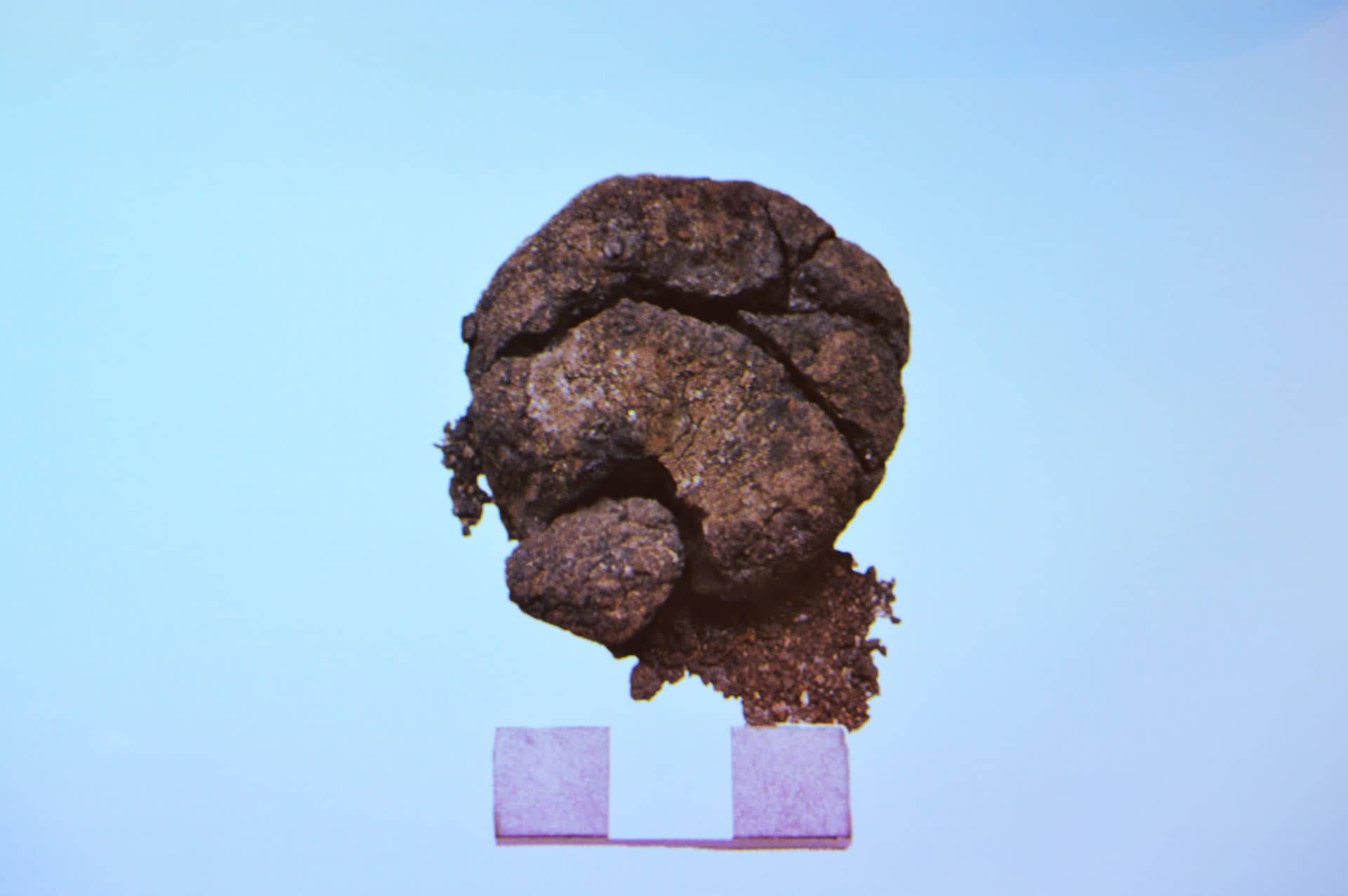




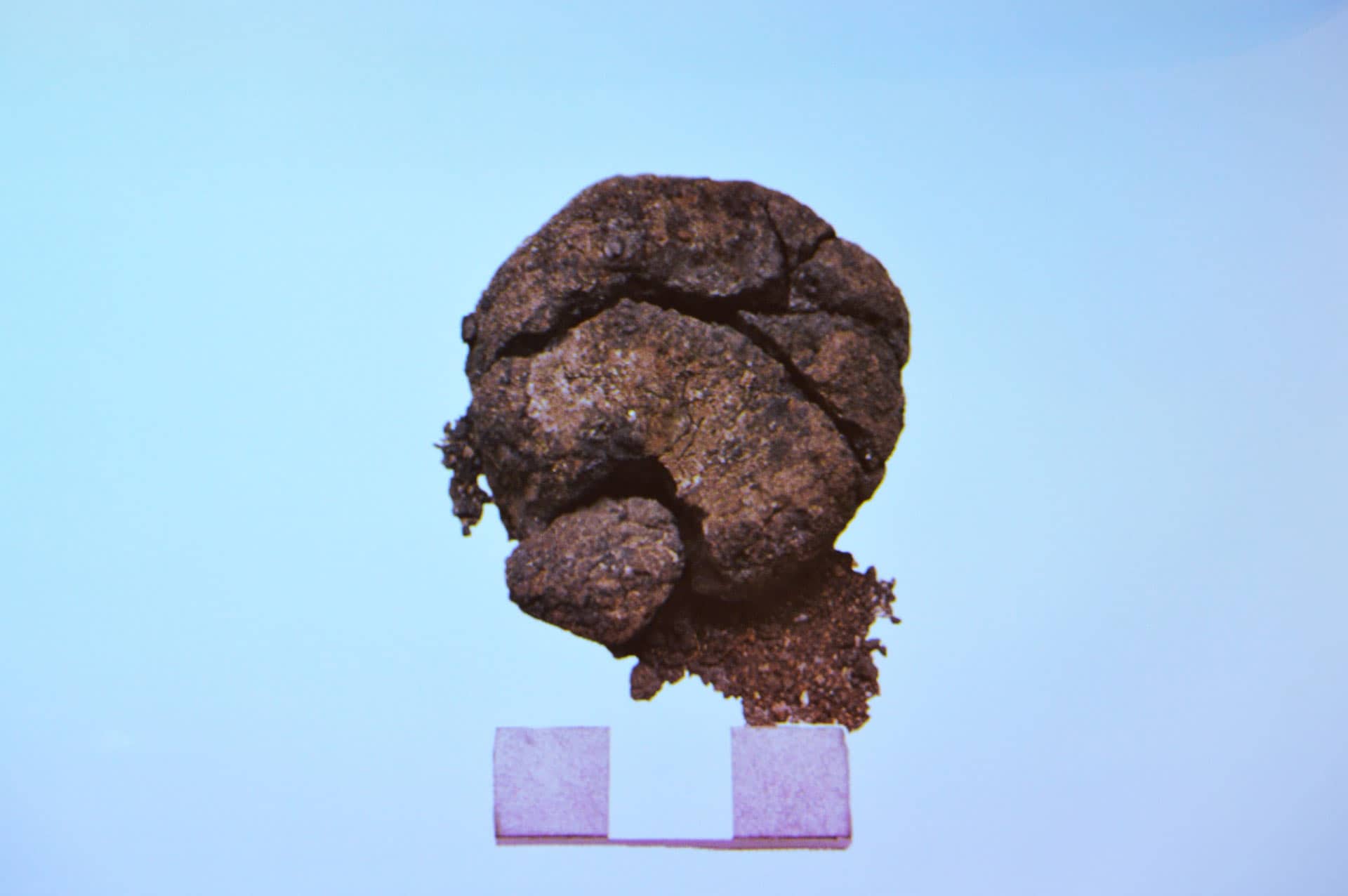 The 8,600-year-old bread found at Çatalhöyük in Türkiye. Image credit: Necmettin Erbakan University.
Archaeologists at Necmettin Erbakan University have uncovered what is believed to be the world’s oldest bread in central Anatolia, Turkey.
The dough-like object was found at the Neolithic site of Çatalhöyük (one of the largest and best-preserved sites of its kind), which is estimated to be around 8,600 years old, dating back to 6600 BCE. The rare and unexpected discovery highlights just how advanced the culinary practices of early agrarian societies were.
Understanding ÇatalhöyükÇatalhöyük is located southeast of modern-day Konya and not far from Mount Hasan, a volcano in Anatolia, Turkey. It began as a modest settlement around 7500 BCE. However, it flourished and developed into a sprawling settlement between 6700 to 6500 BCE before declining and being abandoned around 5950 BCE. This site, discovered in the early 1960s by British archaeologist James Mellaart, drew global attention due to its significant size and remarkably well-preserved architecture, offering invaluable insights into early Neolithic life.
Inhabitants of Çatalhöyük were among the pioneers of early farming, cultivating wheat and barley and herding sheep and goats. Numerous artifacts and ancient structures have been found over the years, including what some believe to be the world’s oldest map depicted in a large wall painting.
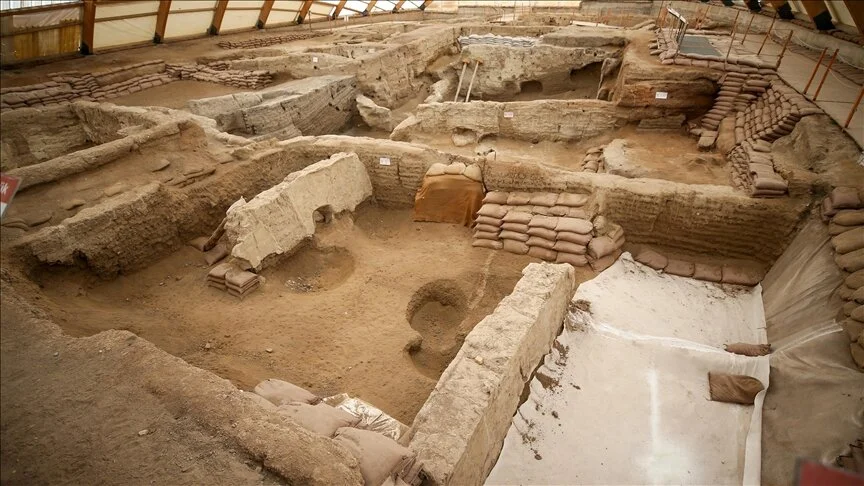 The 8,600-year-old bread was found at the Neolithic archeological site of Çatalhöyük, a UNESCO World Heritage site. Credit: The Anadolu Agency.
World’s oldest fermented bread
The 8,600-year-old bread was found at the Neolithic archeological site of Çatalhöyük, a UNESCO World Heritage site. Credit: The Anadolu Agency.
World’s oldest fermented bread
The latest excavation led by Necmettin Erbakan University’s team occurred in the Mekan 66 area of Çatalhöyük, where they uncovered an ancient building with an oven. Surrounding this oven were wheat, barley, pea seeds, and a distinctive ‘spongy’ organic residue. Upon analysis, researchers determined that this residue was an uncooked, fermented bread, not previously known in such ancient contexts.
“The fact that the building was covered with fine clay has allowed both wood and bread to be stored to this day,” said Dr. Ali Umut Türkcan, an archaeologist at Necmettin Erbakan University.
“We found that the bread has a porous, spongy structure and was not cooked,” added Dr. Yasin Ramazan Eker, also from Necmettin Erbakan University.
As soon as the archaeologists set eyes on the spongy mass, they had a hint it was something important. It still bears the mark of a finger pressed to the center.
The researchers identified the object as probable fermented dough using scanning electron microscope imaging. The analysis revealed air bubbles in the sample and traces of starch grains. They also found telltale chemicals known to be found in cereals and reported detecting signs associated with fermentation.
Previously, the earliest evidence of fermented bread came from ancient Egypt around 1500 BCE. Egyptians discovered that allowing dough to rest and ferment naturally resulted in a lighter, more palatable bread. They utilized wild yeasts that they found in their environment, which, when mixed with the dough and left to sit, would cause the dough to rise.
×
Thank you! One more thing...Please check your inbox and confirm your subscription.
Ancient bakingIn addition to Egypt, other ancient cultures such as the Greeks and Romans adopted and refined the art of bread fermentation. The Greeks, recognizing the significance of bread in daily life, were among the first to establish public bakeries. These bakeries became community hubs, crucial for feeding the urban populations. The Romans further industrialized bread production, building large bakeries that employed slaves and freedmen to ensure the constant supply of bread needed to sustain their vast empire. Roman military campaigns also often included portable mills and ovens.
In 2018, researchers at the University of Copenhagen, University College London and the University of Cambridge analyzed 24 charred remains retrieved from fireplaces at hunter-gatherer sites in Jordan. The researchers claim that these are the burned remains of the earliest flatbreads, made from the wild ancestors of domesticated cereals, such as barley, einkorn, and oat. Remarkably, this bread is estimated to be 14,400 years old, predating agriculture by thousands of years.
However, Çatalhöyük is certainly the oldest fermented bread identified thus far. The ancients experimented with fermentation even farther back. In a cave in Israel, researchers found evidence of beer brewing that is estimated to be 13,300 years old. First beer, then bread. Makes sense.
What happened to the Çatalhöyük bread though? Why was it never baked in the oven? Archaeologists don’t know yet and they might never know. We can only speculate and play detective. Bread, like all food in general, was scarce in ancient times. Certainly, whoever took the trouble of preparing the bread had all the reasons to complete the job and bake it. Whatever interrupted this process must have been very serious because the baker never finished the job — and the bread remained untouched for thousands of years.
The Çatalhöyük object is unusual because it appears to preserve a larger, shaped portion of uncooked dough beside an oven.
Recreating ancient breadIn 2025, a chef in Konya, a city in Turkey, attempted to recreate a loaf inspired by the Çatalhöyük find using wheat, barley, peas and another local legume. After dozens of trials, he adjusted the recipe because the first versions were hard and bitter. The result were tasty, but they were a modern interpretation rather than an exact reconstruction of the Neolithic food.
Another study, conducted in 2026,
In 2026, researchers published a peer-reviewed analysis of a different, roughly 5,000-year-old loaf from Küllüoba Höyük in western Anatolia. That study used detailed chemical and microscopic techniques but the researchers cautiously described fermentation as possible rather than certain. Basically, they said it could be a fermented bread, but isn’t necessarily so.
But we do know that the ancients experimented with fermentation. In a cave in Israel, researchers found evidence of beer brewing that is estimated to be 13,300 years old.
There’s another, potentially even more striking example. In 2018, researchers identified 14,400-year-old charred remains from Jordan as bread-like food made from wild cereals. The peer-reviewed finding is widely accepted, although the fragments are tiny and the authors cautiously described them as “bread-like products” rather than indisputable bread.
But based on the published dates, bread-like food appears to be older: the Jordanian remains date back roughly 14,400 years.
What happened to the Çatalhöyük dough, though? Why was it never baked in the oven? Archaeologists don’t know yet and they might never know. We can only speculate and play detective.
The baker may have been interrupted, but the dough could just as easily have been dropped, discarded, spoiled or caught in a later fire. There is no evidence that a sudden emergency prevented someone from finishing the loaf.
What remains is remarkable enough: food shaped by human hands, left beside an oven and preserved for more than eight millennia.
The article was published on April 17, 2024, and has been edited to include additional information.

