
Remember me
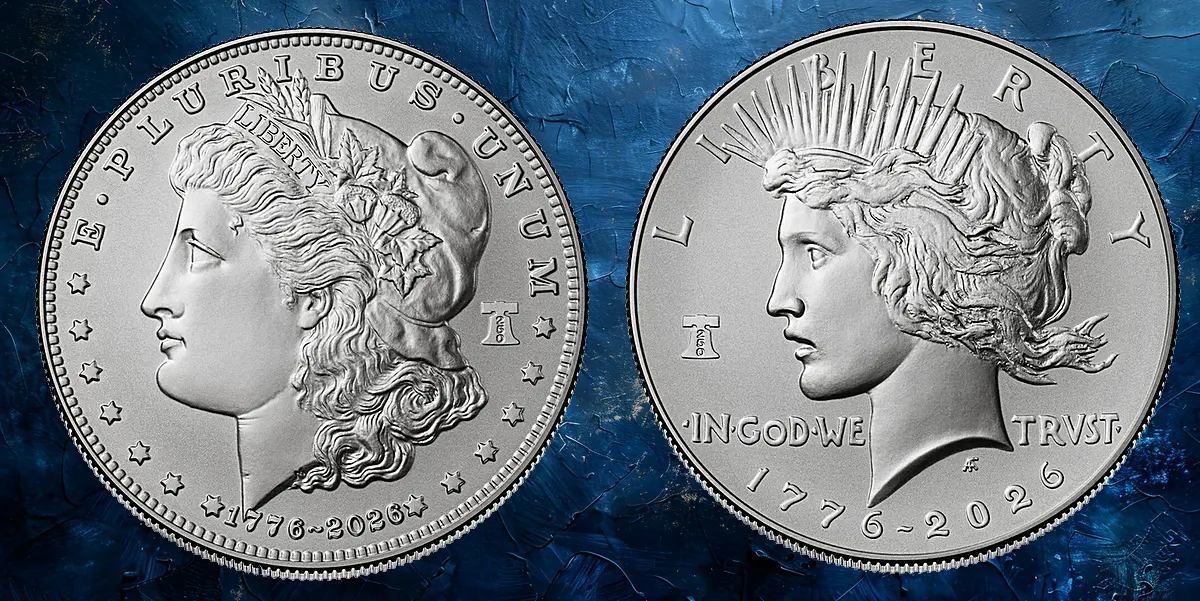

The 2026 Morgan and Peace Enhanced Uncirculated Dollars will add a surprising new chapter to two of America’s most famous coin designs.
The United States Mint will open sales on August 25, 2026, at noon Eastern Time. Each coin will cost $169. Moreover, the West Point Mint will produce both issues in 99.9% fine silver.
However, collectors will not find a W mintmark on either coin.
That detail gives the August release an immediate numismatic hook. West Point will make the coins. The Mint may classify them under “West Point (W).” Third-party grading labels may also use a W attribution. Still, the actual coins carry no physical mintmark.
 2026 Morgan and Peace Enhanced Uncirculated Dollars
 The Mint introduced the modern Morgan and Peace Dollar program in 2021. That year, Philadelphia, Denver, and San Francisco produced Morgan Dollars. Philadelphia also made the Peace Dollar without a mintmark.
Later issues used Philadelphia and San Francisco. The 2026 Enhanced Uncirculated coins introduce West Point to the program. They also give both designs their first regular Mint product with the Enhanced Uncirculated designation.
Yet the lack of a W adds an unusual twist.
Mintmark collectors often treat the letter as part of a coin’s identity. In this case, collectors must separate the coin’s place of manufacture from the mark that appears on its surface. PCGS has already placed the upcoming Morgan and Peace issues under W in its First Strike calendar. Meanwhile, the Mint’s own specifications say “No Mint Mark.”
Therefore, marketplace descriptions may call these coins “2026-W” Morgan and Peace Dollars. Collectors should understand what that shorthand means. It identifies West Point production. It does not describe a visible mintmark.
What Makes an Enhanced Uncirculated Finish Special?“Enhanced Uncirculated” does not simply mean a sharper version of an ordinary Uncirculated coin. Instead, the term describes a carefully planned combination of surface treatments.
The United States Mint defines an Enhanced Uncirculated coin as one in which selected elements receive frosting while other areas retain an Uncirculated finish. Therefore, the artist and Mint technicians can use differences in texture to separate individual parts of the design.
That approach creates contrast without relying on the mirrored fields of a traditional Proof coin.
On a standard Proof, frosted devices usually rise above a deeply reflective field. A Reverse Proof flips that formula. It places polished elements against a frosted field. Enhanced Uncirculated coins follow a different visual strategy. The Mint can apply frosting to selected details while leaving neighboring areas with a more traditional satin or Uncirculated appearance.
As a result, the finish can guide the viewer’s eye across the coin.
On the Morgan Dollar, the Mint could use those changes in texture to distinguish Liberty’s face from her hair, cap, agricultural wreath, inscriptions, and surrounding field. Likewise, different treatments could sharpen the eagle, wreath, arrows, olive branch, and feather details on the reverse.
The Peace Dollar may benefit even more from the process. Anthony de Francisci created broad, open areas around Liberty’s portrait. He also gave the reverse a dramatic arrangement of eagle, rock, olive branch, and sun rays. Selective frosting could give each element its own visual level while preserving the design’s quiet, sculptural character.
However, the Mint has not yet published a color-coded surface map or a detailed technical breakdown for either 2026 dollar. Therefore, collectors should treat any description of exactly which elements receive frosting as an expectation rather than a confirmed production specification.
The Mint has provided a useful comparison through its 2026 Enhanced Uncirculated American Silver Eagle. That coin combines laser-frosted areas with an unpolished field. According to the Mint, the process highlights design details and creates a contrast that looks distinctly different from the mirrorlike finish of a Proof coin.
The Morgan and Peace Dollars may use a related approach. Still, the Mint has not confirmed that all three 2026 Enhanced Uncirculated products share the same surface-treatment map or production sequence.
A Finish Made for Classic Coin DesignsThe finish matters because both silver dollars began as circulating coin designs.
Morgan Dollars entered commerce in 1878. Peace Dollars followed in 1921. Neither George T. Morgan nor Anthony de Francisci designed his coin for modern laser frosting or computer-controlled surface treatments.
Consequently, the 2026 issues place 19th- and early-20th-century sculpture in the hands of a 21st-century mint.
That combination could reveal details that a uniform finish tends to flatten. Frosting can separate Liberty from the field. It can bring forward individual strands of hair. It can also create stronger visual divisions among feathers, leaves, rays, lettering, and anniversary devices.
The process should also emphasize the one-year-only 1776 ~ 2026 dual date and Liberty Bell 250 privy. Those elements do more than identify the anniversary. They distinguish the 2026 dollars from every previous Morgan and Peace Dollar issue.
Moreover, Enhanced Uncirculated coins often change character as the viewer tilts them under a light. One area may appear bright from one angle and subdued from another. Meanwhile, a neighboring frosted area can remain visually stable. That movement gives the design more depth than a conventional uniform surface.
Collectors should not confuse that visual complexity with circulation wear. “Uncirculated” still describes a collector coin that the Mint did not make for commerce. “Enhanced” identifies the selective surface treatments that add contrast to the design.
The finish also creates a clear collecting distinction within the 2026 lineup. The July Philadelphia coins use a Reverse Proof finish. The August West Point coins use Enhanced Uncirculated surfaces. Therefore, collectors will receive two very different interpretations of the same historic designs.
For many buyers, that contrast will provide the strongest reason to own both versions.
The Morgan Dollar: Born From America’s Silver BoomGeorge T. Morgan’s dollar did not begin as a nostalgic collector coin. Instead, it emerged from a political struggle over silver.
 2026 Enhanced Uncirculated Morgan Dollar
The 1859 discovery of Nevada’s Comstock Lode transformed the nation’s silver supply. Then, the Bland-Allison Act of 1878 restored the standard silver dollar and required the Treasury to purchase silver for coinage.
Consequently, the Philadelphia Mint struck the first Morgan Dollars in 1878. San Francisco and Carson City joined production that year. New Orleans followed in 1879.
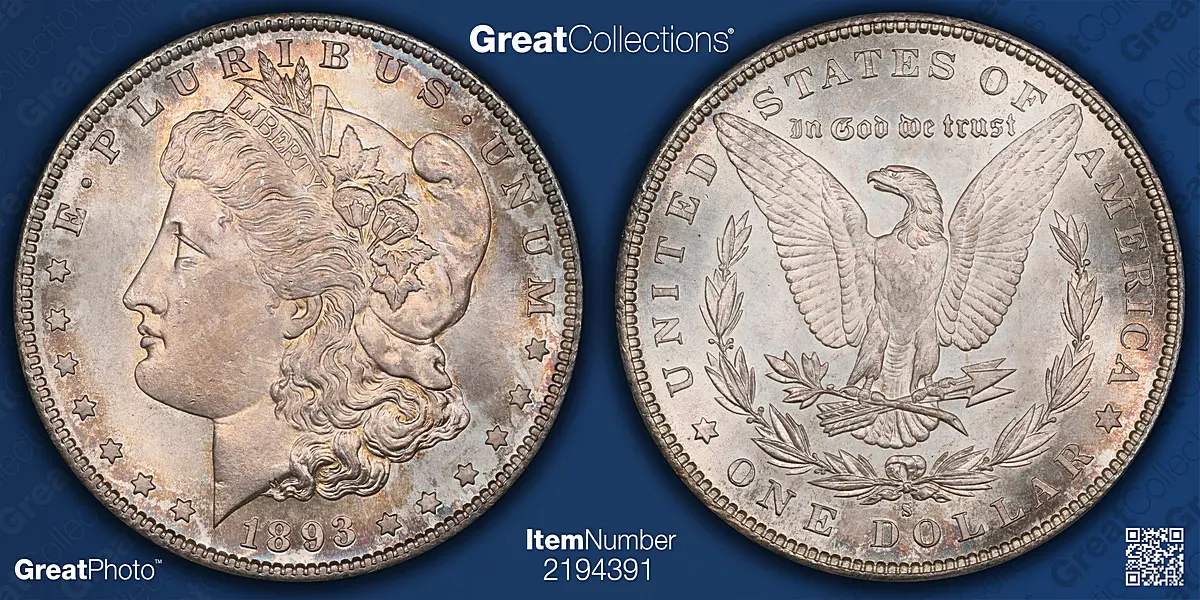
Morgan placed Liberty in profile on the obverse. A cap, agricultural elements, and a crown bearing the word LIBERTY adorn her head. Thirteen stars surround the portrait.
On the reverse, an eagle spreads its wings while holding arrows and an olive branch. A wreath frames the lower design. The imagery combines national strength with a promise of peace.
The 2026 obverse adds two anniversary elements. The date reads 1776 ~ 2026. In addition, a Liberty Bell privy carries the numeral 250.
The Peace Dollar Replaced the Morgan in 1921Morgan Dollar production stopped after 1904. The Mint made no silver dollars from 1905 through 1920.
2026 Enhanced Uncirculated Peace Dollar
Then, the Pittman Act of 1918 changed the story. The law authorized the melting of millions of silver dollars. It also required the government to purchase silver and replace those coins.
Therefore, the Mint resumed Morgan Dollar production in 1921. Philadelphia, Denver, and San Francisco made the final classic issues. Later that year, Philadelphia shifted production to a new design.
Treasury Secretary Andrew Mellon approved Anthony de Francisci’s Peace Dollar design in December 1921. De Francisci portrayed Liberty with a radiant crown. On the reverse, an eagle rests on a rock while holding an olive branch above the word PEACE.
The design marked the nation’s return to peace after World War I. It also announced America’s growing role on the world stage.
For 2026, the Mint placed the Liberty Bell privy to the left of Liberty. The dual date curves below the portrait. Meanwhile, the reverse retains the resting eagle and the rays of a new dawn.
The Liberty Bell Creates a Link to 1976The 2026 dual date and Liberty Bell carry a deeper numismatic connection.
Liberty Bell Privy Mark
During the nation’s Bicentennial, the Mint gave the Eisenhower Dollar the dual date 1776–1976. Dennis R. Williams also placed the Liberty Bell over the Moon on the reverse.
Thus, the 2026 silver dollars do not introduce a completely new anniversary language. Instead, they update one of the most recognizable ideas from the 1976 Bicentennial coin program.
The connection becomes even stronger at West Point.
The Treasury opened the West Point Bullion Depository in 1938 to store silver. Then, in 1976, the facility helped produce Bicentennial quarters. West Point did not become an official branch mint until 1988.
Now, 50 years after it helped make Bicentennial coinage, West Point will produce Morgan and Peace Dollars for America’s 250th anniversary.
Moreover, a facility built to store silver will strike modern versions of the two coins that define America’s classic silver-dollar era. That historical circle gives the August release its strongest backstory.
2026 Morgan and Peace Enhanced Uncirculated Dollar Specifications Product numbers: 26XE & 26XH respectivly Sale date: August 25, 2026 Sale time: 12 noon ET Issue price: $169 Mint: West Point Physical mintmark: None Finish: Enhanced Uncirculated Composition: 99.9% silver Silver weight: 0.859 troy ounce Diameter: 38.10 mm Edge: Reeded Mintage: limit 250,000 Product limit: 250,000 Initial household limit: 10The Mint will package the Morgan Dollar in a black presentation box with an illustrated sleeve and a certificate of authenticity. Official images show similar anniversary packaging for the Peace Dollar.
Could Collectors Buy the Coins at the 2026 ANA World’s Fair of Money?The release date creates another potentially important story.
The American Numismatic Association will open its 2026 World’s Fair of Money in Pittsburgh on Tuesday, August 25. That is the exact date on which the Mint will launch the Morgan and Peace Enhanced Uncirculated Dollars online at noon Eastern Time. The public bourse will open one hour later, at 1 p.m.
Meanwhile, the United States Mint has confirmed that it will operate booth #830 at the show from August 25 through August 29.
That timing makes an on-site release a strong possibility.
However, the Mint has not yet announced that it will sell the Morgan and Peace Dollars at the Pittsburgh booth. Its current event notice invites collectors to visit booth #830, but it does not list products, quantities, sales procedures, or purchase limits. Therefore, CoinWeek cannot present an ANA booth sale as confirmed.
Still, recent precedent supports the possibility.
At the 2023 World’s Fair of Money, the Mint offered limited quantities of products that launched during convention week. Those products included the 2023 Morgan and Peace Proof Silver Dollars. The Mint also sold other available products from its booth.
The Mint followed a similar approach in 2025. It announced that three products would launch during the ANA convention and that limited quantities would become available at its booth. Those releases included the 2025 Laser Engraved American Silver Eagle Proof, the American Liberty High Relief Gold Coin, and the American Liberty Silver Medal.
Therefore, the calendar alignment in 2026 probably reflects more than coincidence. The nation’s largest annual coin convention starts on the same day as one of the Mint’s most anticipated silver-dollar releases. In addition, both events take place in the Eastern Time Zone. The Mint’s online sale begins at noon, while the ANA bourse opens at 1 p.m.
That schedule would allow the Mint to begin national sales first and then open convention-floor sales when attendees enter the hall.
What an ANA Release Could MeanAn on-site release would almost certainly attract a line at booth #830. It could also create a significant market for coins with convention-related grading labels.
PCGS and NGC often provide special submission options for major releases at national conventions. Dealers may also pursue First Day of Issue, First Strike, Early Releases, show pedigree, or other eligible designations. However, the grading companies must announce their own requirements. Buyers should not assume that every coin purchased at the convention will qualify for every label.
The household order limit adds another open question. The Mint has set an initial limit of 10 Morgan Dollars and 10 Peace Dollars per household. Yet it may impose a separate quantity limit for booth transactions. In past years, the Mint has restricted on-site purchases to manage inventory and give more attendees a chance to buy. The Mint has not published its 2026 booth rules.
Collectors who plan to attend should also remember that an ANA sale could involve limited stock. The Mint may reserve only a small portion of the 250,000-coin product limit for Pittsburgh. Once that inventory disappears, buyers may need to place orders through the Mint’s website.
For now, the evidence supports a carefully worded conclusion:
The United States Mint will attend the 2026 World’s Fair of Money, and the convention opens on the same day as the Morgan and Peace Dollar release. Recent Mint precedent makes booth sales highly plausible. However, the Mint has not yet confirmed that it will offer either coin at booth #830.
CoinWeek will update this article if the Mint announces on-site availability, purchase limits, signing events, special strikes, or other ANA-specific programs.
Where the August Coins Fit Into the 2026 ProgramThe Mint launched individual Philadelphia Reverse Proof Morgan and Peace Dollars on July 9. Each coin cost $173. Each also carried a P mintmark, the dual date, and the Liberty Bell 250 privy.
Collectors bought 303,742 coins during the first four days. Morgan Dollar sales reached 158,647. Peace Dollar sales reached 145,095. Those preliminary totals represented 63.5% and 58% of their respective 250,000-coin limits.
The August Enhanced Uncirculated coins cost $4 less per coin. Therefore, a collector will pay $338 for the West Point pair before shipping and tax.
The Mint also plans a Philadelphia two-coin set for fall 2026. It lists that product, 26XS, at $375. The household limit will start at two. However, the Mint has not yet named the finish or published complete specifications.
A collector who buys every listed 2026 Morgan and Peace Dollar product at issue price will spend approximately:
$346 for the two July Reverse Proof coins $338 for the two August Enhanced Uncirculated coins $375 for the fall two-coin setThat brings the complete catalog cost to $1,059, before shipping and tax.
The 2023 Set Remains the Volume BenchmarkThe 2023-S Morgan and Peace Reverse Proof Set remains the sales-volume benchmark for the earlier two-coin sets.
Mint sales reports list 247,820 sets for 2023. In comparison, the 2024 set reached approximately 160,580. The 2025 set had reached 122,275 in the July 2026 report.
However, those figures do not guarantee future prices.
The 2026 program has a different structure. The Mint sells the Morgan and Peace Dollars as individual products. Therefore, each coin can develop a separate sales total, certification population, and collector following.
The anniversary designs also give the coins a fixed historical identity. Decades from now, the dual date and Liberty Bell will still connect the issues directly to the nation’s 250th anniversary.
Still, collectors should treat long-term appreciation as an open market question. A special finish, anniversary design, or limited mintage can support demand. None guarantees it.
Silver Value Versus Collector PremiumEach Enhanced Uncirculated Morgan and Peace Dollar contains 0.859 troy ounce of silver. Therefore, neither coin functions as a one-ounce bullion product.
The supplied source used a hypothetical silver price of $56 per ounce. At that price, each coin would contain about $48.10 in silver.
A $169 purchase price would then represent approximately $120.90 above melt value. That equals a premium of about 251% over the silver value.
For comparison, the $173 Reverse Proof issue price would represent about $124.90 above melt. That equals roughly 260% over melt.
Consequently, buyers do not purchase these coins primarily for their bullion content. They pay for the classic designs, the specialized finish, the limited production, the packaging, and the one-year anniversary elements.
A West Point Coin Without a West Point MarkThe 2026 Morgan and Peace Enhanced Uncirculated Dollars combine several important collecting themes.
They introduce a new finish to the modern series and both designs are from West Point. They continue the 1776 ~ 2026 anniversary program. Finally, they revisit the Liberty Bell and dual-date language of America’s Bicentennial coinage.
Yet the smallest detail may create the most discussion.
West Point will make the coins, but it will not place a W on them.
That absence does not diminish the issue. Instead, it gives collectors a numismatic puzzle to explain. It also creates a clear distinction between where a coin originated and what its surfaces actually show.
For Morgan and Peace Dollar specialists, August 25 will deliver more than another pair of modern silver dollars. It will deliver a new production chapter, a new finish, and one of the most unexpected no-mintmark stories in the 2026 U.S. Mint program.