
Remember me


 by Nino Leitner4 days ago
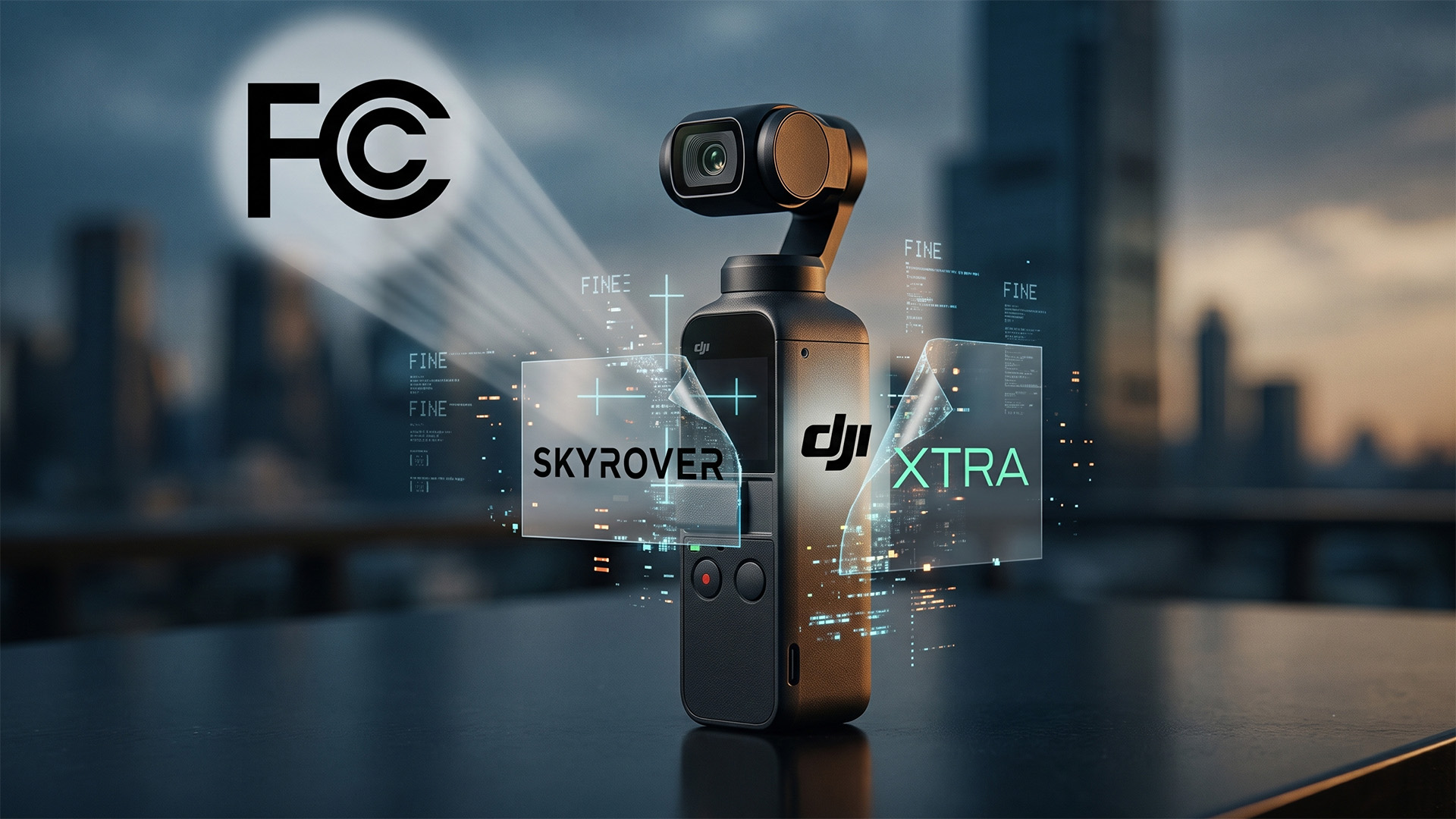
The FCC has fined eight companies it suspects of funneling DJI cameras and drones into the US under other brand names, handing each a $25,000 penalty and a ten-day window to answer the agency’s questions. It is also moving to strip a Chinese test lab of its accreditation, a step that could pull the certifications out from under DJI-derived gear still reaching American shelves.
For more than a year we have tracked the slow tightening of US restrictions around DJI, from the Section 1709 audit standoff to the moment the FCC added the company and effectively all foreign-made drones to its Covered List. That designation, which took effect on December 22, blocks new equipment authorizations rather than grounding existing fleets, and we broke down exactly what it means for the gear in your bag in our coverage of the FCC Covered List decision. The latest development shifts the spotlight from DJI itself to a cluster of lesser-known firms that regulators believe are acting as stand-ins for the Chinese giant.
Eight names on the FCC’s listThe agency is fining eight companies $25,000 each: Cogito Tech, Fixaxo Technology, Lyno Dynamics, Skyhigh Tech, Spatial Hover, SZ Knowact (the company behind the Skyrover drone brand), WaveGo Tech, and Xtra Technology. The penalties are not, at least for now, about the products themselves. Each firm is being fined because it failed to respond when the FCC wrote to ask whether it markets radio equipment in the US that belongs on the Covered List. All eight now have until July 20 to answer, a notably tight window before the agency escalates further.
 The XTRA MUSE 2 PRO has “from Pocket to Pro” as a headline on their website. Image credit: XTRA website
These are the same suspected DJI front companies that watchers have flagged over the past year, several of them selling hardware through mainstream US retailers. We looked at one of them recently when Skyrover refreshed its S1 and X1 drones with a new touchscreen controller, and noted then the unavoidable question hanging over any DJI-resembling brand sold in a market DJI can no longer freely enter. To be clear, none of this is confirmed. DJI has not acknowledged a link to any of these companies, and each positions itself publicly as an independent operation.
How a drone ban reaches a pocket cameraThe mechanism catching these firms is worth understanding, because it explains why a policy aimed at drones can also snare a gimbal camera. To import, sell, or market any radio-transmitting device in the US, a manufacturer needs the FCC to authorize that device’s radios. When the FCC placed foreign drone makers on its Covered List, it closed that door on national-security grounds. Separately, the agency granted itself the power to retroactively revoke authorizations it has already issued, even for products that merely contain a component from a listed company.
That last point is the sharp edge. A camera is not a drone, but if it carries a DJI radio transmitter, the FCC now has a route to block it from sale, import, and marketing all the same. This spring the agency began writing to the companies in question to ask whether they are marketing covered radio equipment, and by its account not one had replied, which is what triggered the current round of fines. DJI, for its part, is still contesting its Covered List placement and recently pointed to an independent security audit of two of its drones as part of that appeal.
 The two drones sold on the SKYROVER website have remarkable similarities to DJI drones. Image credit: SKYROVER websiteThe Xtra Muse and a Pocket 4 Pro in disguise
Among the eight, Xtra has drawn the most attention. The company has promoted influencer videos that stack its Xtra Muse favorably against the DJI Osmo Pocket 3, the 1-inch-sensor gimbal camera we praised in our vlogging and travel review and later put through a professional documentary test. More pointedly, it is now taking $20 reservations for an “Xtra Muse 2 Pro” that lines up closely with DJI’s Osmo Pocket 4 line, specifically the Pocket 4P, right down to a “From Pocket to Pro” tagline and a dual-lens pocket gimbal description.
Here the regulatory net may already be closing. DJI reportedly cleared the Osmo Pocket 4 Pro through the FCC on November 26, ahead of the ban, and Xtra pushed its own paperwork through on June 17. Yet neither set of documents currently appears in the FCC’s public search engine, which for weeks has returned an error stating there are no attachments available for the application. Whether that reflects an active review, a filing problem, or something else is not clear, but it suggests the path these products used to reach the US is no longer as open as it once was.
A test lab in the crosshairsThe FCC is also looking upstream, at the labs that certified this hardware in the first place. The DJI Osmo Pocket 4 and 4 Pro were tested by SGS-CTST Standards Technical Services Co, as was WaveGo Tech, and on May 11 the agency signaled its intent to disqualify SGS as an accredited test lab. The stated reason is ownership: SGS Shenzhen is 15 percent owned by China Standard Science & Technology Group Company Limited, which is itself wholly owned by the China National Institute of Standardization, tied to a country the US Department of Commerce has formally determined to be a foreign adversary.
Losing an accredited lab is not a small procedural footnote. Certification runs through a short list of authorized test houses, and pulling one of them out of the chain complicates the route to market for every product that relied on it, not just DJI’s. Combined with the retroactive-revocation power and the vanishing FCC filings, it points to an enforcement effort aimed less at any single device than at the whole pipeline that has kept DJI-adjacent gear flowing into the country.
 XTRA offers various pocket and action cameras on their website. Image credit: XTRA websiteWhere does this leave DJI shooters?
For filmmakers, the immediate takeaway is continuity rather than panic. Gear you already own stays legal to use, and this action targets importers and certification, not end users. DJI did not respond to a request for comment on the FCC’s actions.
The people who are hurt the most by the DJI ban in the US are filmmakers and creators who lose access to affordable, class-leading tools that no domestic maker currently can match.
The part that does not add upHere is where we step off the fence. For all the national-security language, the people this actually hurts are American filmmakers, creators, journalists, and public-safety teams who lose access to affordable, class-leading tools that no domestic maker currently matches on price and performance. We laid out how thin the alternatives really are in our deep dive on a looming US DJI ban, and little since has changed that math. Chasing shell companies does not close a security gap so much as it shrinks the toolkit of the very community that US policy claims to support.
The bigger problem is consistency. If the genuine worry is Chinese-made devices with wireless radios moving data around, that concern does not stop at DJI. Insta360 is a Chinese company too, its cameras and wireless microphones carry their own radios, and its newest gimbal, the Luna Ultra, is selling freely on US shelves right now, even as DJI fights Insta360 in a US court and cannot legally bring its own competing Pocket to that same market. Factor in the long list of Chinese-made gimbals, monitors, lights, and microphones that fill working kits everywhere, and singling out one brand starts to look less like a coherent security policy and more like a campaign aimed squarely at DJI. We are all for scrutiny applied evenly; what we struggle with is a rule that treats an identical radio as a threat behind one logo and a non-issue behind another.
Are you still able to get the DJI gear you need in the US, or have you started eyeing alternatives? Don’t hesitate to let us know in the comments below!