
Remember me




 by Nino LeitnerToday
The Sony Future Filmmaker Awards have opened entries for their fifth edition, inviting independent filmmakers worldwide to submit short films free of charge until December 15, 2026. The 2027 competition adds a new Immersive category presented by Meta and the Snapdragon Shorts Award, alongside cash prizes of up to $5,000 and a four-day industry program at Sony Pictures Studios in Los Angeles for the filmmakers behind 34 shortlisted films.
Organized by Creo and sponsored by Sony, the Sony Future Filmmaker Awards have grown into one of the more substantial short film competitions on the calendar since their first edition in 2022, which drew thousands of entries from 140 countries. We have followed the program closely over the years, including the 2024 edition and last year’s 2026 competition, and the formula remains distinctive: rather than festival laurels alone, the main prize is direct access to the industry itself, with shortlisted filmmakers flown to Los Angeles for workshops led by Sony Pictures executives. Full details and the entry portal can be found on the Sony Future Filmmaker Awards website.
 Six categories, one category per film
The 2027 competition comprises six categories: Fiction, Non-Fiction, Animation, Immersive, Student, and Future Format. Fiction, Non-Fiction, and Student entries must run between 5 and 20 minutes and can be shot on any device. Animation entries can be between 2 and 20 minutes and must be at least 75% animated. Future Format submissions are 2 to 5 minutes long, designed for vertical 9:16 viewing, and the organizers explicitly rule out repurposed horizontal content and social-media-style videos such as TikTok edits or vlogs.
Eligibility follows familiar lines. Entries must have been released between January 1, 2025 and December 15, 2026, must be finished works that have gone through picture lock, online editing, and audio mixing, and entrants must hold the rights to the film they submit. Each filmmaker may enter one film per category, and notably, the same film cannot be submitted across multiple categories. Films with significant non-English dialogue need on-screen English subtitles at submission, audio is delivered as mono or stereo rather than 5.1 surround, and entries must be hosted on an online screener such as YouTube or Vimeo with the link remaining active until July 2027.
One rule worth highlighting for our readers: if AI assisted in creating any elements of the film, this must be clearly stated during the entry process, including exact details and timestamps. Given how quickly AI tools are being folded into post-production pipelines, this level of mandatory disclosure is stricter than what many festivals currently require, and entrants should factor it into their submission preparation.
 A new Immersive category presented by Meta
The headline change for 2027 is the Immersive category, presented by Meta, which brings the total number of categories to six. Submissions must be 5 to 20 minutes long and consist of immersive video only, meaning VR180 in standard or stereoscopic form; AR, MR, and XR techniques are not eligible. Content should be pre-rendered video designed for headset playback, for example on Meta Quest devices.
The technical bar is set fairly high. VR180 stereoscopic entries require a minimum of 4K per eye (3840 x 3840 or 4096 x 4096), with 5.7K to 8K per eye preferred, while flat stereoscopic 3D requires at least 3840 x 2160 per eye. Accepted codecs are 10-bit H.265/HEVC, MV-HEVC, or Apple ProRes in an MP4 or MOV container, with a minimum bit rate of 100 Mbps for 4K per eye and 200 Mbps or more for higher resolutions. A frame rate of 30fps is the minimum, with 60fps strongly preferred for motion-heavy content, and VR180 metadata must be injected so playback apps recognize the file as immersive. Unlike the other categories, Immersive entries must also be shared as a downloadable direct file link, capped at 25GB per file. Shortlisted Immersive filmmakers will need to supply a version with a minimum resolution of 3840 x 2160 ProRes HQ MOV.
 The Snapdragon Shorts Award
Also new for 2027 is the Snapdragon Shorts Award. Five filmmakers selected from the 2027 shortlist will receive an array of Snapdragon-powered devices, including a smartphone and laptop, to create an original short film. The winner receives an all-expenses-paid trip to Hawaii for an official announcement and film premiere at the Snapdragon Summit, plus exposure through the Snapdragon Insiders community. It is essentially a commission layered on top of the competition, and for emerging filmmakers, a funded production with guaranteed premiere and promotion may prove as valuable as the main prizes.
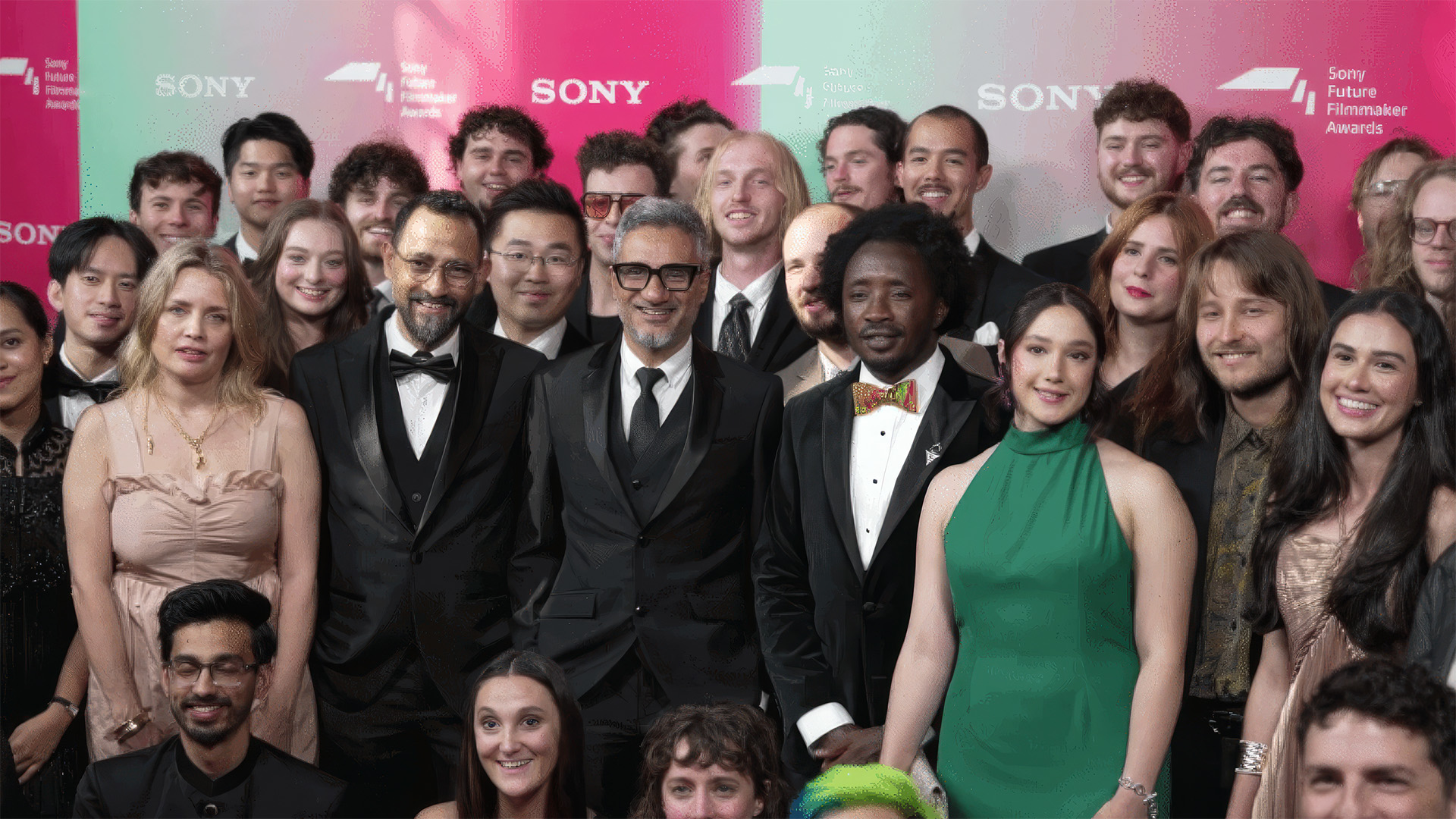
Four days at Sony Pictures StudiosThe filmmakers behind the 34 shortlisted films are flown to Los Angeles, with flights and accommodation covered, for a four-day on-site program at Sony Pictures Studios in Culver City. The program is aimed at directors, cinematographers, and producers, and includes cinematography masterclasses, Q&As with talent agencies, acquisitions teams, casting directors, and production managers, plus curated screenings and studio tours. Previous speakers include Sony Pictures Classics co-founders Tom Bernard and Michael Barker, and cinematographer Salvatore Totino ASC, AIC.
The week culminates in a black-tie awards ceremony on the studio lot where the category winners are revealed. Shortlisted filmmakers may bring one credited collaborator (a cinematographer, director, or producer from the selected film) to the workshop program, though the guest covers their own travel costs. Attendees should note that the program is conducted in English without translation, that participation in all program elements is mandatory, and that securing a valid US visa is the entrant’s own responsibility.
 Prizes and the fine print
Winners in the Fiction, Non-Fiction, Animation, and Immersive categories each receive a $5,000 cash prize, while the Future Format winner receives $2,500. On the equipment side, Fiction, Non-Fiction, Animation, and Student winners receive a Sony camera plus lens and a Meta VR device, the Immersive winner receives a Meta VR device, and the Future Format winner receives a camera plus lens. The Student category winner’s institution additionally receives a piece of Sony camera equipment. Equipment may take up to six months to arrive, and there are no cash alternatives.
Filmmakers retain full copyright of their entries, though entrants grant the promoter and its partners a non-exclusive, three-year worldwide license for promotional use connected to the competition. Shortlisted and commended filmmakers will be required to deliver a 1080 ProRes HQ MOV master, audio stems, clean versions with separate English SRT files, a 30 to 60-second trailer, plus stills, a poster, and a portrait.
The program also continues its Sustainability Prize in partnership with Creators for the Planet, awarding $5,000 and Sony digital imaging equipment to one short film exploring themes linked to the Sustainable Development Goals. The 2026 prize went to Emmy-winning documentary producer and director Mariah Wilson for her short documentary Bear Guardians.
Entry to the Sony Future Filmmaker Awards 2027 is free across all categories, and the submission deadline is 07:00 AM CST on December 15, 2026. The full competition rules are available here.
Are you planning to submit a short film to the Sony Future Filmmaker Awards 2027, and does the new Immersive category tempt you to try VR180? Don’t hesitate to let us know in the comments below!