
Remember me

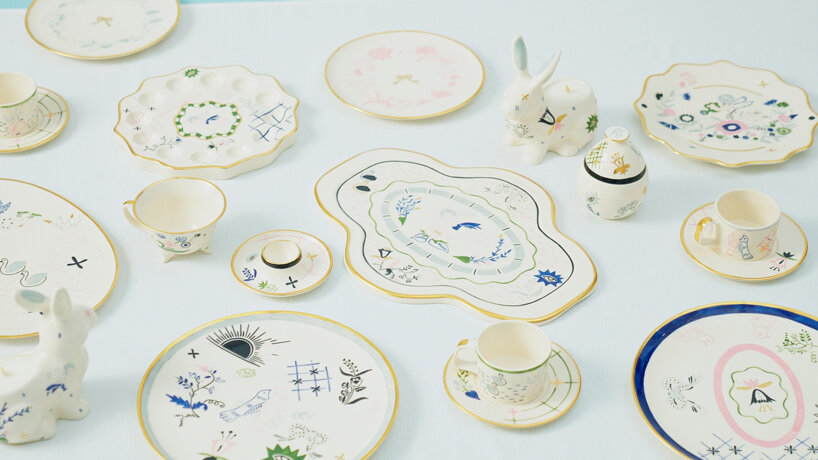




Back in 2019, Natalia Kamenska and Maria Gavryliuk, founders of Ukrainian fashion and design brand Gunia, designed a Christmas tableware collection. In it, white ceramic pieces had cherubs and lambs illustrated across their surface, motifs that appear both in everyday and religious images across the country. When Ukrainian president Volodymyr Zelenskyy visited the Vatican in 2020, he presented one of these creations to Pope Francis – a symbol of the country’s continued legacy for both maintaining and reinventing its cultural crafts.

Gunia ceramics | all images courtesy of Gunia
IN CONVERSATION WITH Natalia Kamenska & Maria Gavryliuk
Not only does Gunia play with Ukrainian imagery in swirling and colorful illustrations, but the very materiality of the work is also derived from material traditions ties to the country. In describing the ‘Gunia universe,’ the brand explains that it works by, ‘bringing together nine artisanal techniques: blown (guta) glass, weaving, embroidery, wood carving, ceramics, silver and bead jewellery, knitting, and basketry.’ In conversation with Kamenska and Gavryliuk, designboom delves into their journey with Gunia and how they’ve brought their contemporary vision to historic practices.
The two founders had a traditional background in the fashion industry before embarking on this project. ‘Fashion taught us a lot about design, aesthetics, and production, but we found ourselves drawn to objects that carried memory, meaning, and a deeper connection to culture,’ the duo explains. ‘Gunia Project began not as a business idea but as a process of research. We started visiting museums, studying archives, traveling across Ukraine, meeting artisans, and discovering how much knowledge, beauty, and complexity existed within traditional culture. Our relationship to design shifted from creating something new for the sake of novelty to creating something meaningful through research. Today, every object starts with a story, a symbol, a historical reference, or a cultural question rather than a trend forecast.’

ceramics manufacturing process
The namesake wool coat and the weavers behind it
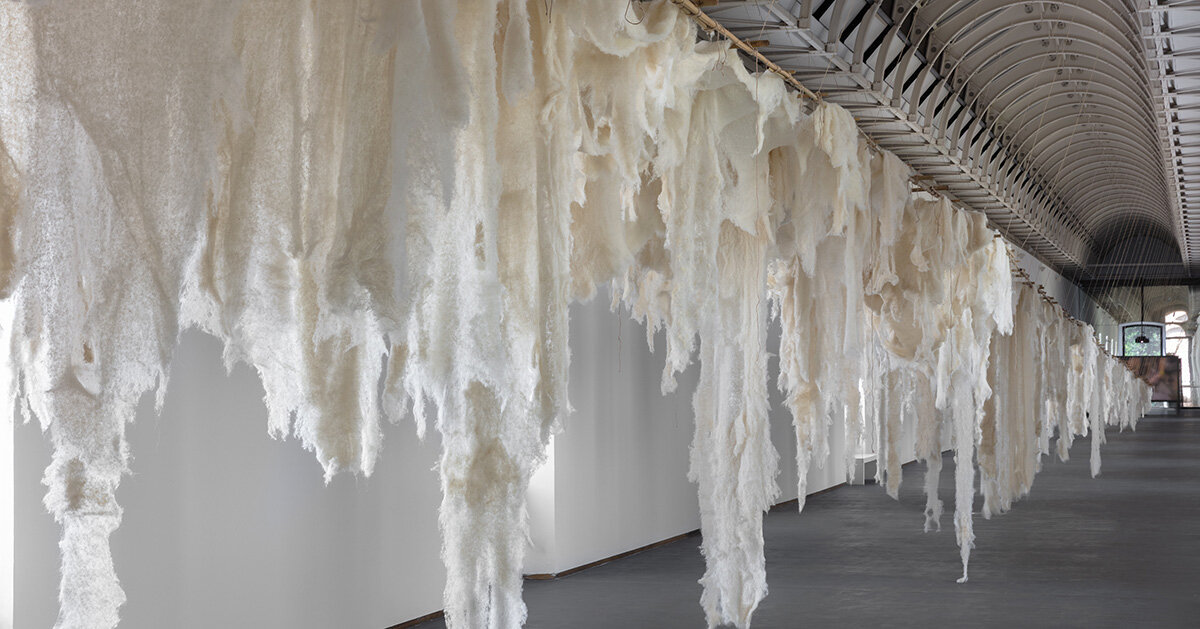
In one of their short films about the craftspeople they work with, Gunia brings us to the loom of Natalia Kishchuk, a weaver that they work with. Watching Kishchuk at work, she explains how the Gunia, the hand-woven wool coat from which the brand took its name, was a traditional work garment in the region. She talks about the amount of sheep that will need to be sheared to make the contemporary gunia for the brand, reflecting on how the way she spins yarn from the raw wool was passed down to her from her grandmother.

a contemporary Gunia coat, a traditional Ukrainian garment made from wool, redesigned by the brand
Managing a network of artisans across Ukraine
Kishchuk is just one artisan in the network of over 150 Ukrainian craftspeople Gunia collaborates with to develop their products. ‘Managing such a network is both inspiring and complex because every collaboration operates differently,’ Kamenska and Gavryliuk explain.‘We work with artisans, workshops, and manufacturers across Ukraine, but there is no single model. Sometimes a particular craft technique inspires the object itself. A weaving method, a ceramic process, or a glassmaking tradition can become the starting point for an entirely new design. In other cases, we come with a very clear concept and work together to find the best technical way to bring it to life.’
The collaboration process is always a dialogue, with artisans often contributing invaluable technical knowledge, suggesting adaptations or solutions that improve the final object while remaining faithful to the nature of the craft. For the two founders, preserving these traditional crafts is equally important as finding a way to bring them into the world of contemporary design. ‘We are interested in reinterpretation rather than reproduction — developing new objects that are rooted in culture yet belong to contemporary life. At the same time, it is very important for us that these techniques continue to live, evolve, and be passed on to future generations. We hope that by bringing traditional crafts into contemporary design, more people will see them not only as a hobby or part of cultural heritage, but as a viable professional practice. For craft traditions to survive, they need to remain relevant, create opportunities, and attract new makers.’