5 learnings from Ireland's fearless win over Wales in Belfast
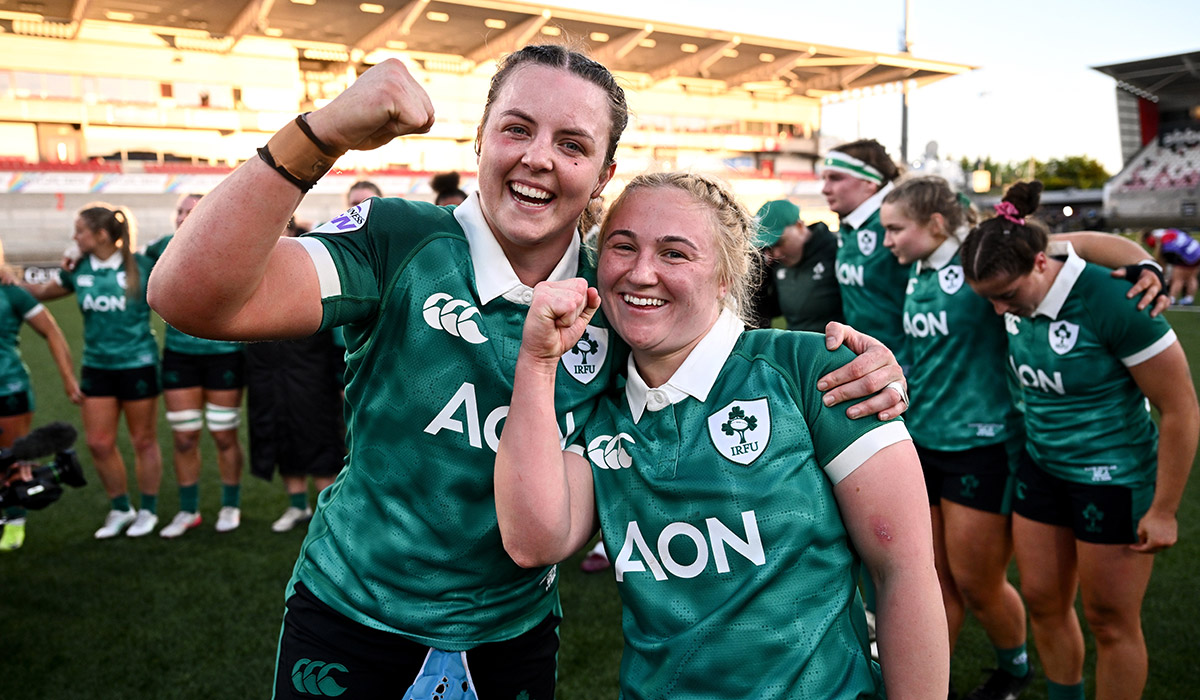
Ireland showed huge bravery in their play as they beat Wales 33-12 in the Affidea Stadium to record their second Six Nations win.
After a scrappy start in the low sun of Belfast, a timely kick from Stacey Flood led to a Welsh goal-line drop-out. A scuffed kick would give Ireland prime field position, and Aoife Wafer would crash over for the first try of the evening.
Wales would get back into it, and after a succession of quick rucks off a lineout, Georgia Evans would dive over beside the post to level things up.
Cliodhna Moloney MacDonald. Pic: Ben McShane/Sportsfile
It was Wafer at the centre of Ireland’s attack once again as the Harlequins 8 picked off the back of a collapsed scrum, taking several Welsh players with her before offloading for Beibhinn Parsons to get her fourth try of the Championship and give Ireland the lead.
Then, deep into the red and after a chaotic few minutes back and forth, Brittany Hogan was able to dot down to give Ireland a two-score lead heading into the break.
It was a nervy start for Ireland in the second half, as Cliodhna Moloney-MacDonald was sent to the bin after a lengthy TMO review, which showed she kicked Georgia Evans as the lock was holding onto her leg. There was very little force, but the hooker was fortunate she didn’t give it any more, as it easily could’ve been upgraded to red.
Béibhinn Parsons of Ireland scores. Pic: Shauna Clinton/Sportsfile
Wales failed to capitalise on the player advantage and would soon get a card of their own, a few minutes later, through Jasmine Joyce. That would open the door for Ireland to secure the win.
Wafer went over again to secure the bonus point, while Ireland had yet another try chalked off through Neve Jones off the back of the maul, as the TMO and referee deemed that the maul had changed.
Wales did score late on through Joyce, but as it did in the first, the second half finished with a Brittany Hogan try to seal the 33-12 win. Ahead of a huge game next week at the Aviva, here are five learnings we can take from the performance in Belfast.
Robyn O’Connor. Pic: Shauna Clinton/Sportsfile
Ireland’s daring bravery pays off
It was a stop-start first half in Belfast as both sides really struggled to get any true flow, down to both the refereeing and then the unforced errors caused by a lack of vision in the low sun.
However, when Ireland turned the ball over with the clock in the red, most teams would kick it off to get into the sheds with the lead, but not this Ireland side.
O’Brien kicked a cross-field kick to Flood, and after winning a penalty, Hogan would dot down beside the post to give Ireland all the momentum going into the half, up by two scores.
Aoife Wafer is the best player in the tournament, and it’s not close
There’s not a player in the Six Nations as dominant at everything she does as Aoife Wafer. The number 8 is simply unstoppable; every carry nearly guarantees passing the gainline.
Another player of the match award, and you can’t debate it. Wafer is pivotal to everything Scott Bemand’s side does on attack, and without her, that game would’ve been significantly tighter.
The World Cup showed that Ireland can survive some games without her, but since her return to full fitness, she’s found another gear and is head and shoulders above anyone else in this Championship.
Aoife Wafer of Ireland is tackled by Lleucu George. Pic: Shauna Clinton/Sportsfile
Alan O’Connor’s brilliant first impression
The former Ulster lock was quietly brought in as a forwards coach, and he’s been a shrewd acquisition to Bemand’s coaching ticket.
Ireland’s lineout has been near impeccable (when Hogan doesn’t have to throw!) and the peel moves and mauls have worked wonders. Jones was unfortunate to have her try ruled out, but it still showed that O’Connor’s blueprint is flourishing.
Everyone has sung his praises so far; it will be interesting to see how his coaching career pans out after what has been a very promising start.
Take your chances!
This Championship will be remembered for its missed opportunities, not just in results, but literally missing opportunities on the pitch.
Wales were stodgy and tough up front, but Ireland were well above them and should’ve made the scoreline bigger.
Pic: Ben McShane/Sportsfile
Standards need to be raised
It was supposed to be a big occasion, but the production standards were not up to scratch. Routinely, replays weren’t shown on the RTÉ broadcast, and for Moloney-MacDonald’s yellow card, the game was brought to a complete extended halt as it took minutes for the replays to appear on the big screen for the referee.
If you want the women’s game to be taken seriously, then you need to treat it the same as the men’s game. You’ll rarely see such production issues for an Ulster match at Affidea. It just wasn’t good enough.