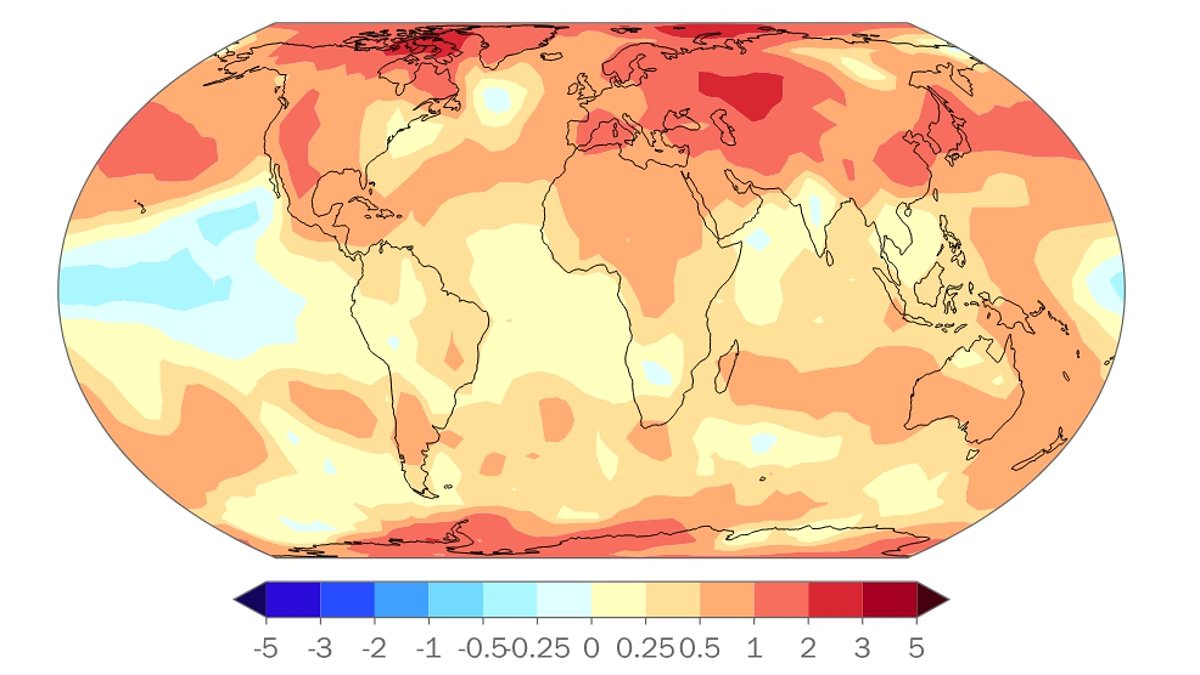
Earth's climate is more out of balance than EVER before: Shocking report confirms humanity has just endured the 11 hottest years on record - as scientists warn 'every key indicator is flashing red'
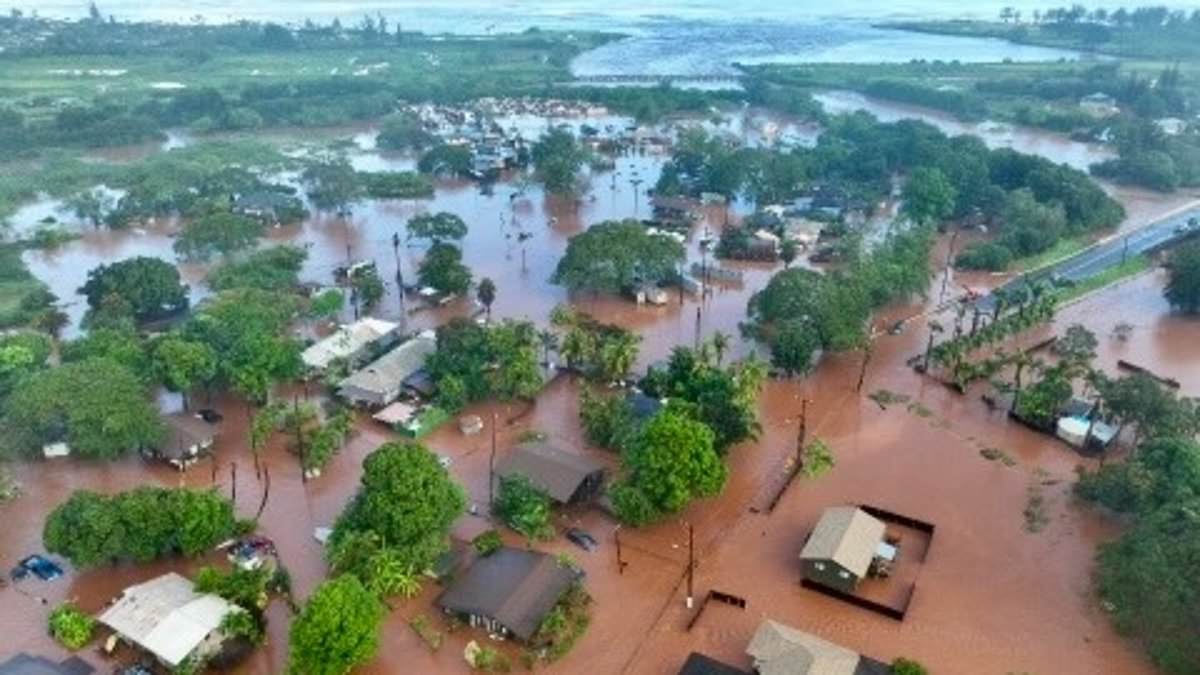
The Earth's climate is more out of balance than at any other time in observed history, a shocking new report has revealed. Scientists from the World Meteorological Organisation (WMO) say that humanity has just endured the 11 hottest years on record from 2011 to the end of 2025.Last year was the second or third hottest year on record, with an average temperature 1.43°C (2.57°F) above the 1850–1900 average.From global temperature and greenhouse gas concentrations to sea levels and glacier retreat, scientists now warn that every indicator is 'flashing red'.The WMO's annual State of the Climate report identifies large–scale changes that experts say could impact the planet for hundreds, if not thousands, of years. Importantly, the report gives the first clear view of Earth's energy imbalance, which measures the rate at which energy enters and leaves the atmosphere.Our planet's energy imbalance is now at its highest in the 65–year observational record, triggering rapid warming of the atmosphere and oceans.UN Secretary–General António Guterres says: 'Planet Earth is being pushed beyond its limits. Every key climate indicator is flashing red.' Scientists warn that Earth's climate is more out of balance than ever before, as a shocking report shows that we have just endured the hottest 11 years on record 2025 was the second or third hottest year on record, with an average temperature 1.43°C (2.57°F) above the 1850–1900 averageIn an ideal world, the rate at which energy arrives from the sun would be roughly equal to the rate at which heat escapes through the atmosphere.However, greenhouse gases like carbon dioxide, methane, and nitrous oxide trap infrared radiation in the atmosphere, throwing Earth's energy off balance.The WMO now confirms that concentrations of these gases have reached their highest levels in history.Carbon dioxide is now present at 423 parts per million in the atmosphere, which is 152 per cent of the concentration before the Industrial Revolution and the highest it has been in the last two million years. Likewise, nitrous oxide and methane are at their highest concentrations in the last 800,000 years.The concentration of methane is 266 per cent of the pre–industrial level, while nitrous oxide is at 125 per cent of pre–industrial concentrations. That means heat is building up faster than it can escape, producing enormous amounts of excess energy.WMO Secretary–General Celeste Saulo says: 'Scientific advances have improved our understanding of the Earth's energy imbalance and of the reality facing our planet and our climate right now. The energy balance, which measures how fast energy enters and leaves the atmosphere, was at its most imbalanced since measurements began 65 years ago Over 90 per cent of the world's excess heat is absorbed by the ocean, driving rapid warming and an increased frequency of marine heatwaves The five key climate indicators 'flashing red' Temperature: The last 11 years have been the hottest ever recorded.Greenhouse gases: Carbon dioxide concentrations are the highest in the last two million years.Ocean heating: Ocean heating is at its fastest rate ever recorded.Sea ice: Arctic sea ice was at or near record lows in 2025.Glaciers: Mass loss from glaciers in 2025 was among the five worst years on record. 'Human activities are increasingly disrupting the natural equilibrium and we will live with these consequences for hundreds and thousands of years.'While the last 11 years have been the hottest on record, experts say that it is likely to get hotter in the coming years due to the natural El Niño weather cycle.Dr Akshay Deoras, senior research scientist at the University of Reading, says: 'El Niño naturally releases a lot of heat from the ocean into the atmosphere, and when that sits on top of very high greenhouse gas levels it can push global temperatures to new records. 'There is a good chance we will see El Niño conditions develop again later this year. Thus, it could bring another spike in global temperatures in 2026–2027 on top of the already high baseline.'However, the part of the atmosphere that we feel only absorbs one per cent of that excess energy.Of the remaining energy, five per cent is stored by the continental land masses, three per cent goes into melting ice, and more than 91 per cent is absorbed by the ocean. Ocean heat content hit a record high in 2025, and the rate at which the seas are warming has doubled from 1960–2005 to 2005–2025.In fact, each of the last nine years set a new record for the amount of heat stored in the ocean. Warming oceans have eroded the polar ice caps, with Arctic sea ice at or near its lowest point on record in 2025 Mass loss from glaciers has also been accelerating due to the warming planet, with 2025 seeing some of the most extreme melting in the last five years Hottest years on record globally 2024 (59.2°F/15.1°C) 2023 (58.96°F/14.98°C)2025 (26.95°F/14.87°C)2016 (58.66°F/14.814°C) 2020 (58.65°F/14.807°C) 2019 (58.60°F/14.78°C) 2017 (58.50°F/14.723°C) 2022 (58.42°F/14.682°C) 2021 (58.38°F/14.656°C) 2018 (58.35°F/14.644°C) (Figures in brackets refer to global average air temperature for the year)Source: Copernicus The WMO now estimates that the oceans absorb between 11 and 12.2 zetajoules of heat energy every year – equivalent to 18 times humanity's yearly energy consumption.This is warming the oceans at a rapid rate and triggering profound consequences for the global climate, including marine heatwaves, sea level increases, and retreating polar ice.In 2025, 90 per cent of the ocean's surface experienced an ocean heatwave, despite a cooling La Niña weather pattern. Professor Scott Heron, of James Cook University, says: 'Intensifying marine heatwaves have already impacted ocean systems through coral bleaching and mortality across the tropics, seagrass death and catastrophic marine disease outbreaks in tropical and temperate zones, as well as episodes of salmon lice in polar aquaculture. 'If rainforests are thought of as the lungs of our planet, the ocean provides the heart and circulation – and human–induced climate change is giving us all heart disease.'The WMO's research shows that sea levels are rising at an accelerating rate due to the melting of ice sheets and the natural expansion of warming water.Sea levels in 2025 were comparable to their record highs in 2024, sitting 4.3 inches (11 cm) higher than they were at the start of satellite records in 1993.Currently, the Intergovernmental Panel on Climate Change (IPCC) estimates that sea levels could rise by 3.2ft (one metre) by 2100 if climate change is not slowed. Since the warmer atmosphere holds more energy, recent years have also seen an uptick in the frequency and severity of extreme weather events However, a recent study has suggested that sea levels at the end of the century could be around 11 inches (28 cm) higher than expected in the UK and between 3.2ft and 4.9ft (1–1.5 metres) higher in parts of Southeast Asia.With an estimated 50 to 80 million people currently living below sea level, even small increases could be devastating for millions of people in coastal areas.Warming oceans are also causing the retreat of polar sea ice, with the annual sea ice extent in the Arctic at or near record lows in 2025 and average extents in the Antarctic at their third lowest on record.Likewise, mass loss from glaciers in 2024 to 2025 was among the five worst years on record, with exceptional levels of mass loss in Iceland and the Pacific coast of North America.At the same time, the warming of the climate is producing serious consequences that are already taking their toll on human life.A warmer atmosphere carries more energy and water, which means that extreme weather events are more frequent and more devastating when they do occur.Late last year, Hurricane Melissa made landfall in the Caribbean as the most powerful storm in Jamaica's history. Researchers found that the catastrophic category 5 hurricane had been made four times more likely by climate change. While some regions experienced record rainfall (dark blue), other areas saw record–breaking droughts (dark brown). These patterns are leading to more flooding and wildfires In a cooler world without climate change, a Melissa–type hurricane would have made landfall once every 8,000 years.Meanwhile, back–to–back periods of extreme drought and heavy rainfall are leading to a greater number of more intense wildfires and flash floods around the world.Dr Mortlock, head of climate analytics at the University of New South Wales, says: 'Even seemingly small increases in temperature can have outsized effects on extreme weather.'The frequency and intensity of bushfires, floods, cyclones and hailstorms are all linked to the warming of the atmosphere. At the same time, more people are living in harm's way.'Recent research shows that these shifting weather patterns also risk fuelling the outbreak of deadly diseases such as dengue fever.Warmer, wetter weather is pushing the habitat of the disease–spreading Asian and Egyptian mosquitoes northwards, into cities including London, Vienna, Strasbourg, and Frankfurt.Although the species is not in these cities yet, its rate of northward spread in France has been accelerating from about 6km (3.7 miles) per year in 2006 to 20km (12.4 miles) per year in 2024. A new study has shown that storms make outbreaks of this disease far more dangerous. As the climate warms, it is becoming more suitable for mosquitoes that spread diseases such as dengue fever. Scientists now warn that these insects' breeding grounds could spread into northern Europe Following a cyclone in Peru during 2023, an outbreak of dengue fever was 10 times larger than normal for the area.Experts say the weather which triggered the outbreak is now three times more likely due to climate change. Mr Guterres concludes: 'The State of the Global Climate is in a state of emergency.'Today's report should come with a warning label: climate chaos is accelerating and delay is deadly.'THE PARIS AGREEMENT: A GLOBAL ACCORD TO LIMIT TEMPERATURE RISES THROUGH CARBON EMISSION REDUCTION TARGETSThe Paris Agreement, which was first signed in 2015, is an international agreement to control and limit climate change.It hopes to hold the increase in the global average temperature to below 2°C (3.6ºF) 'and to pursue efforts to limit the temperature increase to 1.5°C (2.7°F)'.It seems the more ambitious goal of restricting global warming to 1.5°C (2.7°F) may be more important than ever, according to previous research which claims 25 per cent of the world could see a significant increase in drier conditions. The Paris Agreement on Climate Change has four main goals with regards to reducing emissions:1) A long-term goal of keeping the increase in global average temperature to well below 2°C above pre-industrial levels2) To aim to limit the increase to 1.5°C, since this would significantly reduce risks and the impacts of climate change3) Governments agreed on the need for global emissions to peak as soon as possible, recognising that this will take longer for developing countries4) To undertake rapid reductions thereafter in accordance with the best available scienceSource: European Commission