Panic in Hawaii as dam faces 'imminent' failure and thousands are told: 'Leave now'
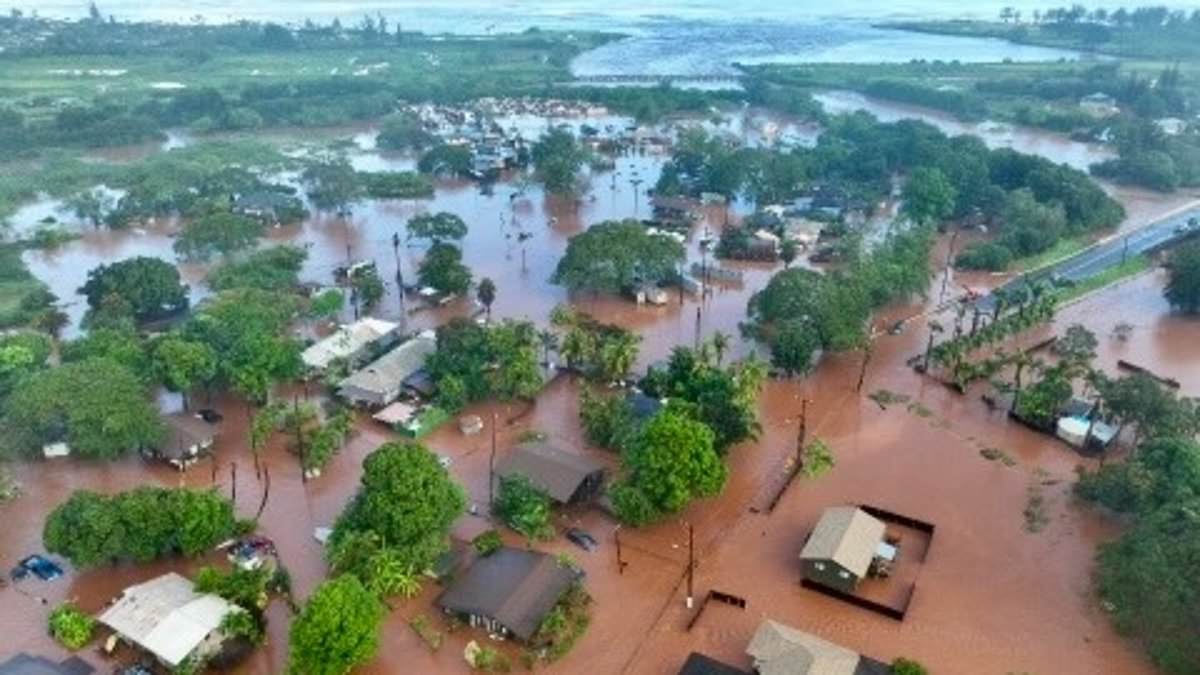
A major dam in Hawaii is on the verge of collapse as heavy rainfall hammers the islands, triggering urgent warnings for thousands of locals to evacuate immediately.The Wahiawa Dam on the island of Oahu is at an 'imminent risk of failure' according to the Oahu Department of Emergency Management.If the dam breaks, it could create a high risk of sudden, life-threatening flooding in areas downstream, specifically in parts of Haleiwa and Waialua on the island's North Shore.As of 9am local time (3pm ET), the evacuation order was still active in Oahu, with officials warning residents to grab family members and pets and leave immediately.Residents were urged to help neighbors only if it was possible to do it safely, but let them know about the alert, and not waste time packing belongings.The evacuation order applies to anyone currently in Haleiwa between Puuiki Street and Kamehameha Highway and areas of Waialua between Kukea Circle to Otake Camp. According to the Honolulu Star Advertiser, the downpours have caused the water level in the Wahiawa reservoir to rise to over 85 feet. That amount is well above the normal spillway level of about 80 feet.Hawaii has been inundated with rain from a pair of heavy storm systems known as 'Kona lows' which have dumped between eight and 12 inches of rain in certain areas over the last day. The Wahiawa Dam in Oahu (Pictured) is at 'imminent risk of failure' due to rising water levels at the Wahiawa reservoir and heavy downpours The Wahiawa Dam on the island of Oahu is at an 'imminent risk of failure' according to the Oahu Department of Emergency Management.Hawaiian officials updated earlier reports that the Wahiawa Dam already failed, but still pleaded with residents to leave the area at once.'Wahiawa Dam has not failed but is at imminent risk of failure. Potential life-threatening flooding of downstream areas,' Oahu Emergency Management posted online Friday.Residents fleeing the area have been advised to carpool if possible as traffic during the evacuation has been extremely heavy.The National Weather Service in Honolulu has also issued a flash flood warning for all of Honolulu County.Nearly one million people live in the county, which encompasses the entire island of Oahu, and that number quickly grows to more than 1.1million after accounting for tourists visiting Hawaii.Honolulu officials warned in a statement at 4.37pm ET: 'Radar indicated heavy rain continuing to move over east Oahu. Rain was falling at a rate of 1 to 2.5 inches per hour.''Flash flooding is ongoing, especially in and around Honolulu, with flowing water on roadways and stalled vehicles.'On X, emergency management officials urged anyone in the affected area to immediately move to higher ground and avoid traveling through flooded areas or roadways. Thousands of residents in Hawaii have been urged to gather their families and leave their homes immediately before the Wahiawa Dam fails If the dam breaks, officials warned that it could lead to life-threatening floods Haleiwa and Waialua (Seen in Red) on the Island of Oahu's North Shore.While residents in Honolulu, on the southern part of the island, have been urged to seek higher ground, the situation is becoming extremely dire for Hawaiians in the north - where the Wahiawa Dam is located.'This is a FLASH FLOOD EMERGENCY for Northern Oahu,' Honolulu County officials declared at 5pm ET. Several public roads are expected to be closed Friday, and landslides are feared along areas with steep terrain.'Significant property damage expected to homes and other properties in low lying areas,' officials warned.All of the rain and flooding ravaging Hawaii has come from a rare double hit from Kona lows.These are unusual winter weather systems that bring heavy rain, strong winds, thunderstorms and flooding by pulling in tropical moisture from the south instead of the usual trade winds from the east. Hawaii has been experiencing a heavy storm system called a 'Kona low' that has produced eight to 12 inches of rain in some areasThe first powerful Kona storm hit Hawaii from March 10 to March 16, dumping record amounts of rain, including up to 46 inches in some spots, such as Maui and parts of Oahu.However, AccuWeather meteorologists have warned that this second Kona storm, which began on Thursday, could quickly lead to devastating damage on Oahu because the ground is still saturated from the earlier storm.AccuWeather Senior Meteorologist Brett Anderson warned: 'The ground is still saturated in the wake of the recent storm, which will lead to rapid runoff that can easily trigger small stream and urban flooding, as well as increase the risk of mudslides and debris flows.'