February slowdown for China’s NEV market
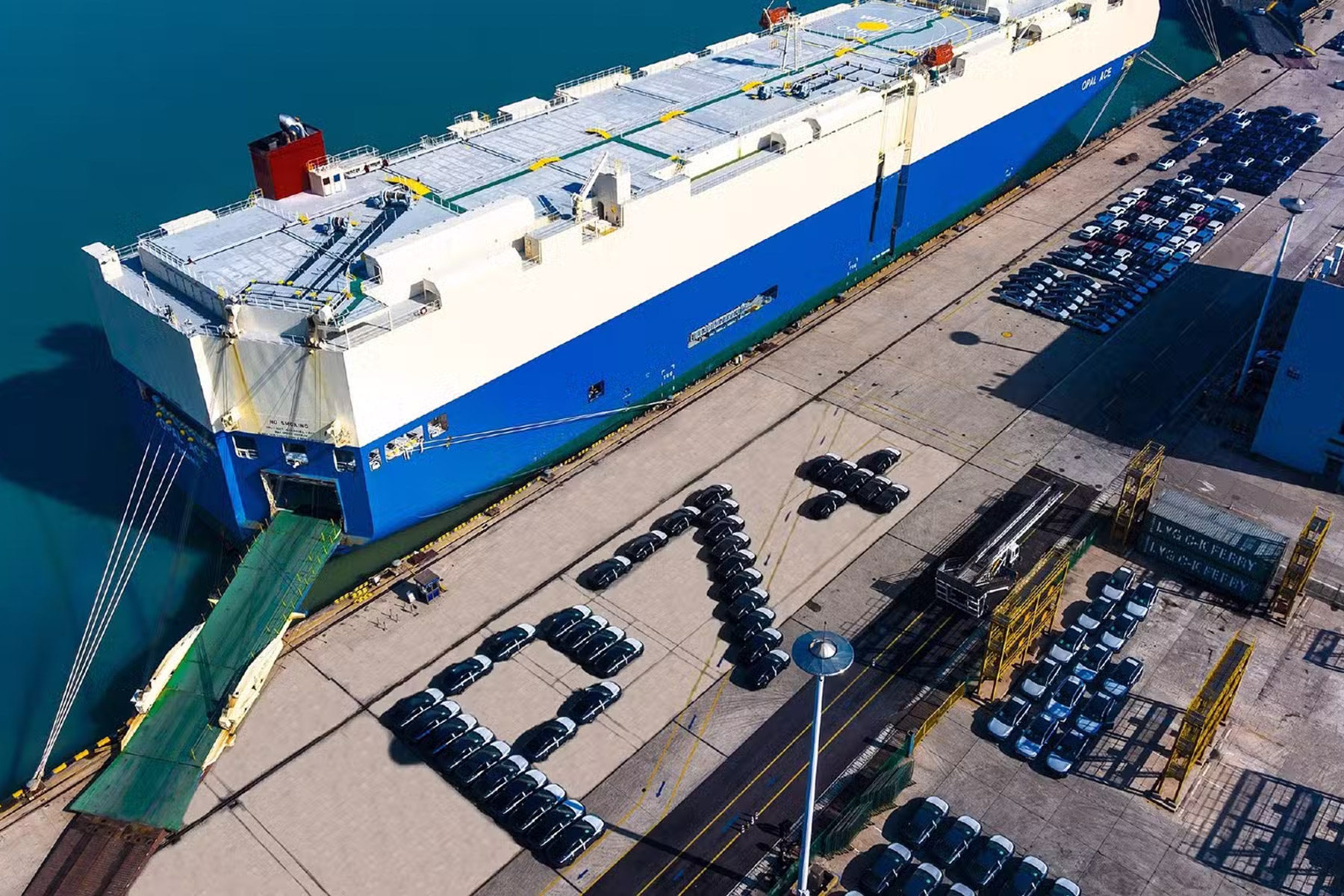
According to the China Association of Automobile Manufacturers (CAAM), a total of 765,000 new energy vehicles (NEVs) were sold in February. China categorises battery-electric vehicles (BEVs), plug-in hybrids (PHEVs), and fuel cell vehicles (FCEVs) under this term, although the latter play no significant role in China’s passenger car sector.The following figures highlight the trends in electric cars and plug-in hybrids: the 765,000 wholesale sales by manufacturers operating in China represent a decline of 14.2 per cent compared to February 2025 and 19.1 per cent compared to January 2026. The statistics include both domestic sales and exports, whose developments diverged particularly sharply last month.Domestic NEV sales in China amounted to just 483,000 units, marking a decline of 36.5 percent compared to February 2025 and 24.9 percent compared to January 2026. Domestic NEV sales were last this low in February 2023. It is important to note that in many markets, the end of the year often marks a peak in vehicle sales, followed by a quieter period in January and February. In China, this phenomenon is particularly pronounced, as the most important holiday, along with its festivities, occurs in January or February. This year, the Chinese New Year fell on 17 February. While a seasonal dip in the statistics is normal in China, the drop in sales this February was unusually sharp. More on the potential reasons below.First, let’s consider exports: NEV exports by manufacturers active in China continued to rise, reaching 282,000 units – an increase of 115 per cent compared to February 2025. However, they were 6.6 per cent lower than in January 2026. For context: a year ago, CAAM recorded 131,000 NEV exports, and two years ago, 82,000. The momentum here remains unbroken. The slight decline compared to January is a recurring pattern in the export statistics over the past three years, each time followed by a strong March. It remains to be seen whether this pattern will repeat this year.The weakness in the domestic market was the primary reason for the decline in overall NEV sales volume. The portal CN EV Post suggests that, in addition to seasonal factors, the elimination of tax incentives for NEV purchases likely contributed to the weak figures. Since the beginning of this year, buyers of electric cars have been required to pay a vehicle purchase tax of five percent.China’s overall vehicle market declined by 15.2 per cent year-on-year in February, totalling 1.805 million units. These figures also represent wholesale sales. The February result marks a drop of 23.1 per cent compared to January. Vehicle exports accounted for just over a third (672,000 units), reflecting a 52 per cent increase year-on-year and almost no change compared to January (-1.4%). This shows that sharply rising NEV exports are providing strong tailwinds for the entire export business.In terms of market penetration, NEVs accounted for a 42.4 per cent share in February—a relatively weak figure. In January, the share was only 40.3 per cent. This could be linked to the introduction of the purchase tax for electric cars, as NEV shares in China stood at 53.2 per cent and 52.3 per cent in November and December, respectively. For the full year 2025, the figure was 47.9 per cent.Finally, let’s examine the differing trends among drive types: BEVs accounted for 484,000 sales in February, which is 10.9 per cent less than a year ago and 18.9 percent less than in January. However, BEV exports saw significant growth year-on-year, reaching 174,000 units (+120% YoY, -13.7% compared to January).Furthermore, CAAM recorded around 280,000 plug-in hybrids in February, representing a decline of 19.4 per cent compared to the same month last year and 19.5 percent compared to January. In exports, however, PHEVs doubled year-on-year to 107,000 units (+110% YoY, -7.8% compared to January).The developments have hit China’s largest NEV manufacturer, BYD, particularly hard. The company experienced a 41 percent drop in sales in February, selling only 190,190 electric vehicles and plug-in hybrids. At the same time, February marked the first month for BYD in which overseas sales surpassed those in China. Overall, this was the sixth consecutive month of declining sales for BYD.cnevpost.com