Ex-NASA chief gives Isaacman's Moon reboot a thumbs up, stays schtum on the awkward bits
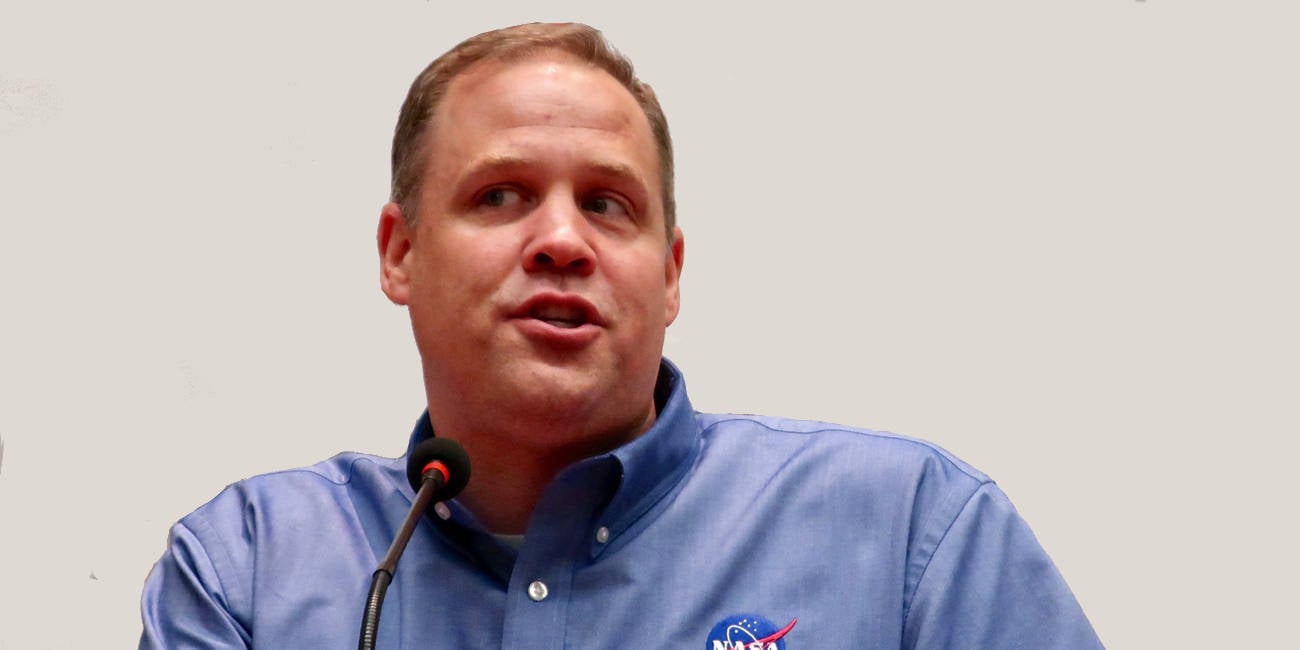
NASA Administrator Jared Isaacman has won an endorsement from his predecessor Jim Bridenstine, who praised Isaacman's shake-up of the perpetually delayed Artemis program.
Bridenstine said what many in the space community have long muttered: NASA's approach wasn't working, but nobody in the agency was prepared to face reality.
"It takes clarity and conviction to evaluate where a program stands and make adjustments that strengthen confidence and build momentum," he said. "Jared is doing exactly that."
Isaacman recently announced that Artemis III mission would be repurposed as a technology demonstration mission, with the actual lunar landing pushed to Artemis IV in 2028. He also outlined plans to increase the cadence of Space Launch System (SLS) launches - the lengthy gap between missions has undoubtedly contributed to the problems (including a hydrogen leak) that has plagued Artemis II.
Artemis II is currently back in the Vehicle Assembly Building (VAB) at NASA's Kennedy Space Center for repairs after a problem with the helium flow to the upper stage of the rocket was discovered following a February 21 Wet Dress Rehearsal (WDR). Engineers have replaced a seal in the quick disconnect through which helium flows, though they are still investigating how it became dislodged. Batteries have been serviced, and work is underway to replace a seal in the core stage liquid oxygen line feed.
The rocket is expected to roll back to the pad later in March for a potential launch in April. Isaacman has stated a goal of reducing the gap between launches from multiple years to ten months. Bridenstine said he supports this:
"His focus on increasing launch cadence and standardizing configuration is about more than schedule. It is about reducing risk, strengthening the industrial base, and restoring the operational rhythm that complex missions require. A steady tempo builds the experience and muscle memory that keep astronauts safe and missions successful."
Bridenstine was nominated to run NASA during the first Trump administration and, although he drove the Artemis program forward, he departed before Artemis I launched. His tenure was also marked by the goal set by the Trump administration to return humans to the lunar surface by 2024. That target came and went as NASA grappled with the budgetary and technical challenges of making the SLS work.
He remains an outspoken voice since leaving the agency. In 2025, Bridenstine criticized a lunar landing architecture that relied heavily on SpaceX's Starship, after which NASA reopened the Artemis III contract competition.
However, Bridenstine has remained silent on two significant questions: Isaacman has yet to address the future of the Gateway lunar space station, and it remains unclear how the increased launch cadence will be funded.
Even so, Bridenstine's endorsement is a welcome development for Isaacman as he works to make NASA's long-held dream of a return to the Moon a reality. ®