Audi and Škoda reportedly line up derivatives of Volkswagen’s electric small-car family
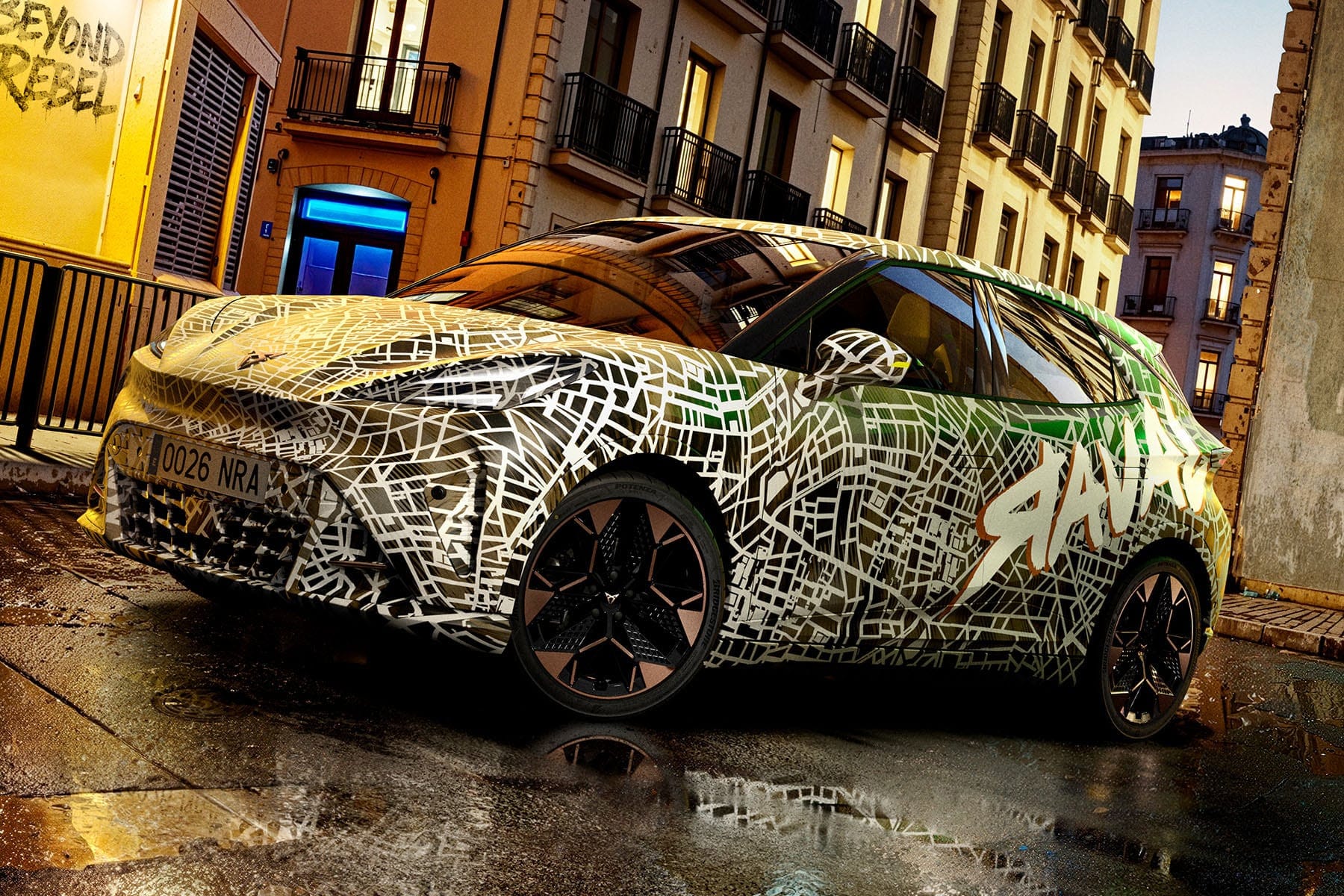
The European Commission’s mid-December announcement of a new vehicle class for small battery-electric cars is triggering fresh momentum within the VW Group. According to the Spanish portal La Tribuna de Automoción, the regulatory push under the ‘Automotive Package’ is prompting Audi and Škoda to advance plans for their own derivatives of the new Electric Urban Car Family. For Škoda, the move would mark the second model in the line-up alongside the already confirmed Epiq. Audi, meanwhile, would be entering previously untapped territory.According to the report, both projects were already considered within the Group in 2021 but were later abandoned. The new legislation has now seemingly revived them. The plans are said to be well advanced: the battery-electric small-car offshoot bearing the four rings is described by the Spanish media as ‘practically confirmed,’ while Škoda’s version has yet to receive the green light. The hypothetical Audi A1 e-tron is expected to launch in 2029/2030, with the potential Škoda E-Fabia following in 2031/2032. However, these plans and timelines have not been officially confirmed.So far, the confirmed models for the small-car family include the Cupra Raval, the VW ID. Polo, the VW ID. Cross, and the Škoda Epiq. The Raval will be the first to open its order books in the first half of 2026, with the other three small battery-electric vehicles set to follow later that year. All models will be produced in Spain.The focus on small battery-electric vehicles marks a shift in the industry. For years, the sector has neglected the small electric car segment, prioritising more profitable segments instead. As a result, many low- and middle-income earners have long been unable to afford electric cars. This prompted the EU Commission to introduce a new vehicle class in its recently presented ‘Automotive Package’ to counteract this trend. At the core of the package, however, is a slight relaxation of CO₂ targets for manufacturers. The Commission has linked both aspects in its proposal.To this end, the Commission plans to promote small and affordable battery-electric cars through so-called ‘super credits.’ Electric vehicles shorter than 4.20 metres will be weighted more heavily in a manufacturer’s fleet emissions calculations. In practical terms: a sold ID. Polo would not count as one vehicle in VW’s fleet emissions calculation, but as 1.3 vehicles. “This will enable Member States and local authorities to develop targeted incentives, stimulating demand for small EVs made in the EU,” the Commission stated in December.The proposal is said to originate from Spain and France. Both countries had already advocated in autumn for maintaining the 2035 CO₂ target with only slight additional flexibility, preferring instead to promote electric vehicles through measures like super credits. On the corporate side, the new vehicle class is reportedly supported primarily by Renault and Stellantis.Specifically, a new subcategory of the standard passenger cars (class M1) is planned, designated M1E. The key criterion is a maximum length of 4.20 metres. Current models that fall into this category include the upcoming Twingo, the Renault 4, and the Renault 5 (all Renault), the Citroën ë-C3, the Opel Mokka Electric, and the Jeep Avenger (all Stellantis), as well as the aforementioned small cars from the Volkswagen Group. Slightly larger models, such as the Ford Puma Gen-E, the Volvo EX30, or the Kia EV3, exceed this limit.According to media reports, however, only battery-electric small cars produced within the EU will benefit. This aligns with the Commission’s new approach, which increasingly seeks to introduce ‘Europe-first’ rules in its industrial policy. As a result, models that qualify in terms of length, such as the Dacia Spring, the Hyundai Inster, or the Mini Cooper and Aceman, would be excluded from the definition.forococheselectricos.com, latribunadeautomocion.es ( both in Spanish)