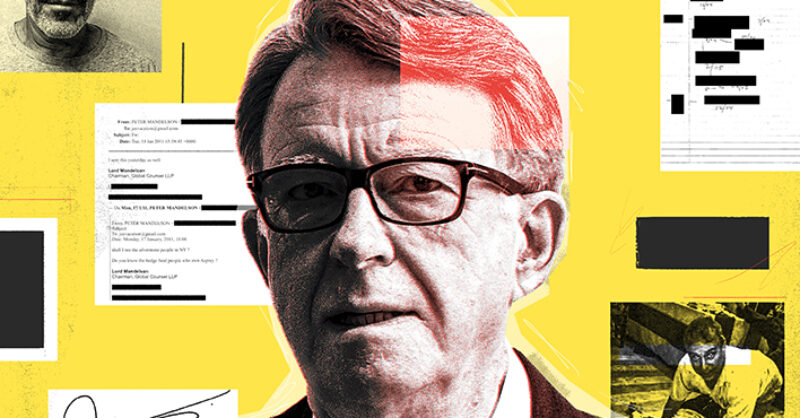
The Mandelson affair: inside the scandal of a century
When Keir Starmer first entered Downing Street as Prime Minister, appointing Peter Mandelson ambassador to Washington wasn’t part of the plan. Sue Gray, Starmer’s then chief of staff, had compiled a shortlist of two for that crucial diplomatic role, and Mandelson – despite media reports linking his name to the role – was not on it.
“Keir doesn’t even like him, and never really has,” one Labour insider now insists. “He’s not Keir’s sort of person.” True or not, the shortlist Gray had drawn up contained the existing post-holder, Karen Pierce, and an intriguing potential political appointment: David Miliband. And yet, five months later, the man Starmer apparently never liked got the job. How that happened – and what changed in the intervening months – is now a question whose answer may determine whether Starmer survives as Prime Minister.
Mandelson’s links to the notorious paedophile Jeffrey Epstein have plunged Labour into a fresh crisis it cannot afford. Five months since Starmer sacked his US ambassador, new revelations – the $75,000 Mandelson doesn’t recall receiving from Epstein, emails he allegedly sent to Epstein informing him Gordon Brown would be resigning as prime minister before it was public knowledge, another allegedly giving him advance notice of a €500bn bailout to save the euro – have placed fresh scrutiny on the very decision to appoint him in the first place. Because, while No 10 says it is shocked and appalled by the latest revelations, Mandelson’s relationship with Epstein beyond his 2008 conviction was not only in the public domain, but pointed out, plainly and directly, to Starmer and his chief of staff, Morgan McSweeney, before they appointed him. And still they went ahead with the decision.
This is the story of how Peter Mandelson came to be appointed to the most important British diplomatic role in the world, by a Labour leadership to whom he had become an indispensable, some say venerated, confidant. For many in the Labour Party, it is a story raising grave concerns about the quality of the advice provided by Morgan McSweeney, who, as I will detail below, developed the relationship with Mandelson and pushed for the appointment. But it raises undeniable questions for the leader who also took the advice, and with whom responsibility for the appointment ultimately rests.
New year, new read. Save 40% off an annual subscription this January.
When McSweeney finally arrived inside No 10, after years of fighting to lead the Labour Party back to power, he was lost. New to the systems and ways of working at the top of the British state, he was engaged in a bitter feud with Gray, but it was a battle he was ill-equipped to fight. She was a veteran of Whitehall; he a newcomer unaccustomed to its archaic structures. For help, McSweeney turned – as he so often did, to Mandelson – the mentor who had been there and done it before.
From the aftermath of the Hartlepool by-election to everything that followed – from the reshuffles and internal feuds to the candidate selections and Downing Street manoeuvrings – Mandelson has been there, available to advise the Starmer operation. As one person who worked with McSweeney in opposition puts it, “Morgan wouldn’t breathe without consulting Mandelson first.” “They talked all the time,” observes another. Mandelson was a frequent visitor at McSweeney’s home in rural Scotland. The once-close pair have not seen each other since Mandelson’s sacking, according to two people familiar with the matter, and are no longer in regular contact.
Mandelson often praised McSweeney’s political acumen and strategic mind, reportedly once saying: “I don’t know who and how and when he was invented but whoever it was… they will find their place in Heaven.” McSweeney, and some fellow advisers, in turn “venerated” the mastermind of the New Labour project, seeing him as a formidable political operator and unparalleled source of insight as they navigated the Labour politics of the 2020s.
In the feud with Gray, Mandelson was “instrumental”, one person close to the matter says. He helped McSweeney navigate it, advising him to build a strategic alliance with Simon Case, the cabinet secretary thought to be a rival of Gray’s. Soon, after damaging leaks surrounding Gray’s salary and a furore over donations from Waheed Alli and others, she was ousted by Starmer and replaced by McSweeney.
Then Donald Trump was re-elected as US president. The process for selecting an ambassador for this key role began again, with Starmer and his chief of staff anxious about managing the potentially tricky relationship with Trump.
A new shortlist was drawn up comprised of four diplomats and two political figures: George Osborne, the Conservative ex-chancellor, and Mandelson. Starmer was quickly persuaded that the delicacy of the position would require a politician, rather than a traditional diplomat. But intriguingly, he initially favoured Osborne, according to a person familiar with the conversations.
McSweeney took a different view. According to those in the room with him at the time, he viewed Mandelson’s slick personal manner, skills as a political operator and experience as the EU’s trade negotiator as appropriate for the delicate job of managing the unpredictable president.
The Cabinet Office Propriety and Ethics team compiled a due diligence report on each of the six contenders up for consideration by the Prime Minister. This highlighted the red flags that already existed in the public domain about each of the candidates, rather than involving a deeper vetting.
The report on Mandelson warned of potential conflicts of interest surrounding Global Counsel, the lobbying company Mandelson co-founded, in which he had a 28 per cent stake (worth about £8.5m). It highlighted the company’s clients, in particular Russian and Chinese links, according to someone familiar with the report’s contents.
The report detailed Mandelson’s two previous resignations from government, the first in 1998 over an undisclosed loan of £373,000 from his then fellow minister, the millionaire Geoffrey Robinson, whose business affairs were under investigation by the Department of Trade and Industry, which Mandelson headed. Mandelson denied a conflict of interest but resigned from government, as did Robinson.
Also detailed in the report was how Mandelson resigned from the cabinet a second time in 2001, strongly denying claims he pulled strings to help Indian billionaire Srichand Hinduja secure a UK passport in return for a £1m sponsorship deal for the Millennium Dome, a project Mandelson was in charge of.
And then there was a section on Epstein. Sources familiar with the report confirm that it clearly stated that Mandelson’s relationship with the paedophile continued after his conviction for soliciting a minor for prostitution. It contained links to photographs of Mandelson with the paedophile, and drew particular attention to evidence that Mandelson had stayed at Epstein’s apartment while he was in prison. It was sent directly to the Prime Minister.
The cabinet secretary, Chris Wormald, was asked about the report in November and told MPs that it contained “a summary of reputational risks” associated with appointing Mandelson, including his “prior relationship with Jeffrey Epstein”.
Yet “Morgan was relaxed” when he saw the report, according to one person who observed him at the time, because the chief of staff said that Labour had already broached a conversation with Mandelson about these issues years before. (A No 10 source disputes this characterisation, emphasising that the Prime Minister and McSweeney followed up on details raised by the report.)
Back in June 2023, a court released a report into Epstein and his associates that had been compiled in 2019 by JP Morgan. It found that Epstein appeared to “maintain a particularly close relationship with Prince Andrew the Duke of York and Lord Peter Mandelson, a senior member of the British government”.
The Labour Party discussed some of the issues raised by the report with Mandelson around that time. Mandelson released a statement, via a spokesperson, that said: “Lord Mandelson very much regrets ever having been introduced to Epstein. This connection has been a matter of public record for some time. He never had any kind of professional or business relationship with Epstein in any form.”
As far as Starmer and McSweeney were concerned, Mandelson’s statement satisfied them that he could go ahead with advising the party informally and campaigning for Labour ahead of the election, according to someone familiar with their thinking. So when the report that was compiled by the Propriety and Ethics team was presented to the Prime Minister, “in their heads they had rationalised it”, a person familiar with the decision-making says.
Again, No 10 denies that Starmer or McSweeney were in any way complacent about the details in the report. The Prime Minister asked McSweeney to follow up with Mandelson about some of the report’s findings. Mandelson lied in his responses, a Downing Street source says, including denying he had stayed in Epstein’s flat. “I was asked three questions which I truthfully answered,” Mandelson told the New Statesman.
David Lammy, then foreign secretary, had concerns about giving the role to Mandelson. No 10 has denied that the Foreign Office or security services raised concerns about the prospective appointment, or that McSweeney rebuffed those concerns. But while Mandelson may have misled the Labour leadership as to the extent of his relationship with Epstein, “what was known was enough” to decide against appointing him to high office, in the view of one person familiar with the decision-making process.
According to multiple insiders, McSweeney was the driving force pushing Mandelson. And somewhere along the way, Starmer’s mind changed away from Osborne. On 20 December, Mandelson was announced as the new US ambassador.
Those sympathetic to Starmer and his team argue it is important to understand that all of this existed within the context of Trump, and their anxiety about getting it right given the high stakes. They felt this unstable president required someone unusual for the role.
Mandelson, it was decided, was the man Britain needed and other considerations were pushed to the side. He was a rare ambassadorial appointment who didn’t already have security clearance from past employment with the Foreign Office. And so, only after he was announced for the role did the Foreign Office begin the vetting process required for such a sensitive position, which some diplomatic sources describe as unusual.
“The processes were followed but Peter Mandelson deceived,” a No 10 source said. “Nobody can read the emails that have emerged and believe he gave a true account of his relationship with Epstein at the time of his appointment.”
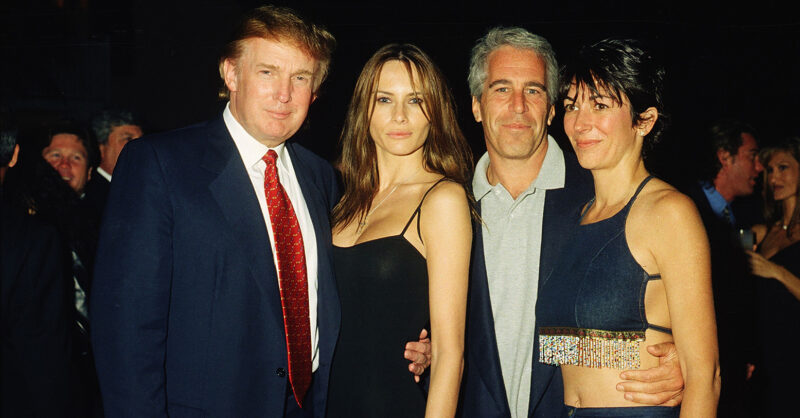
Jeffrey Epstein’s 50th “birthday book” from 2003, full of missives from famous names like Trump, contains a concerning message from Peter Mandelson. Addressing his “best pal”, he describes the paedophile’s “‘interesting friends” and references Epstein “taking you by surprise… in one of his glorious homes he likes to share with his friends (yum yum)”. It was accompanied by two pictures: one of Mandelson in a bathrobe, sitting with his friend, and another of Mandelson standing with two women, one apparently in her underwear, their faces obscured.
The “birthday book” and its further details about Mandelson’s close relationship with Epstein were released on Monday 8 September. Recollections vary as to what advice was given to Starmer in the days that followed as the steady drip of fresh revelations continued.
What we know now is that two days later, Keir Starmer stood up at Prime Minister’s Questions and defended Mandelson. “I have confidence in the ambassador in the role he is doing,” he declared. Labour MPs still speak of their shame and embarrassment at sitting behind him while he justified the appointment.
Starmer did not sack Mandelson until the following day, when a further cache of emails revealed yet more correspondence between Mandelson and the paedophile. “I think the world of you,” Mandelson had written to Epstein before the financier began his prison sentence in Florida for child sex offences, urging him to “fight for early release”. The Prime Minister woke Mandelson in the early hours of the morning to fire him.
A government spokesperson told the New Statesman: “Peter Mandelson would not have been appointed if all the information we have now was available at the time. Additional information and emails written by Peter Mandelson showed the depth of his relationship with Jeffrey Epstein, and that this was materially different from what was known at the time of his appointment.”
It was a profound fall from grace. Just days before, Mandelson had been in No 10 to advise on Starmer’s first major cabinet reshuffle – a decisive moment that saw soft-left figures ousted and key Mandelson and McSweeney allies elevated. “That is not normal,” one No 10 insider says. “He was the US ambassador – why was he masterminding the reshuffle?” But Mandelson was not just the US ambassador. He had become one of the most important figures in the Labour government.
The scandal grows and grows. Now the police are reviewing whether Mandelson committed a criminal offence by leaking Downing Street emails and inside information to Epstein. No 10 figures say they feel deceived by Mandelson.
“I have always been clear in every statement that my relationship with Epstein continued because I believed his story, that I profoundly regret doing so and apologise to the young women and girls for believing him over them,” Mandelson told the New Statesman.
As the Labour Party comes to terms with the depth and extent of this scandal, many are blaming McSweeney. Mandelson had various connections across the Labour Party – as well as the media and wider establishment – but it was McSweeney who brought Mandelson into the inner circle.
McSweeney has long been the lightning rod for the frustrations many in Labour feel towards this leadership, blamed for a “boys’ club” culture, brute factionalism and a disrespect for the party’s elected politicians. Now, as his advice to appoint Mandelson brings shame on Starmer’s already shaky government, Labour figures are asking: “Why is the PM still listening to Morgan?”
“If you ever needed evidence that Morgan doesn’t work in the PM’s interest, the forceful lobbying to impose Mandelson as ambassador is it,” one internal critic says. But Starmer stands by McSweeney, the man who helped him win the election, who offers advice on so many more things than this one ill-fated appointment, and who is still seen by many of his colleagues as a gifted campaigner and strategist. Even some of McSweeney’s internal opponents say Labour’s Mandelson malaise is far deeper and harder to explain than his relationship with this one figure.
The Mandelson affair is yet another example of the type of story the Labour rank and file hates: McSweeney apparently advising Starmer to take a decision at odds with his initial instincts – a dynamic that we saw play out on the two-child benefit cap, and is again playing out on Europe. But those who wish to see McSweeney toppled and Starmer reinvented with a refreshed team and a move to the left might find the Prime Minister is weakened by the removal of his closest adviser. As the adage goes, “advisers advise, and ministers decide”. Keir Starmer, the elected politician and the leader, takes ultimate responsibility for the decisions of his government.
Peter Mandelson, a man who revels in his reputation as the “Prince of Darkness” and the “Dark Lord”, has destabilised yet another Labour prime minister and been forced out in disgrace for the fourth time – this time from the House of Lords. Now, as the police investigate allegations that he leaked market-sensitive information to a paedophile, the fallout is even more profoundly shocking and embarrassing for a Labour Party that has gone back to him repeatedly.
Keir Starmer and the advisers around him face numerous questions around how they walked into this scandal. But now large parts of the Labour Party, spanning generations, are confronting a dependence on this beguiling figure who has led them into disrepute again and again, and are quietly concluding this isn’t a uniquely Starmer, or Morgan McSweeney, problem. The Prime Minister and his chief of staff are simply the latest party figures to have fallen foul of a very Labour weakness.
[Further reading: The Epstein files expose the rot of Mandelson’s Britain]
Content from our partners
Related