This BMW-Powered Motor Home Was Designed By The Engineer Behind The DeLorean
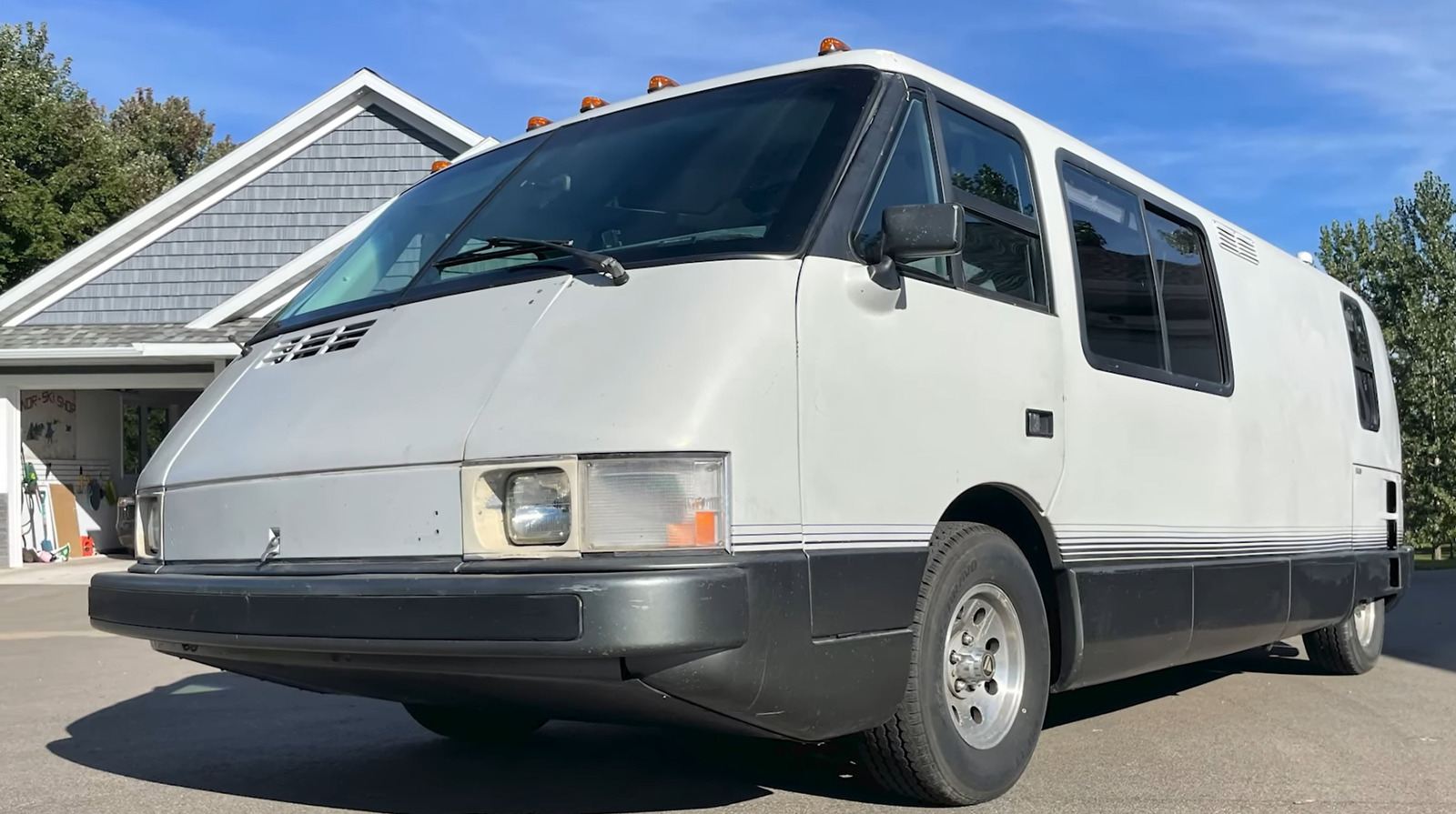
Motor homes rarely get gearheads' blood pumping. They're traditionally huge white squares clad in cheap plastics, designed to swallow up miles in comfort rather than evoke excitement. However, there are exceptions, and a fascinating one is the Vixen 21. There are numerous reasons why the Vixen 21 is worth remembering, from its sleek, aerodynamic design (for a motor home, at least) to its Bavarian power plant. The main reason, though, is the man behind it — Bill Collins.
Collins is best known for his work on the DeLorean, which is a great example of what's possible when a team of enthusiasts just build something cool, rather than conforming to industry norms and producing what they think consumers might buy. The striking Vixen employed many of the same attributes as the DeLorean, but was also designed with a surprising amount of practicality, as well as a regard for efficiency and handling. While practicality had long been a cornerstone of motor home design, efficiency and handling certainly were not, which is why the Vixen stands out in a sea of oversized white boxes.
Collins built his Vixen much lower and shorter than most traditional motor homes, and he did away with old-school V8 power trains in favor of a much more economical BMW engine. Clever design ensured owners still had everything they required within, which is why the Vixen stands out along with others of the most innovative motor home designs, and is coveted by collectors from this niche corner or the market.
Breaking away from the norms
The Vixen 21 debuted in 1986, and production ran for just a few years. To truly appreciate the genius of Bill Collins' creation, it's important to look at what else was available then. Popular choices included the Fleetwood Bounder, a typical V8-powered motor home that represents exactly what the Vixen was trying to separate itself from. The Bounder found cultural fame in TV's "Breaking Bad"; it's likely Heisenberg would've had less success escaping prying eyes had he been cooking up his product in a svelte Vixen. Other period choices include the huge Holiday Rambler and RVs built on Ford or GM chassis — all of which sported traditionally thirsty American V8 power plants.
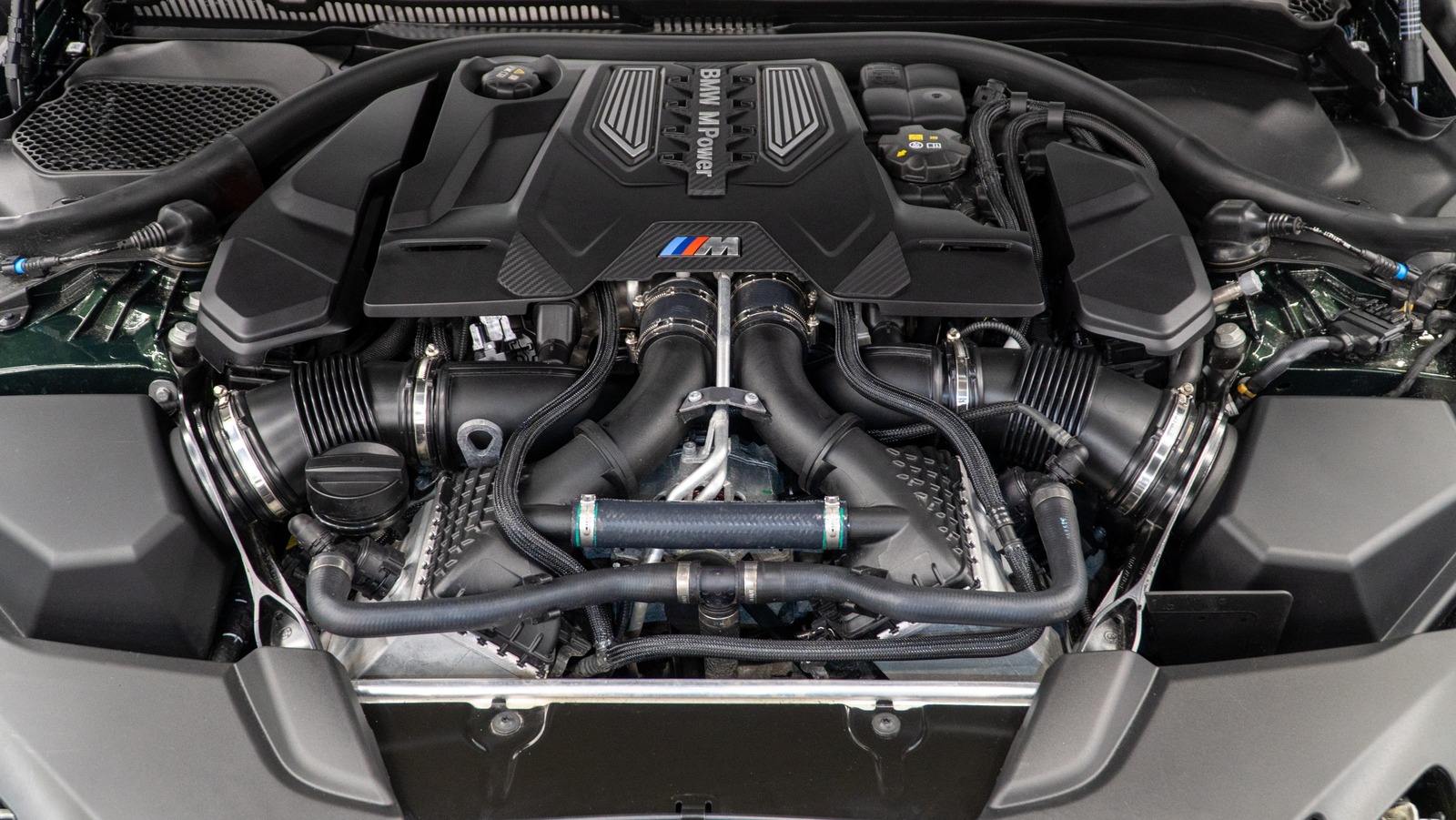
Here's where the Vixen did things differently. Instead of a V8, Collins decided the Vixen would be powered by a 2.4-liter inline-six turbodiesel engine borrowed from BMW. While the styling was adventurous, the choice of engine was really the most inspiring thing about the Vixen, as it enabled the motor home to return an unheard-of 30 mpg, in a segment where most competitors could barely manage 10.
In addition, the BMW mill also gave the Vixen real sporting credentials, as not only was it hooked up to a Renault transmission that let the driver row through the gears themselves, but it provided the Vixen with enough grunt to top 100 mph on an appropriate stretch of road. Speed that would leave the rest of the segment far, far behind.
The Vixen 21 in 2026
Turbodiesel BMWs from the '80s have proven themselves over the years to be mighty reliable, and capable of clocking some serious mileage, which is another plus point for the Vixen. Nobody wants to tour the globe in a motor home that spends half its life in the shop. This also means that the Vixen makes for a genuinely usable classic purchase today. The drivetrain is efficient and reliable, and the classic BMW parts should still be plentiful available thanks to the community that surrounds them. That Renault transmission is the same one used in the DeLorean, so we'd assume parts and servicing will be easy enough, too, thanks to enthusiast support there.
However, the Vixen's real charm is that it's a motor home, so the whole family can use it for weeks upon end, for summer excursions or winter vacations. Provided you've got the space to store it — which, thanks to the garage-friendly proportions Bill Collins gifted, you probably do — then it could make for the perfect usable, family-friendly classic.
And the Vixen has remained relatively affordable. Prices for smart, drivable examples generally sit around $20,000, although you should add an extra $10,000 to $15,000 if you want an example you can really show off. Six-figure Winnebago-Mercedes campers are all well and good for those with buckets of money, but for a fraction of the price you could own something with real style that will steal the show at every campground for years to come.