
Remember me




 by Johnnie BehiriToday
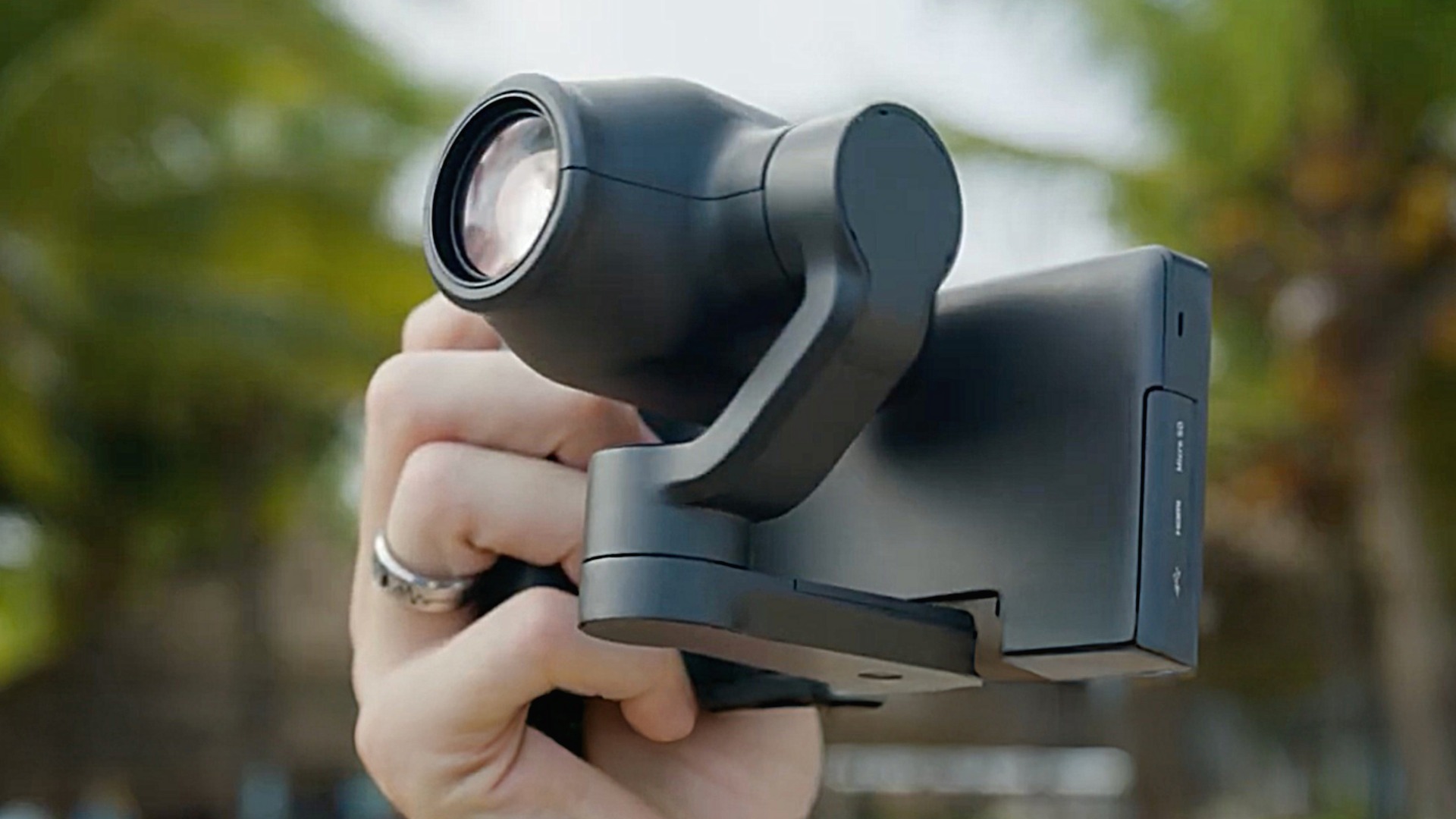
FarseerTech, a startup founded by former DJI engineers, is preparing to launch the RocXZoom on Kickstarter: a 400g / 0.88 lb handheld camera that combines a 50x hybrid zoom (20x optical, 40-2000mm full-frame equivalent) with a motorized pan-and-tilt head and computer vision subject tracking. The company calls it the world’s first robotic extreme zoom camera, and a bigger sibling, the RocXZoom Pro, promises to bring the same AI tracking to your existing camera and lenses.
The pitch is easy to understand for anyone who has ever tried to handhold a super-telephoto shot: at extreme focal lengths, every heartbeat translates into frame-filling shake, and keeping a moving subject centered is closer to gambling than operating. FarseerTech wants to solve both problems with robotics rather than technique. The team’s pedigree lends the claim some weight: according to the company, its core members previously handled research, development, and mass production of DJI products including the Inspire, the Osmo Pocket, and the Ronin 4D, which remains one of the most ambitious marriages of camera and gimbal to date.
 FarseerTech’s team, ex-DJI engineers. Credit: FarseerTech
The RocXZoom was shown publicly at CES 2026, and a Kickstarter pre-launch page is now live ahead of the campaign.
 RocXZoom camera. Credit: FarseerTechRecognize, track, zoom
The concept rests on what FarseerTech calls a trifecta of robotic sight. First, computer vision identifies the subject in the frame; the company describes the recognition system as industrial-level and says the camera can identify over 300 animal species, a clear nod to the birding crowd it is courting. Second, a motorized pan-and-tilt head physically follows the subject, so the framing is corrected by the machine rather than by your wrists. Third, the 50x hybrid zoom adjusts as the subject moves, keeping it at a usable size in the frame across a 40-2000mm equivalent range.
According to FarseerTech, the tracking system responds within 0.01 seconds and can follow subjects moving at 10 to 20 m/s (roughly 36 to 72 km/h or 22 to 45 mph). If those figures hold up in practice, they would cover most wildlife, sports, and aviation scenarios that currently demand an experienced long-lens operator on a fluid head. As always with pre-launch performance claims, we would want to see this verified on production hardware before drawing conclusions.
 A pocketable long-lens rig. Credit: FarseerTechA pocketable long-lens rig
The standalone RocXZoom Camera packs the optics, the motorized head, and the brains into a single 400g / 0.88 lb unit that FarseerTech describes as pocket-sized. Stabilization is handled by a combination of gimbal mechanics and electronic image stabilization, applying the same layered approach DJI popularized in its handheld cameras. A 5-inch OLED display on the back serves as the monitoring surface, which is generous for a device this size and removes the need for an external monitor in the field.
The housing is machined aluminum with an IP54 rating, so dust and light rain should not end a shooting day. Full remote operation is available through a companion mobile app, which turns the RocXZoom into a small remote camera: park it on a tripod near a nest, a stage, or a finish line, and control framing and zoom from a distance while the tracking system does the operating. FarseerTech has not yet published a conventional spec sheet covering sensor size, recording formats, resolutions, frame rates, or codecs in accessible form, and those details will matter enormously for judging whether the footage holds up beyond social media use. We have asked the obvious question every filmmaker will ask: what does a 2000mm equivalent image from a compact zoom actually look like? Until independent footage is available, that remains open.
 Integrated 5-inch OLED. Credit: FarseerTechThe specifications in detail
FarseerTech’s spec sheet fills in the imaging picture, and it deserves a sober reading. The RocXZoom Camera is built around a 1/2.5-inch image sensor behind a 40-2000mm equivalent lens with a variable aperture of f/1.8 to f/3.9, the 50x hybrid zoom resting on 20x optical magnification with the remainder handled digitally. Video recording tops out at 4K at 30fps, with 1080p available at 30 and 60 fps, while photos are captured at 4K or 1080p resolution. Stabilization inside the camera itself is electronic (EIS), with mechanical stabilization delegated to the external gimbal in the larger bundles.
The practical implications are worth spelling out. A 1/2.5-inch sensor is smartphone-class silicon, so low-light performance and depth rendering will be modest, and the physics of a 2000mm equivalent reach from a 400g package simply demand a small chip. The absence of frame rates above 4K30, of any log or 10-bit recording mention, and of slow motion beyond 1080p60 positions the RocXZoom clearly as a spotting, tracking, and capture tool rather than an A-camera; for the wildlife and sports scouting work it targets, that may be entirely acceptable, but expectations should be set accordingly. Rounding out the sheet: subject recognition covers birds, people, animals, and any user-defined target, battery life is rated at 4 hours, and connectivity includes Wi-Fi and Bluetooth for file transfer plus a USB-C port that handles the gimbal connection.
 Credit: FarseerTech
 Credit: FarseerTechRocXZoom Pro: robotic tracking for your own glass
For CineD readers, the more intriguing product may be the RocXZoom Pro. FarseerTech positions it as the heavy-duty partner of the family: a high-torque tracking host designed to carry your existing camera and professional lenses. In the companion Master Suite configuration, a compact tracking camera (available separately at $249) acts as a second pair of eyes on top of your rig, feeding subject position to the gimbal below, which then pans and tilts to keep your mirrorless or cinema camera locked onto the action.
 Credit: FarseerTech
This effectively turns any camera into an AI-guided tracking platform, territory that until now has mostly belonged to PTZ systems and dedicated robotic heads at considerably higher price points. For solo wildlife shooters, second-unit setups, or event coverage where an unmanned long-lens angle would be valuable, the idea is genuinely compelling. Whether the torque, precision, and payload limits are sufficient for real production cameras with telephoto glass is exactly the kind of thing we would test before trusting it on a job.
Bundles, pricing, and what is still unknownFarseerTech lists several configurations. Alongside the standalone RocXZoom Camera and the RocXZoom Pro, an All-in-one bundle combines the camera with the gimbal, a FarseerTech tripod, a storage bag, and four batteries for extended remote sessions. On the official site, VIP pricing starts at $449, with the company advertising savings of up to 50% for early backers and pre-order gifts secured with a $1 deposit. Final retail pricing, the full reward structure, shipping regions, and delivery timelines have not been published yet and will presumably be revealed when the Kickstarter campaign goes live. More information is available on the official FarseerTech website.
A healthy dose of cautiousness is warranted here. FarseerTech is a young company shipping its first product, the performance claims are so far demonstrated only in controlled settings, and crucial imaging specifications remain unpublished. The DJI heritage of the team is encouraging, and the factory and lab photos the company shares suggest the project is well past the rendering stage, but a strong resume is not the same as a delivered product.
And, as we say at the end of every crowdfunding-related article: be aware of the risks when backing a project on a crowdfunding platform. Please read the platform’s terms of use and keep in mind that there can be significant delays when delivering the product. Some projects may not even get delivered at all.
Would you trust a robotic camera to find, follow, and frame your long-lens shots in the wild? Don’t hesitate to let us know in the comments below!