
Remember me
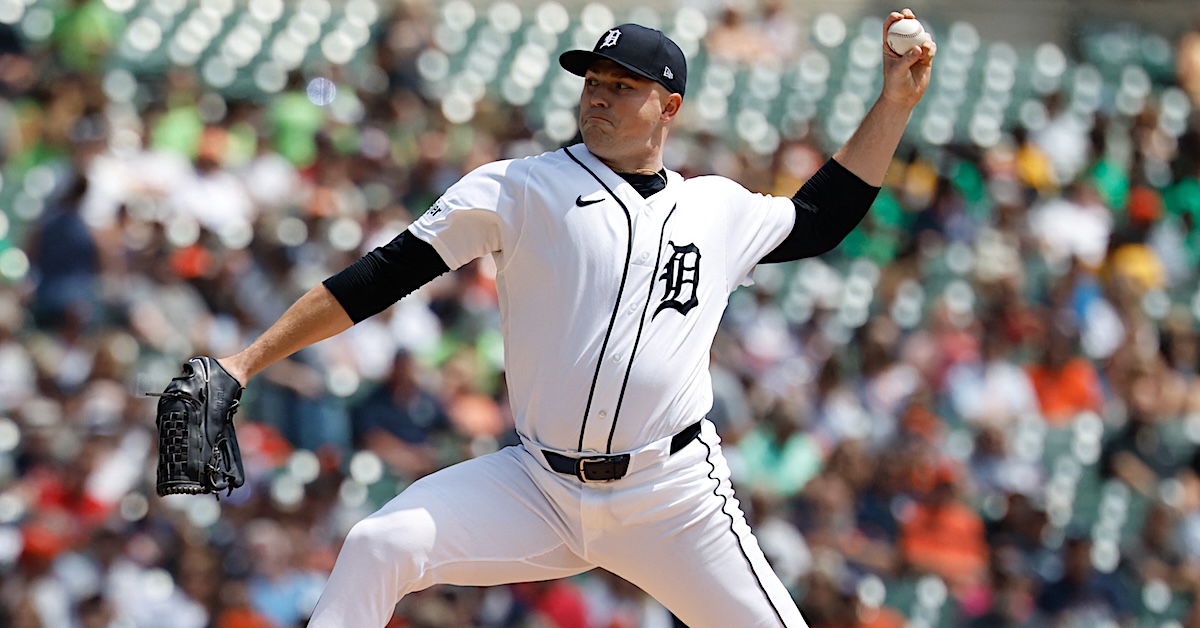

 Gregory Fisher-Imagn Images
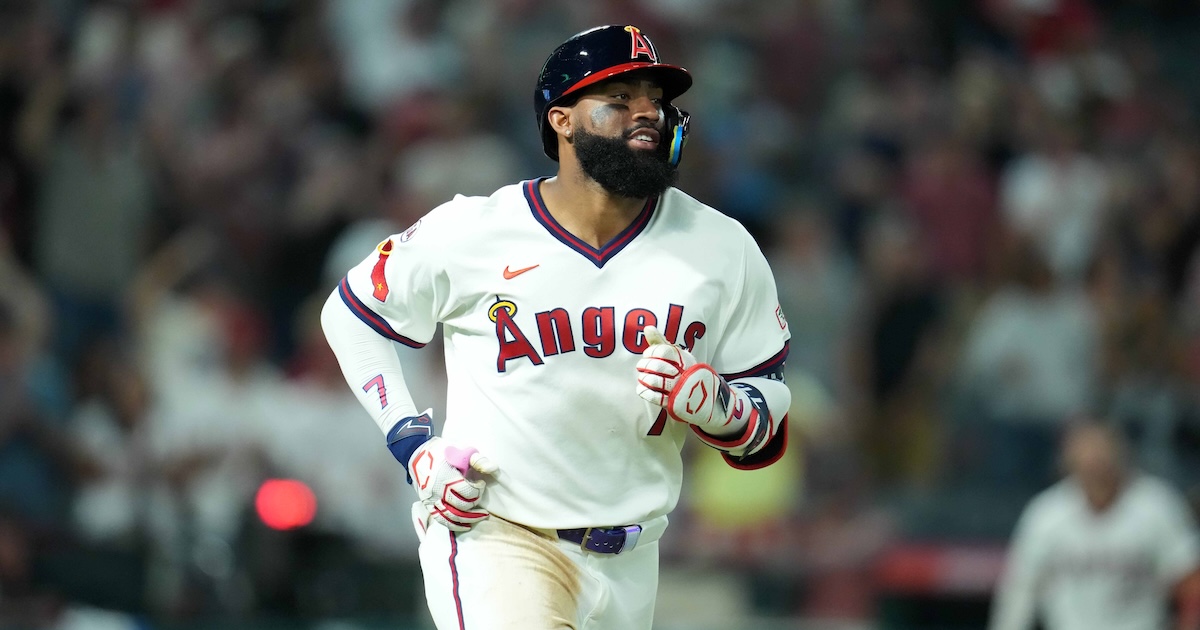
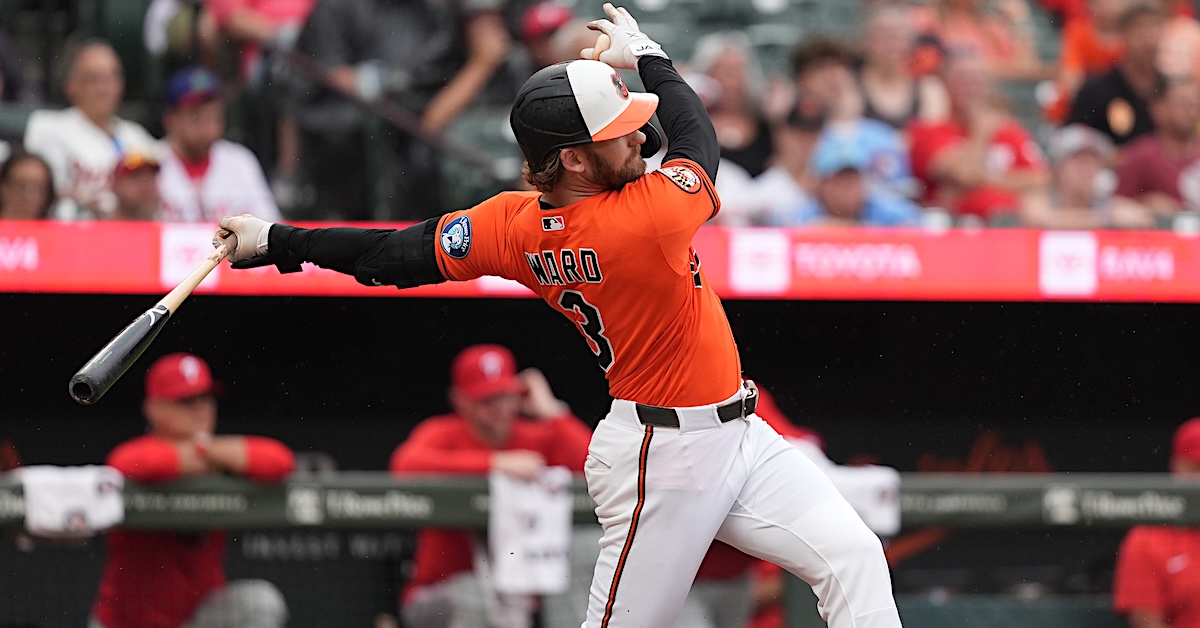
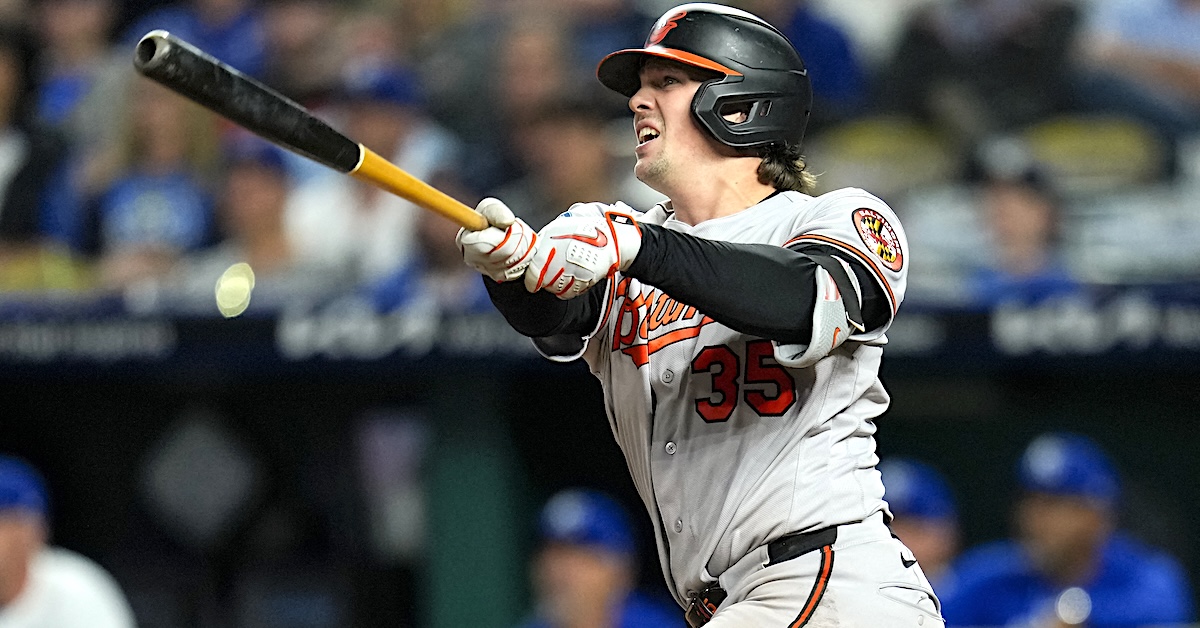
Taylor Ward walked his way back across the country.
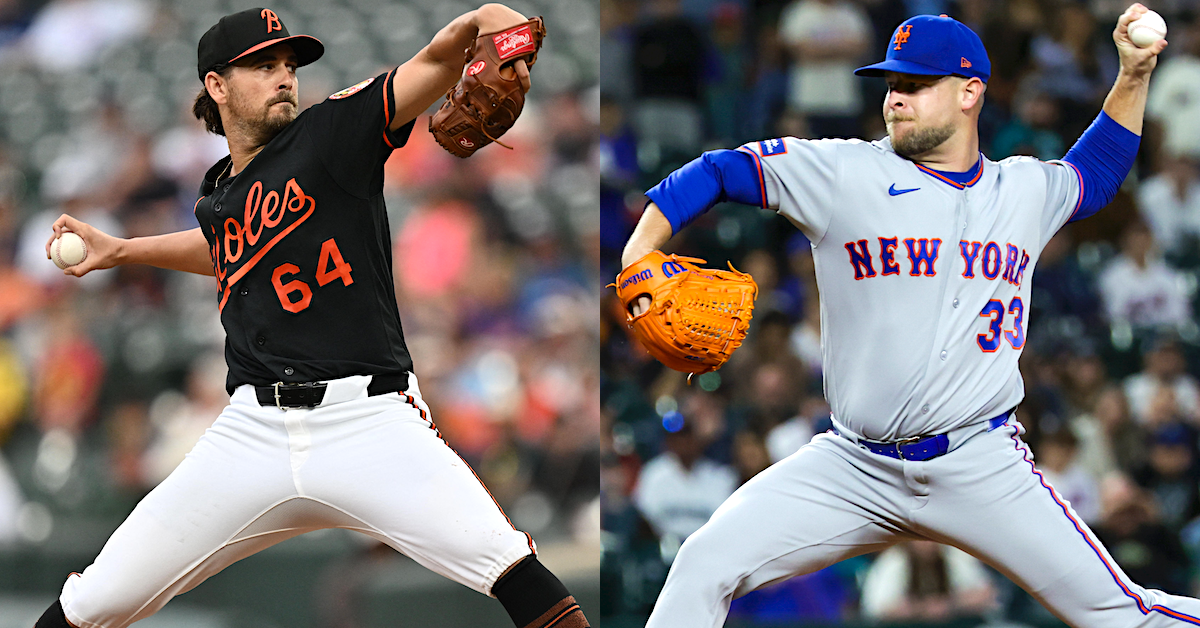
In a trade on Monday ahead of the 6 PM ET deadline, the Orioles sent Ward to the Mariners in exchange for Alex Hoppe and two minor league pitchers, Brock Moore and Harrison Kreiling. Ward leads the American League in walks (second in the majors only to James Wood) and satisfies Seattle’s need for a right-handed bat to even out a lopsided lineup. Baltimore in turn gets a trio of work-in-progress arms to aid in what appears to be a bit of a reset.
Ward has completely reinvented himself at the plate in 2026 after being traded to Baltimore over the offseason. For years in Anaheim, the outfielder profiled as a three-true-outcomes hitter, mixing slug-and-whiff with a discerning eye to produce at an unspectacular, but above-average clip. Last year, he mashed 36 homers and struck out 26.4% of the time, good for a 117 wRC+.
This year, Ward has an identical 117 wRC+ but has gotten there in a fundamentally different way. His walk rate has leapt from an already strong 11.3% last year to 17.2% this year — fourth best in the majors. He also cut his strikeout rate to 20%, giving him one of the best BB/K ratios in the majors at 0.84. The tradeoff has been a massive drop in ISO, to a career-low .100. A year after slugging 36 homers, Ward is pacing for 10.

Back in June, Ben Clemens wrote a great piece outlining the how and why for Ward’s changes in 2026. The how is he’s simply stopped swinging. Ward has always had a great eye, but this year he’s combined it with an aggressive form of discipline. His 34.3% swing rate is among the lowest in the league. He doesn’t swing at balls (15.3% is the lowest in the majors), and he doesn’t swing at strikes (51.8% is second lowest). He doesn’t swing when ahead in counts or behind. He doesn’t swing at the slow and bendy stuff, and he doesn’t even swing at middle-middle fastballs. Pitchers have yet to figure out how to throw him strikes consistently, and Ward has forced them into deep counts that have generally worked in his favor.
You Aren't a FanGraphs Member
It looks like you aren't yet a FanGraphs Member (or aren't logged in). We aren't mad, just disappointed.
We get it. You want to read this article. But before we let you get back to it, we'd like to point out a few of the good reasons why you should become a Member.
1. Ad Free viewing! We won't bug you with this ad, or any other.
2. Unlimited articles! Non-Members only get to read 10 free articles a month. Members never get cut off.
3. Dark mode and Classic mode!
4. Custom player page dashboards! Choose the player cards you want, in the order you want them.
5. One-click data exports! Export our projections and leaderboards for your personal projects.
6. Remove the photos on the home page! (Honestly, this doesn't sound so great to us, but some people wanted it, and we like to give our Members what they want.)
7. Even more Steamer projections! We have handedness, percentile, and context neutral projections available for Members only.
8. Get FanGraphs Walk-Off, a customized year end review! Find out exactly how you used FanGraphs this year, and how that compares to other Members. Don't be a victim of FOMO.
9. A weekly mailbag column, exclusively for Members.
10. Help support FanGraphs and our entire staff! Our Members provide us with critical resources to improve the site and deliver new features!
We hope you'll consider a Membership today, for yourself or as a gift! And we realize this has been an awfully long sales pitch, so we've also removed all the other ads in this article. We didn't want to overdo it.
The why is Ward is swinging much slower this year. His 68.4-mph average bat speed ranks in the bottom 10% of the majors and is down from an already-slow 69.5-mph average swing last year — one of the largest drops of 2026. As Ben notes, this slower swing has meant being later on fastballs and less likely to pull the ball in the air. That’s capped Ward’s power potential and forced him toward this new, extreme approach. It’s not all bad, though. This slower swing has kept Ward from whiffing, and his 5.9% swinging strike rate is a career low, helping him spoil pitches in those deep counts. He’s also squaring up the ball at a career-best 34.2% of swings. He’s hitting a lot more high-quality low line drives to all fields and supplementing his walks with a .310 BABIP (compared to .257 in 2025).

Ward is an ideal fit for the Mariners. Their lineup has been mediocre in 2026, with a 101 wRC+ a year after finishing second in the majors with a 113 wRC+. While they’ve hit better and worse depending on the month (definitively “worse” the last six weeks), they’ve always struggled to hit lefties. Their 91 wRC+ against southpaws is 25th in the majors. They seemed to identify this as a weakness in the offseason, bringing in one of the game’s great lefty mashers in Rob Refsnyder. But Refsnyder has a 33 wRC+ and -1.0 WAR this year while battling a pair of knee injuries. Between that performance, the cratering of Cal Raleigh, and a generally lefty-heavy lineup, the Mariners have been highly susceptible to aggressive bullpening from opposing managers. More than a few teams have reworked their pitcher schedules to force the Mariners onto the weak side of their platoon.
Enter Ward: He has a 141 wRC+ against lefties this year and a 130 wRC+ for his career. He’s walked in 20.3% of his plate appearances against lefties in 2026 while only striking out in 18.8% of them. He’s not limited to a strict platoon, with a 108 wRC+ against righties both this year and for his career. This gives the Mariners an ideal mix of an everyday bat while also someone they can slot into the top of their lineup — likely the very top of their lineup — against lefties.
It’s not quite clear where Ward will play defensively. He’s been a left fielder exclusively since 2022, but the Mariners already have Randy Arozarena playing left in the midst of a career-best season, and they have Dominic Canzone in right, also having a career year. Neither is particularly good defensively, though Ward doesn’t represent a clear upgrade himself, with -1 OAA in 2026 and -3 OAA going back to last year. My sense is Ward will do a good amount of DHing while occasionally spelling Arozarena and Canzone in the corners.
With this trade, the Mariners are signaling that the 2026 season is not lost yet, which wasn’t quite clear after they dealt starting pitcher Luis Castillo to the White Sox over the weekend. “Disappointing” is an understatement for their season to date, one they began as arguable favorites in the American League. They’ve reached the deadline at 55-58, having already fired a hitting coach and with fans clamoring for more heads to fall.
Still, they remain just three back in the league’s worst division and two back of the Wild Card. I wrote just last week that the Rangers had taken over the top odds to win the AL West, then proceeded to get swept over the weekend by the Astros, who have snatched the top odds for themselves. Neither team is too formidable, with the Astros having one of the worst pitching staffs in the league and the Rangers displaying a more general mediocrity. The Mariners have far and away the best Pythagorean record in the division at a mere +3 run differential. A week or two of hot play is all it would take to make them favorites again. That seems likelier now with Ward in the lineup.
For the Orioles, they get a trio of interesting, long-shot, team-controlled pitchers, less than a year after getting Ward for just one interesting, post-hype, team-controlled pitcher in Grayson Rodriguez (who has been bad with the Angels).
Hoppe is the most imminently relevant pitcher in the deal. He’s posted a 5.79 ERA as a rookie out of the Seattle bullpen this year while bouncing back and forth between Triple-A. There is some clear upside, as he has a 2.88 FIP with a solid 27.6% strikeout rate, and he’s also allowing just 0.64 HR/9. He throws a four-seamer that averages 97.9 mph and an impressive, biting slider that’s generated whiffs on 41% of swings this year. At 6-foot-6 with over the top arm action, Hoppe often looks the part of a future bullpen ace, even if his command has limited him to a fringe big leaguer thus far.
Moore, 26, is a righty reliever who dominated Single-A hitters this year with a 58.2% strikeout rate and a 5.5% walk rate in 16 innings. Since being promoted to Double-A, however, his long-standing issues with command have returned, now with a less impressive 33.7% strikeout rate and a 16.3% walk rate. Brendan Gawlowski noted Moore’s boom-or-bust potential in our Mariners Top 25 Prospects List this year:
“Moore touches triple digits and his slider flashes plus, but he’s a stiff athlete with a big head whack and bigger control problems.”
Kreiling, 24, was a 17th-round pick by the Mariners out of Nebraska in 2024, and he underwent Tommy John surgery before making an appearance professionally. He returned to the field this year and has made four starts, with 16 strikeouts and one walk in 10 2/3 innings. His fastball sits between 94-96 mph from a clean, moderate-effort but repeatable delivery. He also throws a cutter, a changeup, and a projectable slider. Brendan notes that Kreiling, who went unranked on the preseason prospects list, will likely receive a 35+ grade in the future, though he profiles as a reliever going forward.
It’s an ultimately a fine deal for a decent rental bat. The Mariners help even out their lineup while dealing from their strength of fringy arms with great stuff. And the Orioles get some fringy arms who could help them now and later.