
Remember me
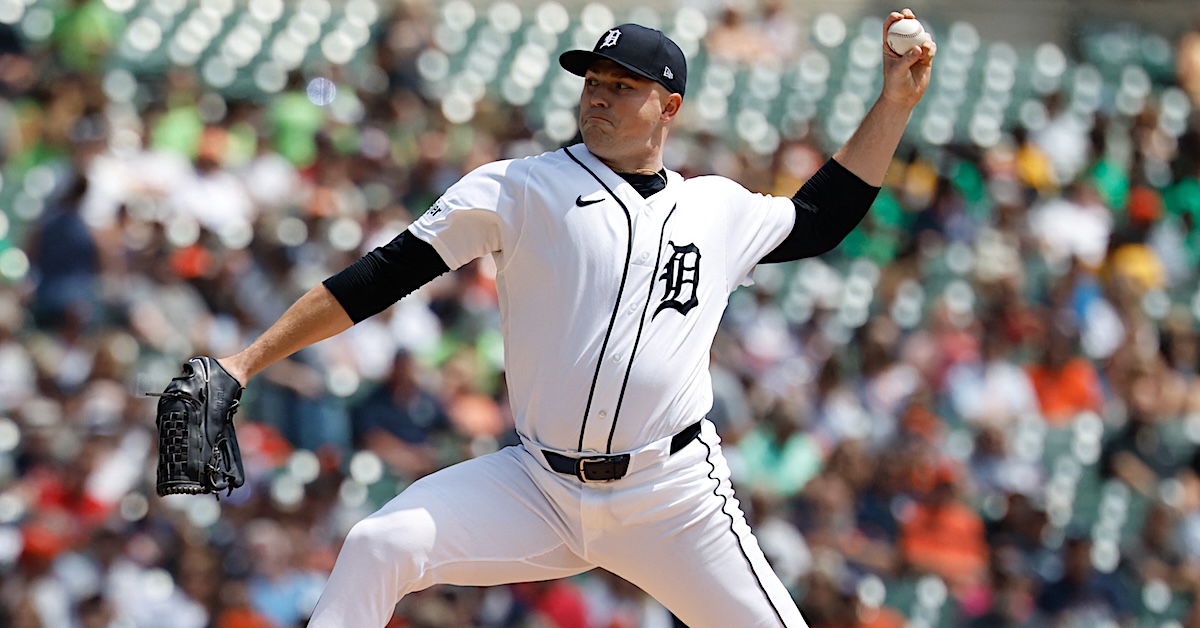

 Brett Davis-Imagn Images
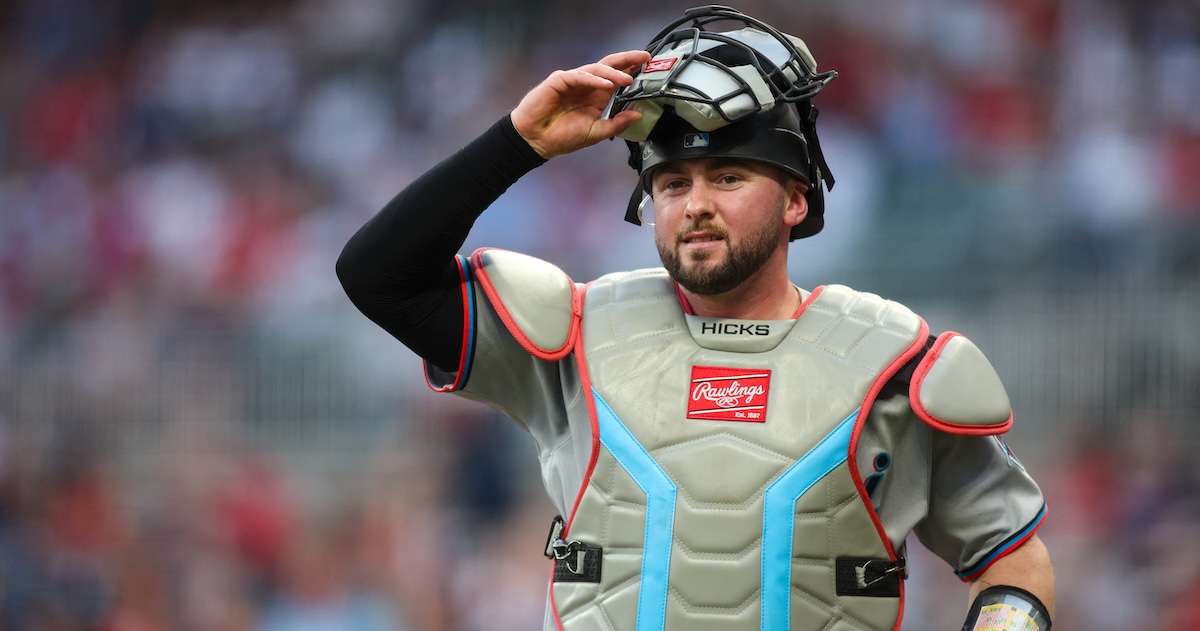
I know, I know. I, too, wish the Tampa Bay Rays had traded for Tarik Skubal. But they didn’t, and it’s not in their nature if we’re being honest. The Rays aren’t the type to trade for one big hammer. They prefer to one-red-paperclip it, and that’s exactly what they’ve done this deadline. First, they traded for Freddy Peralta. Now, they’ve added some sorely needed offensive help by acquiring Liam Hicks from the Marlins in exchange for prospects Jacob Kisting, Adrian Santana, and Brayden Taylor, as Jeff Passan first reported.
The Tampa Bay side of this equation is pretty simple. Their catching duo of Hunter Feduccia and Nick Fortes hasn’t been good enough. Fortes has been reasonable as the righty half of a platoon, but Feduccia has scuffled to an 82 wRC+ even getting good platoon matchups. Catcher probably wasn’t the weakest part of their lineup – frankly, there are a lot of holes to patch here – but it was definitely an area of need. If the Rays are going to keep a hold on the AL East, they’ll have to score more runs in addition to continuing to pitch well, and playing a good hitter at catcher is a good way to start.
Hicks was a late bloomer who didn’t debut until last year at age 26, but he has a long track record of plus offense from behind the plate. He hit throughout his minor league tenure but never received a call-up because of questions about his defense. The Marlins took him in the Rule 5 draft in December 2024, plugged him in as the big half of a platoon, and let him cook. His defense was predictably weak – so weak that he ended up rotating between catcher, first base, and DH – but the bat played right away.
In 2026, he’s taken another step forward offensively, walking as often as he’s struck out while hitting for more power than he ever displayed in the minors. It’s weird to think about because he’s a catcher, but he’s kind of a Steven Kwan lookalike offensively; he doesn’t swing hard, but he rarely chases and almost never whiffs. This year, he’s tapped into some pull-side power – all 14 of his homers have come down the right field line – to turn the whole profile into one of the strangest you’ll ever see: no foot speed, no power, good eye, outstanding contact, and a feel for turning that contact into cheapie homers.
I’m excited to see how Tampa Bay will deploy such a unique player. Defensively, I’m not sure his flexibility is all that useful; they’re awash in first base/DH types, and they have enough lefty hitters that he’s not unlocking any platoon options. But on offense, he’s the kind of oddity that the Rays have been historically excellent at maximizing. Tropicana Field isn’t particularly conducive to lefty pull hitters, but neither was loanDepot park, the improbably-capitalized home of the Marlins, and he hit just fine there.
If Hicks is an acceptable catcher with a high-OBP offensive game, he’s a tremendously valuable part of the Rays’ future. And thanks to the aforementioned late start on his big league career, he won’t reach free agency until roughly 2075 (fine, fine, 2031). I don’t put a ton of value on the last few of those years – catchers are hard to forecast and he’ll be in his 30s by then – but starting with the big part of a platoon at a key position for the next few years sounds pretty good to me.
You Aren't a FanGraphs Member
It looks like you aren't yet a FanGraphs Member (or aren't logged in). We aren't mad, just disappointed.
We get it. You want to read this article. But before we let you get back to it, we'd like to point out a few of the good reasons why you should become a Member.
1. Ad Free viewing! We won't bug you with this ad, or any other.
2. Unlimited articles! Non-Members only get to read 10 free articles a month. Members never get cut off.
3. Dark mode and Classic mode!
4. Custom player page dashboards! Choose the player cards you want, in the order you want them.
5. One-click data exports! Export our projections and leaderboards for your personal projects.
6. Remove the photos on the home page! (Honestly, this doesn't sound so great to us, but some people wanted it, and we like to give our Members what they want.)
7. Even more Steamer projections! We have handedness, percentile, and context neutral projections available for Members only.
8. Get FanGraphs Walk-Off, a customized year end review! Find out exactly how you used FanGraphs this year, and how that compares to other Members. Don't be a victim of FOMO.
9. A weekly mailbag column, exclusively for Members.
10. Help support FanGraphs and our entire staff! Our Members provide us with critical resources to improve the site and deliver new features!
We hope you'll consider a Membership today, for yourself or as a gift! And we realize this has been an awfully long sales pitch, so we've also removed all the other ads in this article. We didn't want to overdo it.
If he’s not an acceptable defensive catcher, well, the deal isn’t quite so good. Above-average offense from defense-first positions is nice, but Hicks’ batting line is de rigueur at first base, and his projections are below average there. It’s hard to add meaningful overall value if you play an easy defensive spot and don’t hit for power. But Tampa Bay is pretty good at figuring out who can hack it defensively, and their trading for Hicks is a vote of confidence (at least in my mind) that he’ll be fine behind the plate for the next few years.
For the Marlins, this was good results at the end of a good process. Adding Hicks in the Rule 5 Draft was a great move. Giving him plenty of time to shine was even better. Cashing him in for prospects is a logical next step; you shouldn’t count on your success stories continuing to excel indefinitely, and with Miami’s recent swoon making them unlikely playoff contenders, I think they were always likely to trade him to someone who could take advantage of how well he’s playing right now. So let’s look at that Miami return.
Taylor is the best minor leaguer in the deal, a 24-year-old infielder currently playing in Double-A. We had him as Tampa Bay’s number eight prospect, with a 45+ FV, in June, but he was upgraded to a 50 FV as part of our recent Top 100 update. The book on Taylor is interesting and quickly evolving. He plays slick defense at second and third base, runs well, and has plus plate discipline and power. The problem early in his career was how he got to that power – he swung like he was a Tasmanian Devil cosplayer, basically. That came to a head in 2025, when his near-30% strikeout rate caught up with him; he hit .173/.289/.286 in a full season at Double-A. But he’s made a huge adjustment in 2026, remaking his swing meaningfully. He’s striking out less, making contact more, and mostly still tapping into sneaky-good power.
The Rays’ 40-man roster is as crowded as ever, and Taylor needed to go on it this winter. He’s also in Double-A for a third straight year, which means that he hasn’t been thrown into the deep end yet. It makes sense to me that Tampa Bay felt like he was expendable at the deadline. But he seems like a great fit for a Marlins team that’s still in the talent accumulation phase. They don’t really know who will be on their next playoff team yet, and they have some roster space to use, so trading for interesting, high-upside profiles with question marks is perfect.
Santana is also an infielder (40 FV), but he’s interesting in a completely different way. An under-slot first-round draft pick in 2023 as a high schooler, he’s a contact-and-defense shortstop with blazing speed and an excellent sense of how to use it on the basepaths. There’s just one problem – he’s swinging a wet noodle out there. He’s hitting for average in 2026, but even that has been a struggle at times; he just doesn’t hit the ball hard enough. We have a current 20 on his power and a future 30; the three home runs he’s hit this year are a career high.
That limits his chances of being an everyday player, but slick-fielding utility infielders who add value on the basepaths are still useful big leaguers. He looks like a rotational piece to us, a guy you love having on your bench but can’t quite accept as an everyday regular. At 5-foot-11 and 155 pounds, he’s probably not going to grow into huge power, either. Still, players do sometimes get improbably stronger or find ways to transcend their limitations. He’s a lottery ticket, but one with a clear carrying tool that should help him contribute at least a little to the Marlins.
Kisting, the first 40-FV prospect on the Rays list, is the lone pitcher headed back to the Marlins in this all-Florida deal. He ranked 33rd in the system when Eric wrote Tampa Bay up in June, but this is where I remind you not to focus too much on the ordinal ranking with a farm this deep; he slots in at no. 22 on the Marlins list. He’s a 14th-round Twins draft pick from 2024, acquired last offseason in exchange for some relief depth. Nothing he throws will blow you off the page. He sits 92-93, mixes five pitches including two different offspeed options, and keeps the ball on the ground with a low-slot, sinker-first approach. He was a senior sign from a small, cold-weather college, so he’s still in A-ball at 23, but he’s absolutely humbling his opponents there: near-30% strikeout rate, 5% walk rate, an ERA below 2.00 and spiffy peripherals.
Could he implode when he starts facing advanced competition? It’s certainly possible. He’s doing it with guile and command right now, locating and mixing well enough to bamboozle his opponents. The jump from that level to Double-A will be a key point of observation. But I love these command-over-stuff types, and if I were running a team, I’d be targeting guys like Kisting whenever I could. Throwing strikes and mixing pitches is hard! The floor here is high. Even if he can’t miss bats in the upper minors or majors, he’ll likely be a good option as an up-and-down swingman, the kind of guy who can soak up relief innings and make starts in a pinch. And if he takes a step forward somewhere else, he’s already demonstrated a great ability to make the most of his physical tools. I’d rather bet on the guy dominating at 93 mph than the guy struggling at 98; the softer thrower has easier avenues to improvement in general, and they tend to be easier to acquire to boot.
Put that all together, and the Marlins got a nice, broad package of prospects in return for Hicks. I think their team might be better with the new guys as soon as 2027, when I expect both Taylor and Kisting to get a shot at the bigs. The Marlins are friskier than expected this year, but they still need a little more juice to feel like bona fide playoff contenders. I think this is excellent process on their part; their good decision in drafting Hicks in the Rule 5 has snowballed into useful prospects at multiple spots in the org.
The Rays are in a very different situation from the Marlins, though, and this trade works very well from their angle too. They’re always fighting a roster crunch. They don’t have that much opportunity to give Taylor and Kisting while they try to win the AL East. They’re so deep with nice high-floor options that they won’t miss those two as much as a team with a shallower farm system might. When you’re working on a thin budget and maximizing resources like the Rays, turning the fringes of your roster into extra value is imperative, and Hicks is a shot of major league offense that they badly needed.
The Rays will keep finding guys like Taylor, Santana, and Kisting. That’s what they do. But right now, those guys aren’t helping the 2026 Rays much, and they’re not in a great position to help the 2027 Rays either. That makes the Rays’ continued consolidation of prospects into big leaguers a great call, in my eyes – and I expect them to do even more before the day is done.