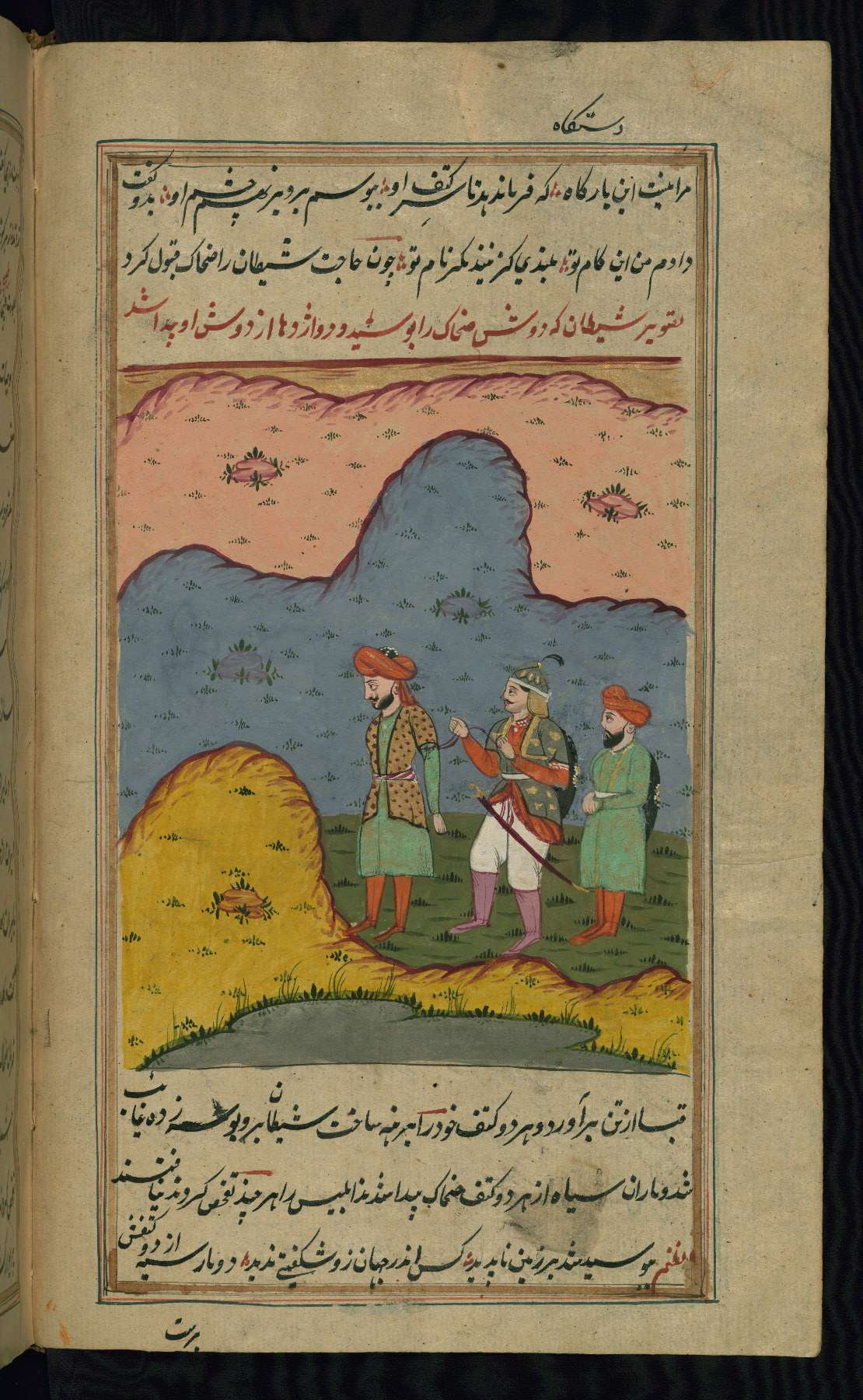
A 15th-century Persian book says what a snake sighting means
The Marnameh is a short Persian book, written in the late fifteenth century, that explains the meaning of seeing a snake. It runs through the thirty days of the Zoroastrian calendar, most of them named for a divinity or figure, and gives the omen attached to a snake sighting on each one.
Zoroastrianism is not fond of snakes. They belong to a category called khrafstar, the harmful creatures — frogs and scorpions are in there too — spawned by Ahriman, the source of all evil, as against the beneficent animals of Ahura Mazda. In the Shahnameh, Iran's national epic, the demon-king Zahhak terrorizes people with brain-eating snakes growing out of his shoulders. The British surgeon George Waters translated the Marnameh and read it to the Bombay Anthropological Society in 1892. "It was always considered meritorious to kill [it]," he said of the snake. "A believer . . . was recommended to keep with him a snake-killer, which was a stick to kill the snakes with."
A good number of the Marnameh's omens are cheerful anyway. If you see a snake on the day of Zamyad, you can expect "justice from the Creator of the world." If you see one on the day of Sheherivar, the book says, "you will (soon) find an absent friend in your arms."
Previously:
• Babylonian tablets reveal kings installed royal doubles during eclipses, then executed them
• The Tarot of Austin Osman Spare