
Remember me

Open access operator Leo Express has come through some stressful times to reach an era of stable growth, partly thanks to major shareholder RENFE. Chief Executive Peter Köhler explains the company’s backstory and current strategy to Toma Bačić.
‘We think that the flexibility of private operators is a huge advantage, and that future railway services in Europe will be an equal mixture of national incumbents and smaller independent players’, predicts Leo Express Chief Executive Peter Köhler.
The head of the now well-established open access passenger operator was speaking to Railway Gazette International during a preview run for the service between Praha and Bratislava which the operator launched on April 30. The link reflects the latest milestone in the company’s post-pandemic resurgence, supported by investment from Spanish incumbent RENFE, which — appropriately perhaps — owns 50% of the business.
Leo Express was founded in 2010 by Czech entrepreneur Leoš Novotný with the aim of exploiting market liberalisation to create an insurgent player in the central European passenger market. Its initial funding came from Novotný himself and the investment group Aakon Capital. However, Leo Express made an early commitment to a fleet of five newly built Stadler Flirt trainsets that were bespoke for the operator. This left the business struggling to manage its bank debt and the trains’ leasing arrangements solely through its own backers, and the legacy of this approach has had profound implications since.
‘Leo Express started operations in December 2012’, Köhler reflects. ‘It was before the Fourth Railway Package was adopted, so there was a lack of regulation and a very national, domestic outlook on rail policy. I joined the company in late 2012 as the CFO, and the company was a typical start-up. Later on, when I became CEO, I realised that the company would have to expand internationally. We decided to establish the services to Poland and Slovakia, and these began in 2015.’
Stress testKöhler notes that while ‘for most businesses’, expansion within the EU is a relatively smooth process, this was far from the case in the rail market.
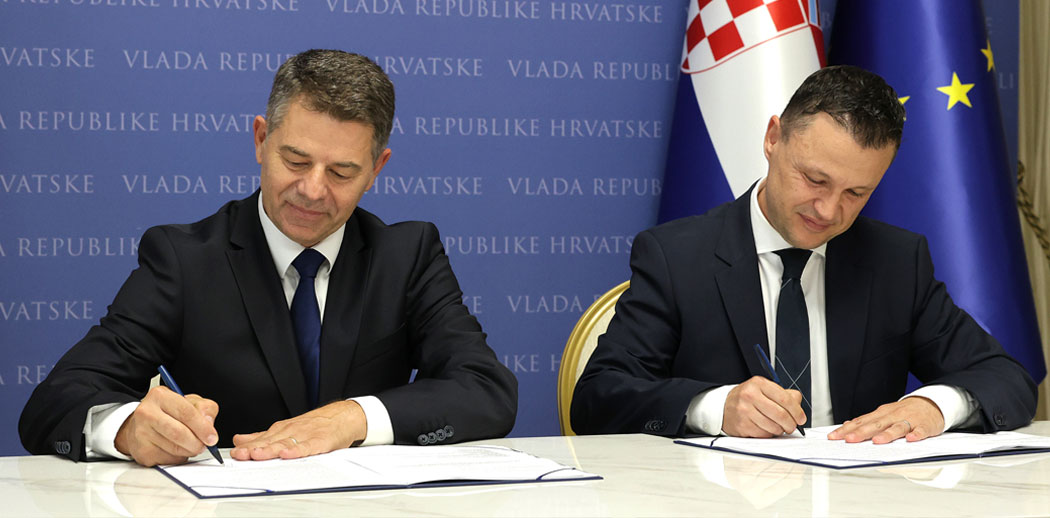
 Peter Köhler is Chief Executive of Leo Express.
No sooner had Leo Express found a viable path to expand beyond the Czech borders than the pandemic hit. ‘The stress test for us was Covid-19’, Köhler recalls. During the crisis, he briefly left the operator to join Austrian incumbent ÖBB, before returning to Leo Express as Chief Executive in March 2022. ‘The goal then was to expand the company along two lines: open access services and PSO operations.’
By the time Köhler returned, RENFE had completed the purchase of its half share in the business in 2021, completing the formalities in December of that year when it appointed its representatives to the board. The deal brought a definitive end to the doubts about the company’s financial viability that dated back to the decision to use brand new trains for the launch routes.
For RENFE, Leo Express offered something that would have been difficult to build from scratch: operating licences in the Czech Republic, Slovakia and Poland, access rights and experience in Germany, and the eligibility to bid for public service contracts in central Europe. The acquisition also aligned with RENFE’s internationalisation strategy at the start of the decade, which was a response to the liberalisation of European rail markets, and its home market in Spain in particular.
The founders and original owners of Leo Express, Novotný and Aakon Capital, retained their 50% share, giving the business important continuity. Nevertheless, the RENFE purchase did bring one important change in strategy: a recognition that using secondhand rolling stock could ease the path to further expansion of the business.
By 2024-25, negotiations had advanced to the point where leasing business RENFE Alquiler agreed to provide three Talgo VI loco-hauled trainsets to Leo Express under a 10-year agreement. The lease was formally announced in October 2025, but the first trainset had arrived in the Czech Republic earlier in the summer. ‘When we were looking at options for secondhand rolling stock, we liked the Talgo trains because they are low-floor, and [the design] is well suited to central European operations’, Köhler explains. ‘Hopefully, we will deploy more such trainsets in the future.’
New train painHowever, the Talgo deployment should also be seen in the context of the challenges in procuring new passenger vehicles in Europe. For example, German industry guidance indicates approximately 24 to 36 months from contract signing to the start of series production for a newly developed EMU, with the full project including production and entry into service often reaching 52 to 64 months, or more than five years. In central Europe, the timescales are only marginally shorter.
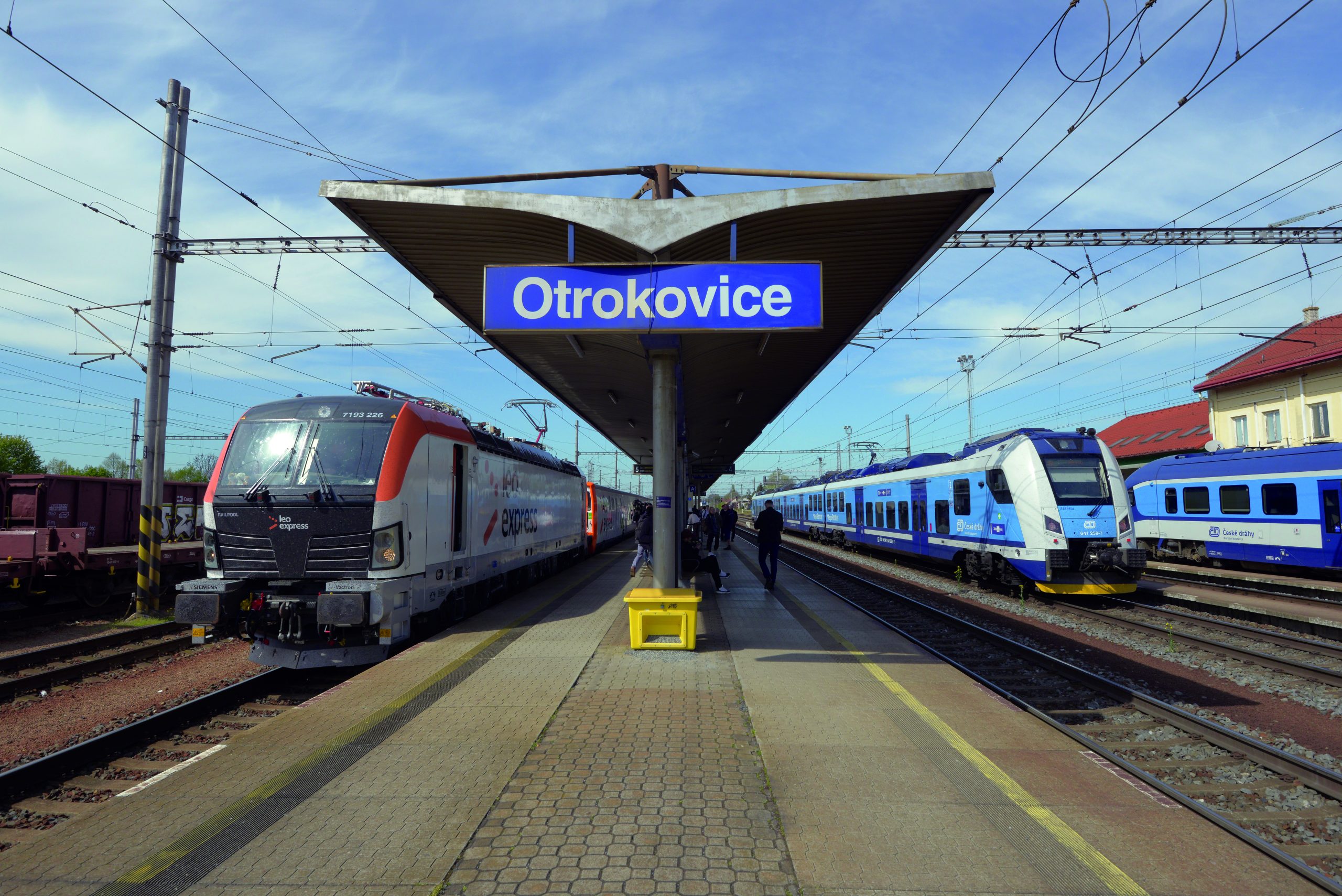
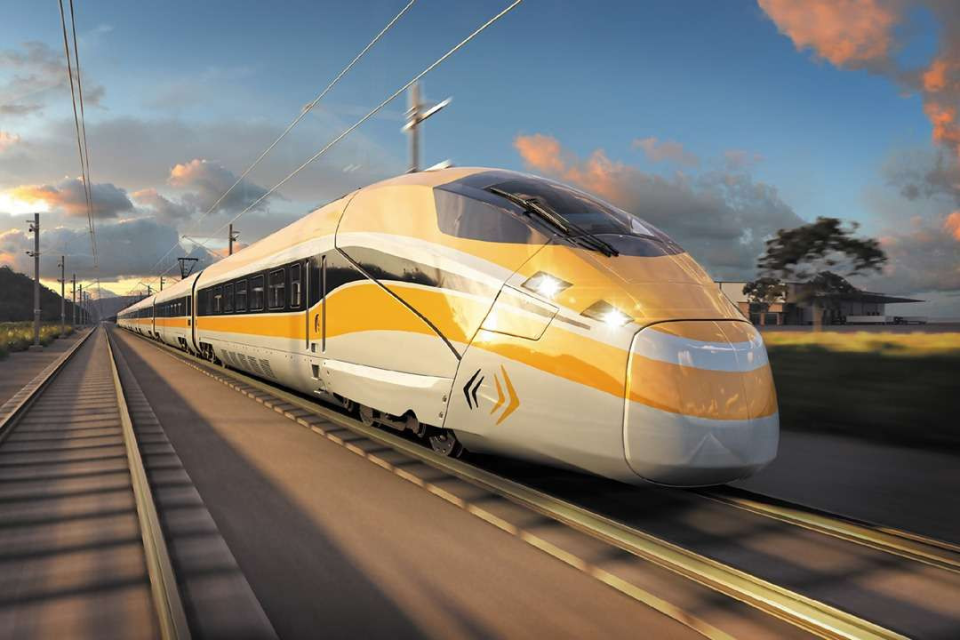
 Three leased Talgo VI trainsets are now being deployed on the Praha – Bratislava service.
One notable feature of the Talgo trainsets is that their onboard power comes from a generator car rather than via a head-end supply from the locomotive. Leo Express is trying to turn this into an advantage, Köhler says. ‘At the moment, the train is powered independently through the diesel generator car, and we like that. In the future, we may supply the train electrically from the locomotive, but we are looking for some other options too, possibly by using some renewable power sources, such as fitting the generator car with batteries. We are already experimenting with renewable fuels, so that is another option.’
However, the Talgo fleet has not had a particularly smooth entry into service on the Praha – Bratislava route. Some Czech newspapers described the launch as a ‘failed premiere’ after a series of technical incidents occurred during the first days of their operation. Problems with the reliability of the generator car and vandalism in eastern Slovakia have affected availability of the trains, with one of the three having to be sidelined for repairs for some time.
In its fleet today, Köhler explains, the operator uses a mix of Stadler Flirt EMUs, Talgo VI hauled stock, and RIC coaches for its long-distance operations, while its PSO contracts and regional services use leased Lint 41 and Lint 27 DMUs. ‘We aren’t going to use Sirius EMUs from CRRC’, he adds, confirming that the operator had abandoned plans agreed in September 2016 for CRRC Zhuzhou Locomotive to supply three six-car 25 kV 50 Hz/3kV DC trainsets for use on routes linking the Czech Republic, Slovakia and Poland, with options for up to 30 more.
‘We are trying to optimise the maintenance and spare parts procurement. Having different fleets can create additional costs, but also create some advantages. It is pluses and minuses we have to combine in the best way we can’, Köhler acknowledges.
Network development planToday, Leo Express has delivered on its plan to offer a mix of open access commercial services and subsidised contract operations. The core open access network currently includes Praha – Ostrava – Bohumín – Kraków, Praha – Ostrava – Žilina – Prešov, Praha – Olomouc – Bratislava, Praha – Ostrava – Warszawa, and a domestic Polish route between Warszawa and Kraków. A Przemyśl – Kraków – Ostrava – Praha – Dresden – Leipzig – Frankfurt am Main Flughafen service started in June, while a Praha – Plzeň – Domažlice – Regensburg – München route is planned for December 2026.

Its contracted services are concentrated around Pardubice in the Czech Republic and in Slovakia, where PSO services run between Bratislava and Komárno. Leo Express experienced strong growth on the back of winning these operating contacts: in the first half of 2024 alone, it carried 1·8 million passengers, up 130% year-on-year. Full-year traffic in 2024 reached 3·8 million passengers, more than double the 2023 figure. In 2025, ridership increased again to 4·6 million, a further increase of 19·2%.
The longest dayWhen it started on June 25, the Przemyśl – Praha – Frankfurt airport service became one of the longest daytime rail routes in Europe, spanning more than 1 300 km through Poland, the Czech Republic and Germany. However, in the launch phase, the section in Poland is being operated as a coach service, with trains to be introduced at a later date. The aim of the service is clear: to connect eastern Poland and the Ukrainian gateway at Przemyśl with urban centres in Germany. The trains depart from Bohumín at 17.45, arriving in Praha in the evening, and then continue overnight to Frankfurt airport, arriving at 08.06. In the opposite direction, the train leaves at 14.39, reaching Bohumín at 06.01 the next morning. As for rolling stock, Leo Express is using ex-DB Fernverkehr hauled coaches with leased multi-system locomotives.
 Leo Express is to test renewable power supplies, and has called tenders for a build of BEMUs.
The Praha – München services, meanwhile, are due to begin with the December 13 timetable change. Leo Express has won a tender from the Czech transport ministry, securing a five-year PSO contract. This KC427m framework covers the Czech section of the route, excluding infrastructure charges. The current plan is to operate seven trains each way per day, plus one short working between Praha and Plzeň, effectively creating a two-hourly pattern. ‘On the German side the contract is with Die Länderbahn, we will be operating the Czech side of that contract’, Kohler clarifies. ‘The cars will be provided by both operators; and for the German-speaking side, the staff will be provided by DLB, and on the Czech side by us.’
However, the route is not straightforward to operate, he admits. ‘There is a diesel section between Plzeň and München. We operate from Praha to Plzeň with an electric loco, then by diesel to Schwandorf, where there is also a change of direction. A second reversal happens at Regensburg, and as Munchen Hbf is a terminus, we’ll need two locomotives to facilitate a rapid turnaround there. Clearly, the plan is to use driving trailers on the trains as soon as we can.’
Ex-DB fleetAlthough the exact number of ex-Deutsche Bahn passenger cars intended for Leo Express has not been publicly disclosed, local reports suggest that 41 coaches have been delivered so far. RENFE’s rolling stock leasing subsidiary agreed to purchase a batch second-hand RIC passenger coaches from DB and signed a 15-year lease agreement with Leo Express; the vehicles are intended to support the future services to Germany.
Given the complexity of purchasing new rolling stock, it is not surprising that Leo Express has opted for a similar approach to that taken by its fellow Czech private operator, RegioJet, in its early years. It built an inter-city network using refurbished second-hand coaches rather than ordering new rolling stock. The move is also a clear indication that it remains easier to lease a modern multi-system locomotive than it is to obtain high-quality passenger vehicles at a commercially viable price.
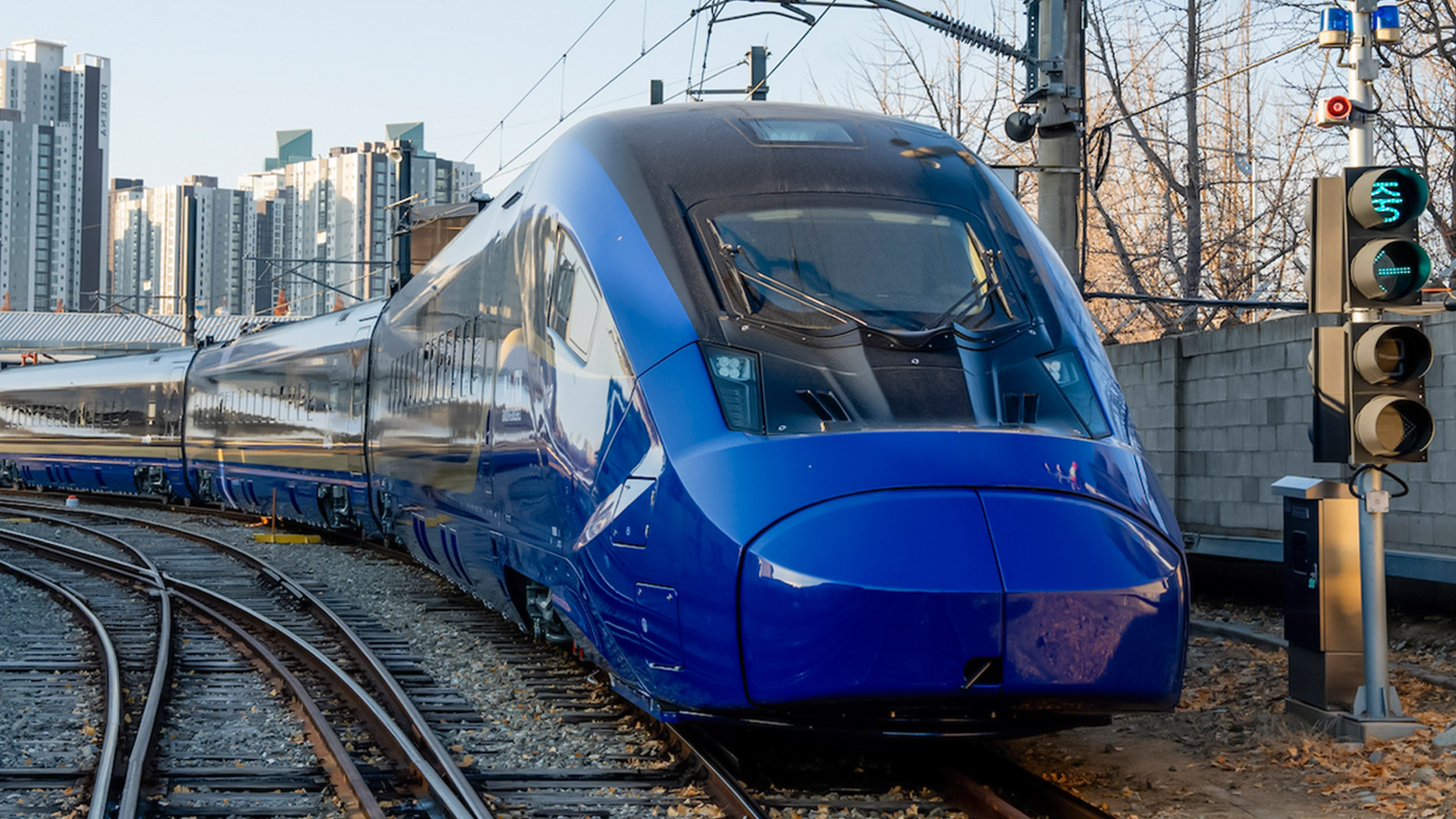
Battery trainsLooking forward, Leo Express has aspirations to procure battery-electric trainsets to boost its operational flexibility. While no order had been placed at the time of writing, in January 2026 Leo Express called tenders for 11 BEMUs with an option for up to 30 more. A potential contract worth KC8bn is envisaged, initially to support future regional contracts in the Czech Republic.
If fully exercised, the framework could see Leo Express become one of the largest battery train operators in the region. 

This article first appeared in the July 2026 issue of Railway Gazette International
See also

Already have a subscription? Log in.
Choose your subscription Most popular! Digital Onlyi Prices are displayed as monthly rates (exc. VAT), but billed annually. Please refer to our subscription terms for more details.
€18,17 per month per user *
£15.75 per month per user *
$19.17 per month per user *
Unlimited access to all Railway Gazette content Monthly digital Railway Gazette International Magazine 2000+ Operator Profiles Newsletters & Breaking News Updates Subscribe with 1, 3, or 5 user logins Digital + Printi Prices are displayed as monthly rates (exc. VAT), but billed annually. Please refer to our subscription terms for more details.
€25,67 per month per user *
£22.33 per month per user *
$26.67 per month per user *
Monthly print Railway Gazette International Magazine Unlimited access to all Railway Gazette content Monthly digital Railway Gazette International Magazine 2000+ Operator Profiles Newsletters & Breaking News Updates Subscribe now ›Considering a corporate subscription? Contact us to find out more.