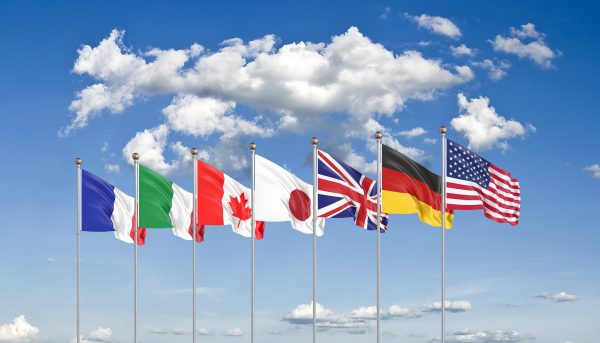
The G7 has changed almost everything – except its membership. Created in the 1970s to coordinate among the largest industrial democracies, its agenda has become impressively expansive. Canada’s G7 presidency in 2025 produced initiatives on critical minerals and artificial intelligence. France’s 2026 presidency has placed economic security, supply chain resilience, global imbalances, development partnerships, and new technology risks at the center of the group’s work.
The G7’s agenda has moved into the 21st century. Its composition still reflects the late 20th.
The G7 has tried to compensate through guest invitations and issue-specific outreach. That flexibility is valuable, but it does not provide continuity, agenda-setting authority, or responsibility for implementation. A country invited to one summit may disappear from next year’s. Guest invitations can widen participation, but this cannot correct a persistent membership mismatch.
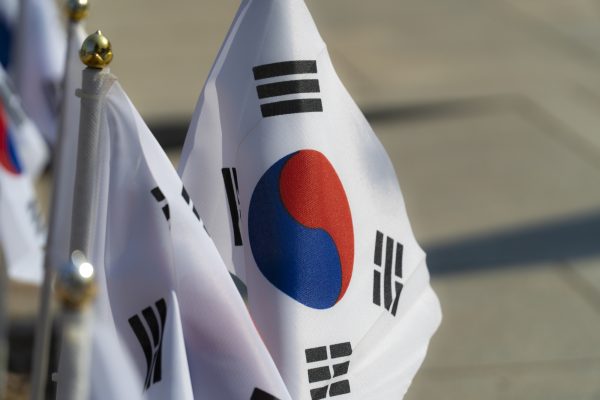
And two of the countries best positioned to contribute to the G7’s expanded agenda, South Korea and Australia, remain outside the group’s permanent membership.
South Korea is the world’s 13th-largest economy and a pivotal producer in semiconductors, batteries, shipbuilding, nuclear energy, digital infrastructure, and defense manufacturing. When the G7 discusses chip supply, maritime industrial capacity, advanced manufacturing, or North Korea, South Korea’s participation is indispensable.
Australia brings a different but equally important set of assets: critical minerals, energy, maritime geography, development partnerships in the Pacific, AUKUS, and a growing network of economic-security and defense agreements across the Indo-Pacific. A G7 strategy for trusted mineral supply chains that excludes Australia is incomplete from the start.
An original dataset I compiled using more than 300 publicly available indicators covering economic scale, technological capacity, defense contribution, governance, development finance, supply chain relevance, and democratic performance shows that South Korea and Australia meet or exceed several existing G7 members across many of the issues where the group now claims to lead.
This creates an unusual opportunity in 2027, when the United States assumes the G7 presidency. The Trump administration is an unlikely champion of multilateral reform in the traditional sense. But the relevant question is whether enlargement can be presented as a better deal for the United States.
The answer is yes. South Korea and Australia are U.S. treaty allies that already carry substantial burdens. They bring industrial capabilities, strategic geography, investment, and defense cooperation that Washington wants. Expansion can be framed not as widening a diplomatic club for its own sake, but as aligning membership with contribution. The Trump administration’s own fiscal year 2027 budget planning already recognizes U.S. hosting responsibilities. That creates a concrete deadline and a presidential platform.
During the U.S. presidency, the G7 should admit South Korea and Australia as full members. The G7’s legitimacy will not be restored by adding every important democracy, nor should enlargement become open-ended. The initial standard should be demanding: sustained democratic governance, advanced economic and technological capacity, willingness to provide international public goods, and direct relevance to the institution’s core agenda. South Korea and Australia satisfy all four.
The new “Democratic G9” should then create a light troika secretariat linking the previous, current, and next presidencies. The G7’s informality is useful, but annual rotation too often produces discontinuity. A small standing mechanism could preserve priorities, track implementation, and support working groups without turning the G9 into a treaty organization. Critical minerals projects, sanctions coordination, AI standards, and development-finance commitments all require follow-through beyond a single summit cycle.
The G9 should also institutionalize outreach to the Global South. Inviting a changing list of guests to one summit does not constitute representation. The G9 should establish recurring, issue-specific consultations with countries from Africa, Latin America, the Middle East, South Asia, and Southeast Asia, and with China. On debt, food security, digital infrastructure, climate finance, and mineral development, partners should help shape agendas before leaders announce them. Enlargement of the democratic core must be paired with a more serious practice of consultation beyond it.
Three objections deserve answers.
The first is that Trump will not support G7 enlargement. But a proposal built around burden sharing, China competition, supply chain resilience, and allied industrial capacity is more compatible with his politics than a defense of inherited membership. A U.S.-led expansion of the G7 could be framed not as an extension of liberalism, but as an American-led modernization of the institution.
The second is that the rise of BRICS makes the G7 irrelevant. The opposite is true. BRICS expansion demonstrates a demand for institutions that reflect a wider distribution of power.
The third is arbitrariness: why admit South Korea and Australia, but not India, Brazil, or others? The answer is that India and Brazil are indispensable global actors and should be central to structured outreach, but full membership in a democratic steering group requires a combination of regime standards, policy alignment, contribution, and institutional readiness. In our dataset, moreover, India, Brazil, and Indonesia do not yet perform at the level of G7 countries on the key issue-areas identified as critical by the group’s leaders.
The G7’s problem is that it excludes countries that already perform essential functions while claiming authority over issues they help govern. The 2027 U.S. presidency offers a chance to correct that mismatch.
A Democratic G9 would be a test of whether the advanced democracies can still adapt and rebuild global rules and norms before crisis makes such adaptation unavoidable.
This essay is one of four to emerge from discussions at an international conference jointly organized by the Seoul Forum for International Affairs and the Hairan Series of Korea University’s Institute for Interdisciplinary Unification Studies, “Democratic Multilateralism at the Edge,” held in Seoul on April 20, 2026.