
Remember me

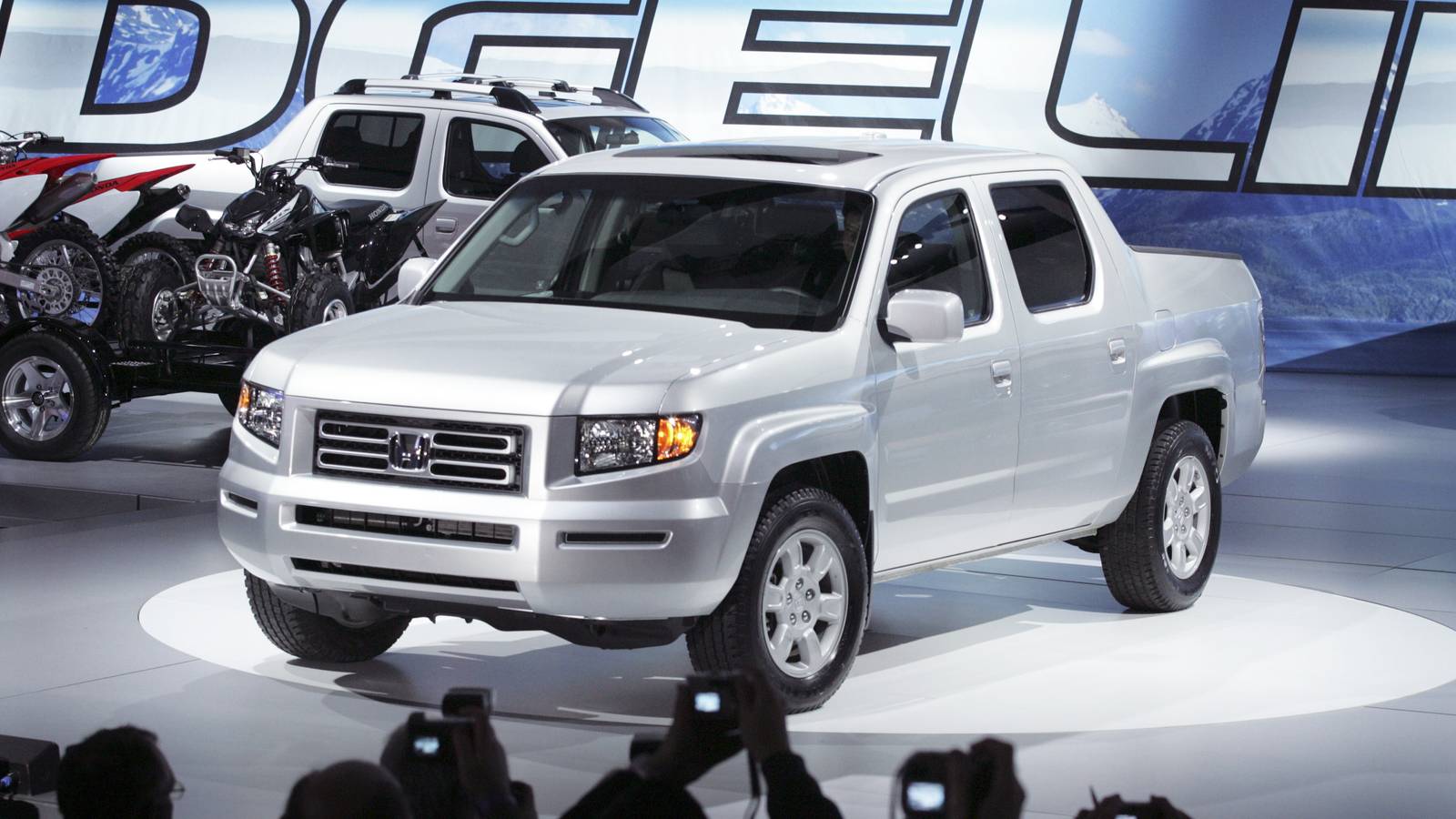
The unibody platform of the original 2006 Honda Ridgeline stood in stark contrast to the standard truck recipe when it was revealed at the 2005 North American International Auto Show in Detroit. Although models like the Ford Maverick and Hyundai Santa Cruz have since come along with their own unibody designs, the Ridgeline has remained perhaps the most notable outlier in the truck segment for two decades and counting.
Honda and its platform choice for the Ridgeline at the time may have put the truck under a more scrutinizing microscope, since trucks like the Colorado, Frontier, Ranger, and Tacoma leveraged a traditional body-on-frame construction. Although it arguably gave the Ridgeline a smoother ride, better handling, and improved fuel economy, the unibody design (and exterior styling) also cost Honda credibility with buyers who wanted something that looked and performed like a “real truck.”
The unibody platform followed the Ridgeline through a rocky first generation that never really landed with consumers, save for the Honda faithful. It survived a two-year absence starting in 2015, followed by a more conventional-looking redesign in 2017 that addressed styling without sacrificing the benefits of the unibody approach. The current 2026 Ridgeline is a remnant of the truck’s 2021 mid-cycle refresh, its architecture shared with the Pilot and Passport.
Honda confirmed that a third-generation Ridgeline is coming within two years and released a teaser image on July 23rd, 2026. For the first time in the truck's history, Honda is leaving open a question it has never left open before: whether the unibody platform survives the redesign at all.
“I won’t get into that” Standard PR response might have some truth to itLance Woelfer, vice president of auto sales at American Honda, spoke with CNBC about the redesign and confirmed the goal for the next Ridgeline is more rugged capability. When asked by CNBC autos reporter Michael Wayland whether that could include a switch to body-on-frame construction, Woelfer declined to comment either way.
“That’s been an important part of its history,” Woelfer told CNBC in reference to the unibody platform. “Whether or not it’s part of its future, I won’t get into that,” Woelfer continued, adding that he thinks the third generation will represent a “step forward for the Ridgeline” that buyers will appreciate.
Honda has spent two decades defending its choice of a unibody (or Unit-Body in Honda parlance), citing it as the reason the Ridgeline rides and handles better than its body-on-frame rivals. Likewise, Honda has touted the benefits of its i-VTM all-wheel drive system over a standard 4x4, noting how it reduces fishtailing during off-road maneuvers when compared to traditional body-on-frame trucks (i-VTM is short for intelligent variable torque vectoring).
Woelfer’s non-answer may suggest the platform decision for the third-generation Ridgeline isn't locked in yet at Honda. Perhaps Honda’s engineering and design teams are having a go at what a body-on-frame Ridgeline would look like. Or maybe it’s nothing more than a standard boilerplate PR response of “we are staying with the unibody but can’t talk about why just yet.”
Whether the new Ridgeline stays unibody or goes body-on-frame, it will be a bit before potential buyers can test-drive it.

Base Trim Engine 3.5L V6 ICE
Base Trim Transmission 9-speed automatic
Base Trim Drivetrain All-Wheel Drive
The road to the third generation Familiar hiatus, but for a different reason Credit: Honda
Current 2026 Ridgeline production will end later this year, after which the model line will be put on pause. The new truck is set to arrive within two years, with design work happening at Honda's Southern California studio and engineering handled at its Auto Development Center in Ohio. Honda’s Alabama Auto Plant, the same factory that builds the Passport, Pilot, and Odyssey, will remain the manufacturing home of the Ridgeline in its next generation.
Honda has been down this road with the Ridgeline before, ceasing production of the truck’s first generation in 2014 to focus on a comprehensive redesign. Honda omitted the Ridgeline from its 2015 and 2016 model-year lineup, with the fully redesigned version appearing at high-traffic venues like the 2016 North American International Auto Show as a 2017 model-year vehicle. The 2017 redesign (and subsequent 2021 refresh) was intended to address the styling of the first generation, a contributing factor in why the Ridgeline didn’t land with a wider swath of truck buyers.
 Related
According to a report from Automotive News, the Ridgeline’s hiatus this time might be related more to the powertrain than to the styling. The current Ridgeline uses an older single-overhead-cam V6, while the Passport and Pilot have already moved to a newer dual-overhead-cam version of the same engine family.
Fitting an updated engine into the Ridgeline’s overall product plan is expected to take about 18 months, driven perhaps by fuel economy commitments Honda signed with California that run through the 2026 model year. Honda released the "teaser" image above for now, which provides an idea of what the third-generation Ridgeline will look like, or at least its silhouette anyway.
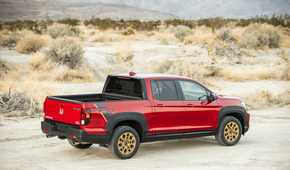
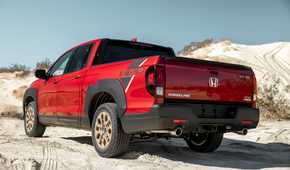
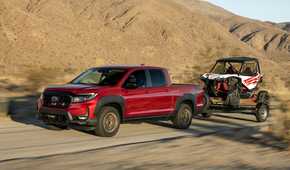
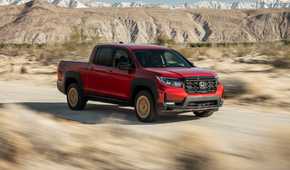
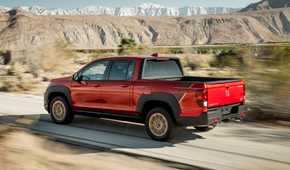
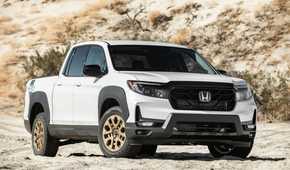
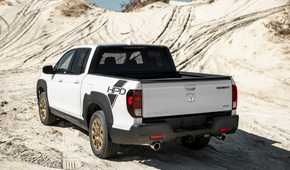
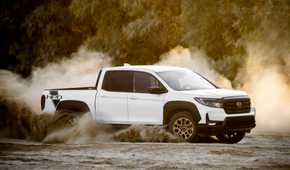
If more rugged capability is the goal, Honda can surely expand on the current Ridgeline TrailSport for the upcoming third generation. TrailSport models have all-terrain tires, skid plates, and an off-road-tuned suspension. Past Ridgeline options include the HPD Package (gallery below), a tribute to Honda’s racing heritage, which adds a unique grille, black fender flares, an oil pan protector, and more aggressive HPD 18-inch alloy wheels.
All of these mechanical and styling elements Honda could expand on with the third-generation Ridgeline, while integrating things like its Trail Experience app, which displays driver-centric data points from the vehicle on the interior touchscreen while off-roading.
 Credit: Honda
 Credit: Honda
 Credit: Honda
 Credit: Honda
 Credit: Honda
 Credit: Honda
 Credit: Honda
 Credit: Honda
 Credit: Honda
 Credit: HondaClose
 Credit: Honda
 Credit: Honda
 Credit: Honda
 Credit: Honda
 Credit: Honda
 Credit: Honda
 Credit: Honda
 Credit: Honda
 Credit: Honda
 Credit: Honda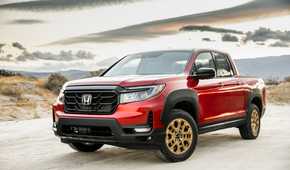
 Body-on-frame design possible, but not likely
Honda hasn't given a firm date for when more details about the third-generation Ridgeline will be released. At this point, it could be reasonable to imagine that a hybrid powertrain will accompany the new Ridgeline. If so, it would most likely increase the Ridgeline’s power output and towing capacity, two things many truck buyers prioritize, whether they actaully need that capability day-to-day or not.
While it’s not confirmed yet, a switch to body-on-frame seems unlikely. The current Ridgeline shares its platform with the Pilot and Passport, and building it alongside those two SUVs at the Alabama Auto Plant keeps manufacturing costs down for Honda. A body-on-frame Ridgeline would break that shared architecture, which Honda would have to weigh the costs and complexities around doing so. The automotive industry writ large is sensitive to factors like cost and complexity, with Honda no exception, especially now.
The automaker posted a $2.7 billion net loss for the fiscal year ending in March, its first annual loss since going public in 1957. According to Reuters reporting on the earnings, Honda tied the loss to more than a trillion yen in restructuring charges connected to its electric vehicle strategy, including canceled EV programs originally planned for North America. Perhaps a revised Ridgeline that appeals to a wider truck-buying audience, in combination with other popular Honda models like the CR-V, can return some of those lost profits.
In the meantime, Honda will continue to sell down current 2026 inventory while the Alabama plant preps for the new generation of the Ridgeline. The 2026 model starts at $42,290 for the Sport trim and tops out at $49,390 for the Black Edition Two-Tone. Both figures include the $1,495 destination charge.
Every 2026 Ridgeline has a three-year/36,000-mile bumper-to-bumper warranty, a five-year/60,000-mile powertrain warranty, and five years of corrosion protection with unlimited mileage.