
Remember me








SINGAPORE – Success in the Malay/Muslim community is not confined to a single academic pathway, a new study on parental motivations in education by self-help group MENDAKI has found.
It showed that parents in the community place emphasis on financial stability, meaningful careers and lifelong learning rather than university education alone.
Among the five types of parents that emerged, 41 per cent of those who are “safety stewards” wanted their children to attain university education. These parents tended to be more cautious and felt a deeper sense of responsibility towards their families.
Key findings of the study were presented on July 9 at MENDAKI’s 10th edition of the Raikan Ilmu movement that promotes lifelong learning. The event was held at Sands Expo and Convention Centre.
Overall, more than one in four Malay/Muslim parents set university education as a minimum goal for their children, according to the study, which was conducted from March 20 to April 30.
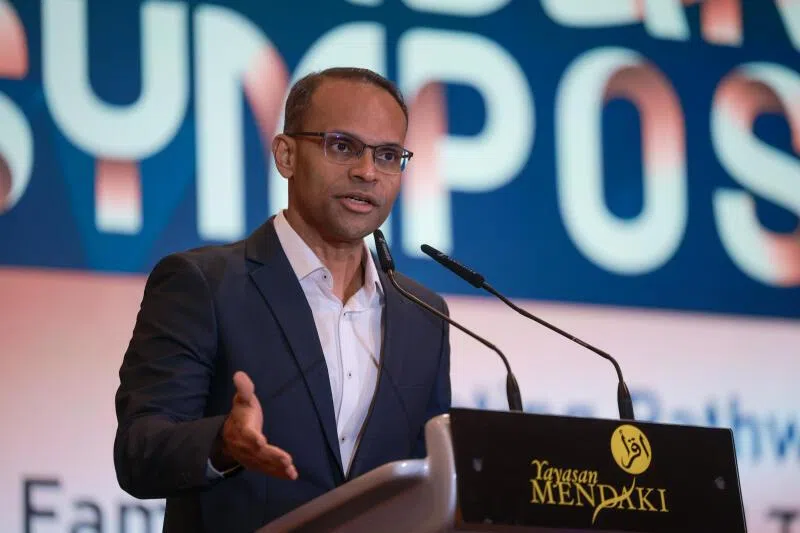
MENDAKI chief executive Feroz Akber said that a university education is not the only measure of success. “Two parents may both want the best for their child, yet have very different ideas about how to get there.
“Success can also mean having a meaningful career, achieving financial stability or building a happy and fulfilling family.”
The study surveyed 1,010 Malay/Muslim parents and found that 28 per cent of them set university education as a minimum goal for their children.
The results identified five parental belief archetypes – Upward Movers, Stability Seekers, Flexible Achievers, Lifelong Learners and Safety Stewards – each differing in their approaches and aspirations for children.
Parents of the MENDAKI Achievement Programme – which provides academic support for primary and secondary school students – were more inclined to set university admission as a goal, with 37 per cent doing so, compared with the overall 28 per cent.
Qistina Sahril, who graduated from the Singapore University of Technology and Design with a degree in engineering product development about three months ago, said her parents prioritise financial stability for their children.
Qistina has four siblings – two are 15 years old, and the other two are 22 and 27. She is the only university graduate among them.
But her parents have given her freedom to chart her path, said the 24-year-old.
“I think that’s because they understand that even if I get a job that has a high salary, if it’s a role I might get stressed by, it’s not good to stay in that kind of job,” said Qistina, who wants to pursue a career in teaching or healthcare.
She added that she initially pursued a degree in engineering because her father, 55, is a technical instructor at semiconductor firm KLA. Qistina’s mother works as a primary school mother tongue teacher. Her father has a master’s degree in instructional design with technology and her mother has a diploma in education.
“It’s not that I don’t like engineering, but I realised that I would want to work on something more meaningful to me,” said Qistina.
A separate study by MENDAKI found that 87 per cent of Malay/Muslim workers are AI-literate, though younger workers showed less interest in AI training.
AI literacy refers to the knowledge and skills needed to understand, evaluate and use AI tools safely and responsibly.
The study surveyed 615 Malay/Muslim workers and 518 non-Malay/Muslim workers from April 29 to June 18.
The workers were tested on their knowledge of AI concepts, usage and risks.
The study found that while many workers are ready to adopt AI in the workplace, some groups may need more support.
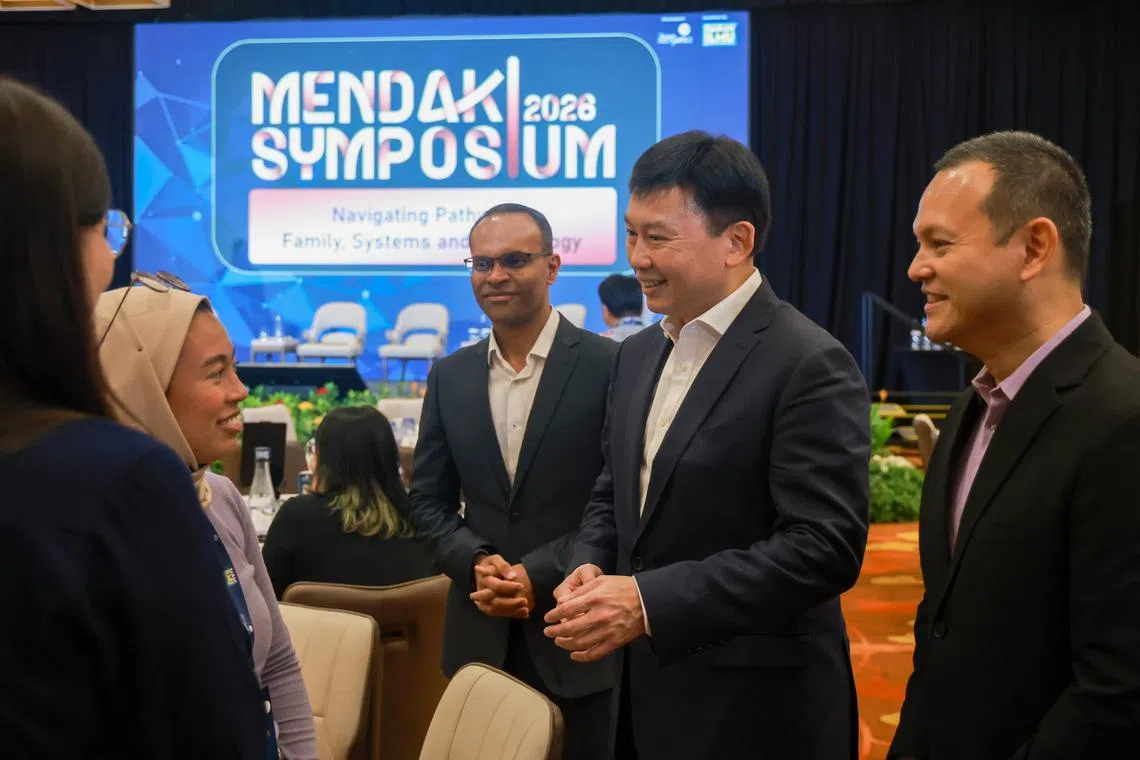
(From left) MENDAKI chief executive Feroz Akber, National Development Minister Chee Hong Tat and Senior Minister of State for Ministry of Defence and MENDAKI chairman Zaqy Mohamad greeting attendees at the MENDAKI Symposium 2026 at Sands Expo and Convention Centre on July 9.
ST PHOTO: JASON QUAH
Malay/Muslim technicians and associate professionals, such as workers in technical and specialised support roles rather than managers or degree-level professionals, are one such group. They felt the highest risk of having AI displace their jobs, but recorded the lowest AI literacy levels and urgency to learn AI.
Workers aged 46 to 60 also had the highest urgency to learn and the highest usage of AI tools, while those aged 18 to 30 showed less urgency and the lowest participation in AI training.
At the MENDAKI Symposium, Minister for National Development Chee Hong Tat said the benefits of AI will not naturally be distributed evenly.
He added that the Government alone cannot ensure all Singaporeans have access to AI tools and opportunities to pick up AI-related skills, and needs to rely on community groups such as MENDAKI for more support.
“Over the years, MENDAKI has been stepping up its education and upskilling efforts to ensure no one in the Malay/Muslim community is left behind,” he said.