
Remember me




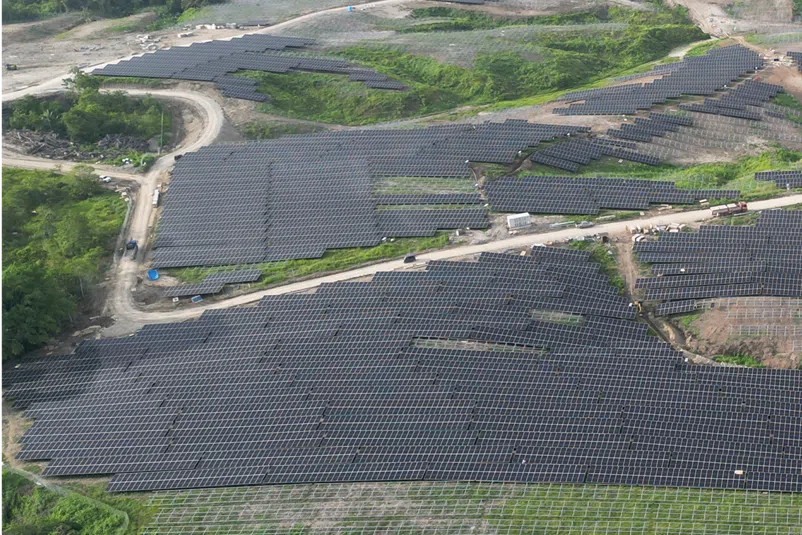
SINGAPORE – A vast solar plant that can power over 82,000 homes is being constructed on the Philippines’ Mindanao Island.
Elsewhere, projects in South-east Asia and India are being built to turn rice husks into cleaner electricity to gradually reduce the region’s reliance on pollutive fossil fuels.
Such cleaner energy projects in Asia would not have been possible without a special formula of finance orchestrated by the Singapore Government.
Called Financing Asia’s Transition Partnership (FAST-P), Singapore’s climate finance initiative has raised US$1.14 billion (S$1.5 billion) for various green energy projects in the region, including battery storage, solar plants, bioenergy and improved power grids to help cleaner sources of electricity gradually replace coal.
Formed at the end of 2023 by Singapore’s central bank, FAST-P’s ambition is to raise up to US$5 billion to help finance Asia’s decarbonisation efforts. This is done through a special formula called blended finance, which involves layering a mix of public, private and philanthropic money.
This financing approach typically starts with capital from public or philanthropic sources as a catalyst. This will then spur the private sector – which holds most of the world’s wealth but is risk-averse – to invest in sustainable projects.
South-east Asia is a trove for renewable energy and green projects, but the prospects may appear too risky and less bankable for many investors to get involved.
The projects are fundamentally commercially attractive, but they are not getting the capital they need from traditional lenders, said Pentagreen Capital, one of three fund managers appointed to unlock funding for climate and infrastructure projects in Asia under FAST-P.
“This could be due to a variety of reasons – for example, the business model of a project may have an element of innovation that has not yet been accepted by incumbent lenders, such as battery technology, or the project may need a different kind of financing structure, which traditional lenders are unable to provide,” added Pentagreen.
As a fund manager, Pentagreen – a joint venture between HSBC and Temasek – is focused on catalysing investments for sustainable infrastructure and clean energy projects in Asia. It oversees one pillar of FAST-P, which is called Green Investments Partnership, which has raised US$800 million to date.
FAST-P comprises two other pillars. The second pillar, Energy Transition Acceleration Finance, is focused on helping countries in South and South-east Asia to phase out pollutive coal plants and replace them with cleaner energy.
At end-June, this pillar – overseen by fund manager Clifford Capital – secured US$345 million, which will be invested in renewables, power grid infrastructure, energy storage systems and hydropower technologies that can gradually replace electricity generated by coal-fired power plants.
The third pillar, the Industrial Transformation Programme, was set up to help emissions-intensive sectors, such as cement and steel production, to decarbonise, while supporting emerging technologies like carbon capture and hydrogen fuel.
In early 2025, Pentagreen and British International Investment – a UK government-backed financial institution – jointly put in US$80 million to fund the construction of solar and battery storage projects in the region, which include the Mindanao plant.
The US$80 million, which is part of the US$800 million pot, was realised through a financial tool that sits below commercial bank loans and thus absorbs risk first.
By adding this extra layer of risk capital – or money that can take bigger losses if things go wrong – it gives commercial lenders like banks extra comfort and increases their willingness to invest in the climate projects.
Srini Nagarajan, British International Investment’s managing director and head of Asia, said: “The essential idea here is to reduce the early-stage risks and (lead to) potentially higher returns to attract more commercial investors.”
As a development finance institution, British International Investment invests in private sector businesses, banks and projects in less economically developed countries.
The constraint in greening South-east Asia’s energy and infrastructure is not just a shortage of capital but also a lack of bankable opportunities with a sufficient track record to attract commercial investors, Nagarajan said.
This is where programmes like FAST-P fill the gap with early layers of funding from the government and philanthropies.
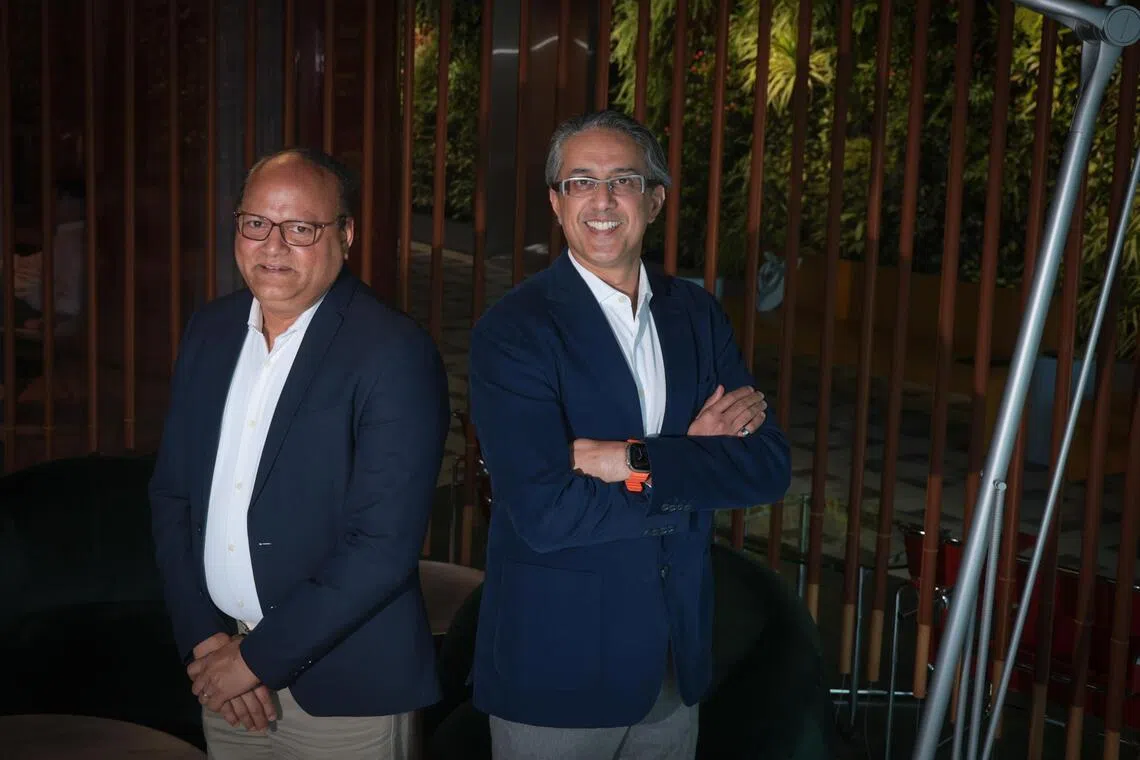
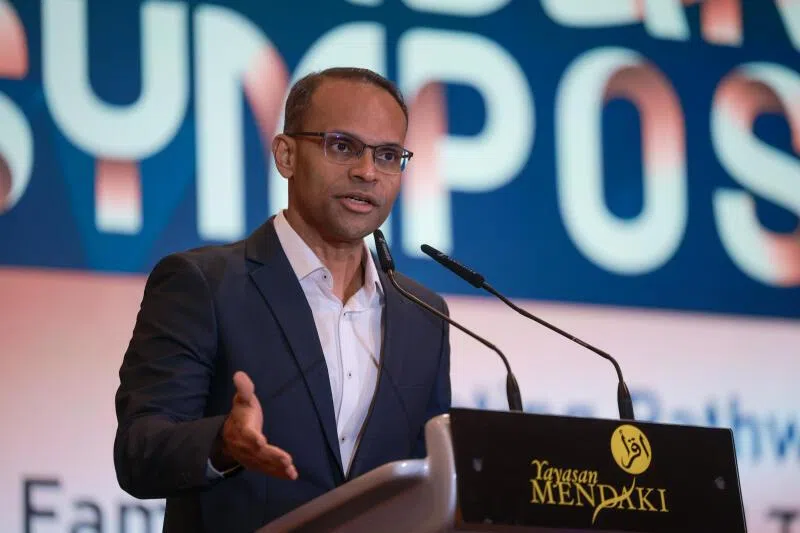
British International Investment managing director Srini Nagarajan (left) and FAST-P chief executive Munib Madni.
ST PHOTO: JASON QUAH
Nagarajan lauded the Singapore Government’s initial commitment of up to US$500 million for the programme in 2024, calling it a “very gracious” move by the Monetary Authority of Singapore. This amount comes in the form of concessional funding, such as grants and loans provided on more favourable terms and at below-market rates.
On FAST-P, he said: “I don’t know whether there are equivalent programmes I have seen anywhere in Asia of this nature.”
But public and fiscal budgets are always limited.
According to the International Energy Agency, South-east Asia must scale up clean energy investments to US$190 billion by 2035 – about five times 2024 levels – to meet its climate goals.
For more commercial investors to come on board, there needs to be a track record of other investors having made money from the projects, said Nagarajan.
If they were in operation for some time and generating cash flows, they can attract banks and other traditional investors.
The reality is that getting commercial investors into emerging markets like South-east Asia has been a challenge. Western countries and markets tend to deliver higher returns for investors, acknowledged Nagarajan.
FAST-P’s chief executive, Munib Madni, said the level of risk investors are willing to take is not adjusted for the ASEAN reality.
Nagarajan added that most of the economies in South-east Asia are still at a slightly earlier stage in green energy transformation, and governments can play a more dominant role in creating stable policy environments.
The US-Iran conflict has not helped.
Nagarajan said: “Over the past two months, we have seen significant foreign institutional capital flow out of emerging markets across Asia, putting pressure on currencies and creating a more challenging investment environment.
“The recent volatility seen across several Asian emerging markets has been driven by a combination of higher oil prices, ongoing geopolitical uncertainty, including the US-Iran conflict, and a broader shift by investors towards safe-haven assets.”
Securing the US$800 million despite the challenging climate shows that FAST-P’s Green Investments Partnership stayed the course and remained resilient, said Nagarajan.
In addition, the US$345 million to gradually replace coal has come at a time when the Strait of Hormuz blockade had prompted several countries in Asia to ramp up their use of coal.
Madni said: “The Asian transition is a multi-decade and trillion-dollar investment. Many people look at it as a cost. We need to change that and talk about it as an opportunity.”