Chinese cars taking on well known rivals - but which vehicles come out on top
Just a couple of years ago there was barely a Chinese car on our roads, writes Freda Lewis-Stempe.
Now their popularity is soaring – and many bear an uncanny similarity to the European models most loved by Irish drivers.
Chinese cars from makers such as BYD and Chery have a similar aesthetic and feel to brands such as Opel, Volkswagen and Mercedes, for example.
And they rival popular European models on features, safety, fuel economy and battery range.
Some are so similar to European models they are being referred to as ‘dupes’ – a label that even the Chinese car manufacturers themselves sometimes embrace.
For example, earlier this year, Omoda, owned by China’s largest automotive exporter Chery, hired Kate Moss lookalike model Denise Ohnona to front its London Fashion Week 2026 campaign – a nod to the brand’s reputation for launching cars with a ‘dupe’ feel.
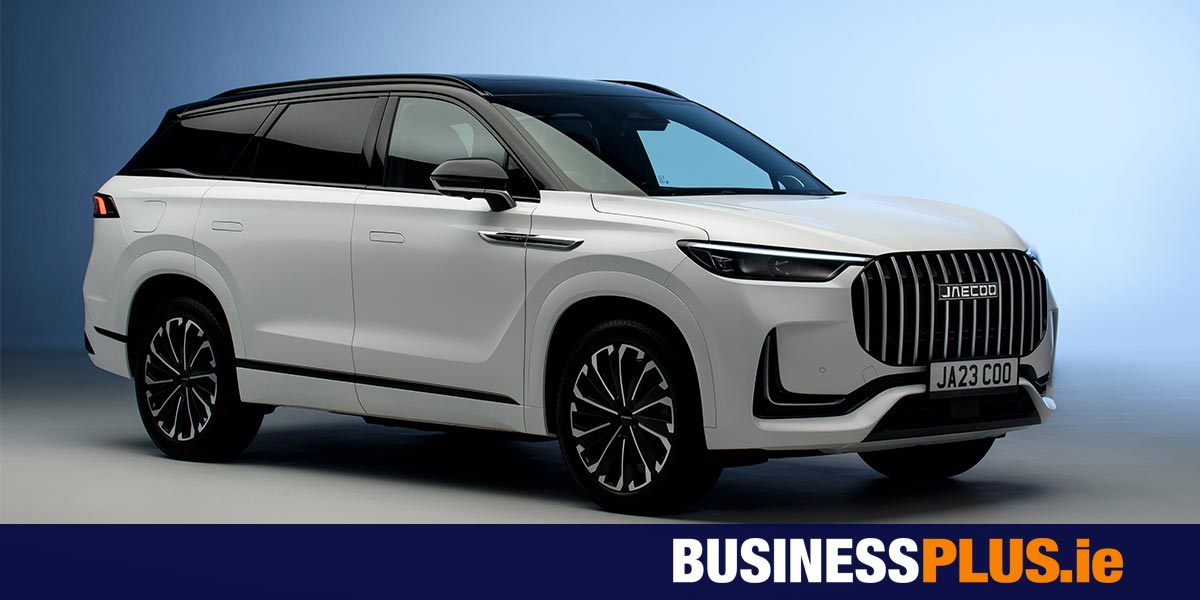
The launch came shortly after Chery’s new €35,000 Jaecoo 7 SUV caused a storm on social media as users dubbed it a ‘Temu Range Rover’ due to its similarity to the Range Rover Velar but at a fraction of the cost.
While these new Chinese cars have much in common with European rivals, they typically have one huge advantage over them – they are substantially cheaper.
As drivers look to save money, it’s no wonder that Chinese carmakers are reporting significant growth in sales in Ireland and across Europe as a whole.
Reports show that 13.2 million new Chinese cars were sold to Europeans last year.
But are they really worth considering? As a motoring reporter, I review the latest Chinese models and test drive them extensively to see if they are worth parting with your cash – and switching your loyalty from your favourite European brand.
I know every car buyer is after something different. It could be seven seats for a school run, compact size and strong fuel economy for nipping around town, or a luxury interior to feel pampered.
So here I’ve reviewed seven Chinese cars that would suit different types of driver – and compared them to the European model they most resemble.
Crucially, I also reveal how much you could save by opting for the Chinese version.
BYD Dolphin Surf
CITY RUNAROUND
BYD DOLPHIN SURF – €17,985
VAUXHALL CORSA ELECTRIC – €25,295
SAVING – €11,310
BYD is now the biggest electric car maker in the world, dethroning Tesla.
Small, cheap EVs are having a moment, and BYD has taken on European marques with its little Dolphin Surf.
It goes up against Opel’s Corsa Electric which costs around €25,295 while the Surf starts from under €18,000.
Yet the Corsa has 405 kilometres of range – how far an EV can go between charges, as measured by industry benchmark figures.
To rival that you’ll need to pay more for your Dolphin Surf. The more advanced €22,230 Dolphin Surf Boost takes the range up to 410 kilometres.
That’s not a huge amount, but you can easily spend a week whizzing around town before it needs to be plugged in.
The Surf comes with a 308-litre boot, a 10.1 in rotating touchscreen and heated seats in the top trim. It’s more about fun and function than thrills, but sometimes that’s all you need.
Verdict: If you want to jump from a well-known petrol car to a copy-and-paste EV version, get the Corsa. If you’re going on value alone, get the Dolphin Surf.
Vauxhall Corsa Electric
SMALL FAMILY EV
MG4 URBAN – €30,995
VOLKSWAGEN ID.3 – €31,780
SAVING – €785
Since its debut in 2022, the MG4 has become one of the best selling EVs on our roads. It’s no surprise the car maker decided to capitalise on the MG4’s success this year by giving it a facelift and bringing out the MG4 Urban.
To my eyes it’s a little less cool and sporty looking than the angular 4, but the Urban is more practical. I was particularly impressed with the 479-litre boot.
Plus, you get an extra 98 litres of storage under the lift-up boot floor.
This means the MG4 beats rivals such as VW’s ID.3 (385 litres) and the new Nissan Leaf (435 litres) in the practicality stakes.
I found it an appealing EV, balancing an interior with a premium feel with functional and smart technology (a 7 in driver display and 12.8 in central screen) and good comfort features, such as heated front seats in some trims.
The MG4 offers a drive that is enjoyably responsive. It’s good on twisting roads and excelled in tight, urban environments.
Verdict: The MG4’s range of between 350 and 492 kilometres isn’t massive but is enough for town and city drivers.
You’ll pay from €39,995 whereas a Volkswagen ID.3 starts at €31,780 for a less practical car.
A Chery Automobile Co. Tiggo 7 CSH vehicle displayed at a dealership in Perth, Australia, on Thursday, Sept. 25, 2025. Chery, China's biggest car exporter, rose in its Hong Kong trading debut after raising HK$9.1 billion ($1.2 billion) in an initial public offering to help power its overseas expansion ambition. Photographer: Matt Jelonek/Bloomberg via Getty Images
THE FAMILY SUV
CHERY TIGGO 7 CSH – Estimated €30,000
PEUGEOT 3008 – €45,495
SAVING – €15,495
Chery is China’s largest car exporter, and the powerhouse behind the Omoda, Jaecoo and now Lepas names.
Chery brought its own-brand cars to Britain less than a year ago, but they’re already proving popular and a launch in the Irish market is expected to follow soon.
The Tiggo 7 is a medium-sized SUV with five seats.
The petrol and plug-in electric CSH (Chery Super Hybrid) model it offers 1,200 kilometres of total range, including around 90 kilometres of electric-only range.
It boasts a premium-feeling interior. The panoramic roof makes the car feel light and spacious, and a dual 12.3in HD display and driver cluster is similar to that in a Mercedes A-Class.
The Tiggo 7 is not going to fill you with excitement but it delivers everything family drivers need. It goes up against the popular Peugeot 3008, which costs €45,495 and has an EV range of around 85 kilometres, a 21 in panoramic curved display, and a similar level of soft-touch materials inside.
Verdict: The Peugeot 3008 is a top-notch car, but its range can’t get anywhere near the Chery’s, so save the bucks and go Tiggo.
THE NEWCOMER
LEPAS L8– Estimated €35,000
VOLKSWAGEN TIGUAN – €50,275
SAVING – Estimated €15,275
The Lepas is the latest brand from Chery, and plug-in hybrid the L8 will launch in the third quarter of this year.
It will be a large five-seater, with a premium interior – potentially a contender for the Volkswagen Tiguan.
It’s expected to be around €35,000, which makes it much cheaper than the Volkswagen Tiguan or luxury five-seater SUVs such as the BMW X5 which is north of €100,000.
Verdict: The Tiguan offers a great package – the updated interior is made of smart materials. Use of AI assist allows you to play music and ask questions hands-free. Considering all the Tiguan has to offer, it would take a lot for the Lepas to steal its crown.
I’d say stick with it until the Lepas proves it’s a worthy buy.
LUXURY ROAD-MUNCHER
OMODA 9 SHS – €54,000
MERCEDES GLC – €75,935
SAVING – €21,935
I took the Omoda 9 SHS (Super Hybrid System) across seven European countries last summer and was cosseted by its comfort features.
These fall under Omoda’s “everything as standard” promise. So I relaxed on massage seats, enjoyed the sunshine through the large sunroof, played music through the 14-speaker Sony system and appreciated the easy-to-use 24.6in infotainment screen.
But I could also enjoy the smooth and swift acceleration from its 442hp and – importantly for many buyers now – know I was munching the miles efficiently.
That European tour was done on a single tank, with the Omoda 9 SHS’s combined EV and petrol 700-mile range leaving more expensive rivals behind.
At home, the 150 kilometre electric-only range will really come into its own.
The Omoda has a high-end feel, but doesn’t quite match the supple, plush quality of the GLC.
This offers chauffeur-level quality – the interiors are as comfortable and luxurious as a home cinema.
Verdict: The Omoda 9 SHS is one of the most complete offerings from the house of Chery and drives well.
German rivals such as the Mercedes GLC will set you back at least an extra €20,000.
JAECOO 8
THE SEVEN SEATER
JAECOO 8 – Estimated €52,500
AUDI Q7 – from €110,350
SAVING – €57,850
We’ve talked about Chery and Omoda and finally we arrive at Jaecoo – the firm’s most popular brand.
Most people will know the name Jaecoo for its 7, but the 8 is soon to arrive as its flagship model. With its ‘Super Hybrid System’ the 8 SHS-P combines a 1.5-litre turbocharged petrol engine with electric power, offering 133 kilometres of EV-only.
You can transport seven people over 1,000kms without needing to stop to refuel.
Jaecoo hasn’t scrimped inside either, with dual 12.3in displays, a Sony 14-speaker sound system, front massage seats and headrest speakers.
At around €53,000 the Jaecoo 8 seriously undercuts the £73,000- plus Audi Q7 and the BMW X7, which costs around €110,000.
But it also gives you plug-in hybrid capability, something the German cars don’t yet offer if you want seven seats. I drove the Jaecoo 7 at its launch and it has great attributes – it’s economical and includes features such as multiple screens as standard.
However, it’s not what I’d call a driver’s car – you wouldn’t choose it if you’re looking for an enjoyable drive.
Hopefully the 8 will be an improvement on the 7.
Verdict: I’ve not driven the Jaecoo 8 yet, so this is an on-paper comparison. But if it’s affordability and hybrid power rather than a badge you want, the Jaecoo 8 seems like the seven-seater to opt for.
The Q7 is a much-loved large family SUV for a reason but it will cost you almost €60,000 more.
TESLA RIVAL
MG IM6 LONG RANGE – €49,995
TESLA MODEL Y PREMIUM LONG RANGE REAR-WHEEL DRIVE – €49,990
SAVING – €5
IM or ‘Intelligence in Motion’ is MG’s ‘technology showcase’ arm. This is a tie-up between parent company SAIC and e-commerce and R&D companies, which means this IM6 is really an MG despite its different badge.
As an alternative to a Tesla, the IM6 earned my respect last summer by matching the Model Y on range and beating it on charging.
The IM6 Long Range offers 625 kilometres to the similarly priced Model Y Premium Long Range Rear-Wheel Drive’s 608kms, but trounces Tesla’s 250kW charging speed with its 396kW one.
It can charge from 10 to 80 per cent in 17 minutes using a rapid charger.
The IM6 is very smooth and pindrop quiet to drive, which are big plus points.
Families don’t have to compromise on practicality either, as the IM6 has a 665-litre boot and 32-litre frunk (front trunk).
If you’re not fussed about range and want more power and punch, then the IM6 100 Performance does 0 to 100 kph in 3.5 seconds and has 740bhp to raise the hairs on the back of your neck.
This will cost you more at €52,000, but that’s considerably cheaper than a €61,990 Performance Model Y.
Verdict: If I was buying one of these cars, it would be the IM6 all the way.
DENZA Z9GT. (Photo by Costfoto/NurPhoto via Getty Images)
THE ‘REVERSE DUPE’
DENZA Z9GT – Estimated €110,000
PORSCHE TAYCAN SPORT TURISMO – €112,059
SAVING – €2,059
Denza is the premium technologyorientated car brand of the BYD Group, and its Z9GT is its flagship model that’s about to arrive – with an astonishing five-minute charging time.
The launch was no small thing. Denza took over Paris’s opera house, the Palais Garnier, and hired former James Bond Daniel Craig as global ambassador.
With its shooting brake shape, the Z9GT is a rival to Porsche’s Taycan Sport Turismo. And it offers headlining-grabbing figures, covering 0-100 kph in 2.7 seconds thanks to its 1,140bhp.
The car offers total luxury with three screens, massage seats for all, a fridge compartment and RollsRoyce style automatic doors.
It has the feel of a super car – if done safely it could bring out your inner racing driver – but the comfort and space of an ultra-luxe estate.
The real pull, though, is that it is the first model to bring BYD’s Flash Charging to UK drivers, with the Z9GT’s battery capable of going from 10 to 70 per cent in just five minutes.
A full 10 to 97 per cent charge takes only nine minutes. The catch is that this Chinese EV isn’t cheap, costing around €110,000. So while an enticing EV, it is by no means a bargain ‘dupe’ – you can pick up the Porsche for a similar price.
Verdict: The Denza beats or surpasses the Porsche in most categories. However, what you do not get is the prestige of a Porsche, as the Chinese brand is still relatively unknown.