'I went to sleep and woke up paralysed, now I live in a nursing home at 36'
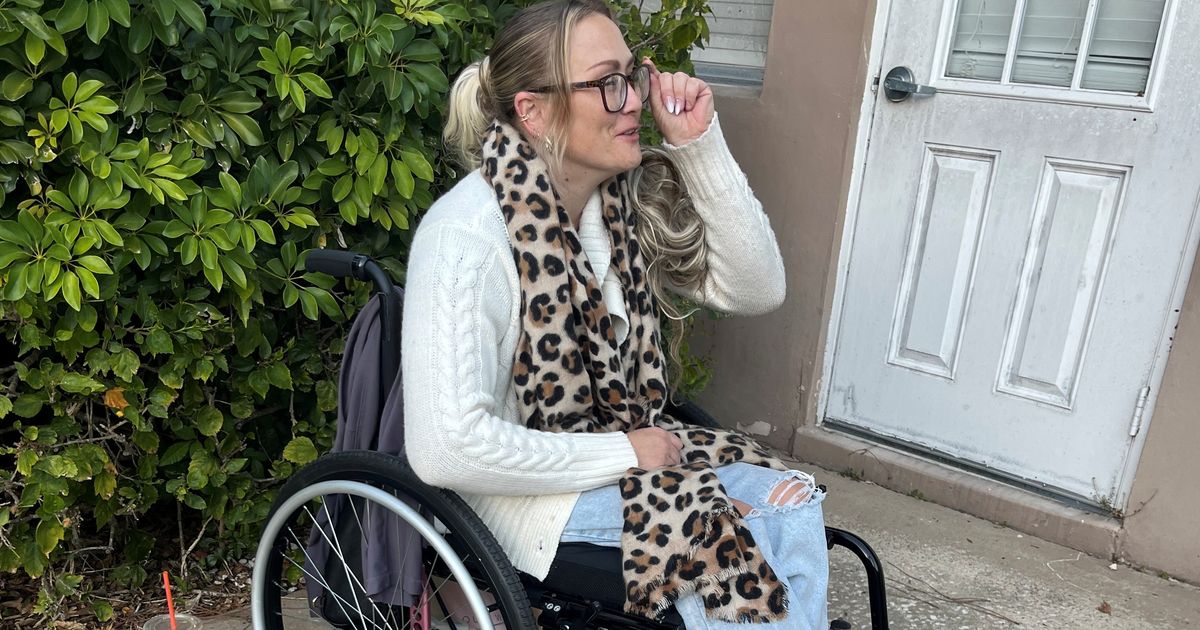
A woman who once spent her days surfing, dancing and coaching gymnastics has revealed how her life changed overnight when she woke up unable to feel her legs. Erica Mays now lives in a nursing home aged just 36 after a spinal infection left her paralysed from the chest down.She had begun working at just 16 as a gymnastics coach, working her way up to assistant manager at an Italian restaurant. “I had the keys, I was doing money drops, I was doing really good,” she says. But she had struggles with sobriety, and a downward spiral led to her eventually finding herself homeless. And that was the root cause of her infection.“I was living under a bridge on a piece of styrofoam,” she says. “I had no idea there was an infection spreading through my spine.“I thought the guy I was with was my soulmate, but everything just fell apart.”Getting married could save your life, frozen dead man brought back, fruit and veg win Alzheimer's fight, and scientists find 'natural Ozempic' that comes without the annoying side effects - all this and more in our latest science newsletterIn the days leading up to her paralysis, Erica says she became seriously unwell. “I had fevers, horrible chills, and I could barely walk,” she says. “I was just trying to survive.”After forcing herself to walk nearly two miles, she made it to a hotel, where she finally felt a sense of relief.“I had a shower, a bed, food, and I slept so well that night,” she says. But by morning, everything had changed. “I couldn’t feel my legs. I thought maybe they were just asleep,” she says.“I even told my friend to put me in the bath with hot and cold water to try to wake them up, but nothing worked.”She was rushed to hospital, where scans revealed a two-inch abscess compressing her spinal cord, a rare but serious condition known to cause permanent paralysis if not treated quickly. “By the time I got there, I was paralysed from the chest down and it was creeping up,” she says.Doctors operated immediately, but the damage had already been done. “They asked me to wiggle my toes and I couldn’t,” she says. “They didn’t have to say it, I knew.”She was later diagnosed with a T6 spinal cord injury after MRSA in her bloodstream spread to her spine, causing the abscess. Since her paralysis in 2021, Erica has been living in nursing homes, something she says she never imagined for herself.“At 36, I’m surrounded by people decades older than me,” she says. “I’m one of the youngest here, and people don’t expect someone my age to be in a place like this.” Before her paralysis, Erica describes her life as active and full of energy.“I was always moving,” she says. “I longboarded, surfed, played soccer and I loved to dance anywhere I was.”Now with no savings, no stable housing, and strained family relationships after years of addiction, she says she had no other option. “I had nothing to fall back on,” she says. “This was the only safe place for me.”In her first facility, Erica says she received minimal therapy and reached her lowest point. “I gave up,” she says. “I even attempted to take my life twice. I just didn’t want to feel anything anymore.”She also developed a severe wound beneath her glutes that became dangerously infected, eventually reaching the bone.“I had it for eight months,” she says. “It just kept getting worse.”After moving to a new facility two years ago, her condition began to improve. “Within a month of being here, my wound finally healed,” she says. “I stopped smoking, focused on my nutrition, and started taking care of myself.”Now, Erica, from Florida, is slowly regaining strength and independence. “I’ve learned how to get on and off the toilet, get out of diapers, stretch on the floor and get back into bed,” she says. “I’m even getting some feeling back in my foot.”Still, daily life remains physically demanding. “My wheelchair is my legs now,” she says. “I have to fight my body just to get moving every day.”Simple tasks require planning, strength and persistence. “This is a 24/7 job,” she says. “Sitting down all day isn’t relaxing like people think.”She has also had to adjust to using a suprapubic catheter after repeated complications with other methods. “At first I didn’t even want to look at it,” she says. “Now it’s just part of my routine.”Despite everything, Erica says the emotional toll has been just as difficult. “The hardest part is losing your privacy,” she says. “People talk about you like you’re not even there.”She also admits that paralysis has affected her confidence. “I used to love dancing, now I feel silly trying,” she says. “And intimacy has been really difficult. I feel insecure.”But through it all, she says her faith has carried her forward. “I couldn’t do life on my own anymore,” she says. “I gave it to God and said, ‘Use me however you need to.’”While her relationships with family are still rebuilding, she remains hopeful. “They’re rooting for me, just from a distance right now, and I understand that,” she says. In recent months, Erica has begun sharing her journey on TikTok, where she has found unexpected support.“I thought I was just another person stuck in a nursing home,” she says. “But people are actually inspired by me.”Her videos have resonated with viewers, many of whom say they had no idea someone so young could end up in long-term care. “For the first time in my life, I feel like I’m doing something right,” she says.“And I can honestly say I’m proud of myself.”Looking ahead, Erica’s dreams are simple. “I just want a home, a yard, my daughter in my life,” she says. “A cat, a dog, maybe even a raccoon.”She also hopes to use her experience to create change. “I want to be a voice for people in nursing homes,” she says. “There’s so much that needs to change.”And for anyone facing a life-changing diagnosis, she has one message: “This is not the end,” she says. “It’s going to get really hard, but it can still be worth it. I lost everything once. But I’m still here — and I’m not done yet.”