The AstroVettes: Why So Many NASA Astronauts Drove Corvettes In The '60s
The story of America's most iconic Corvettes starts with one man, a passion for performance, and $1,500. That man was Alan Shepard — best known otherwise as the first American in space. Long before he claimed that accolade, Shepard purchased a lightly used '53 Corvette from his father-in-law for $1,500, and it was at this moment that the automotive love affair started.
Several years later, when Shepard was chosen to be one of just seven men selected for NASA's awesome Mercury program, he would purchase another used 'Vette – a '57 example this time around. Clearly, he had a thing for America's favorite sports car, and that would make his welcome-home treat all that more special once he returned from space.
Back on Earth, Shepard had befriended famed engineer and father of the Corvette, Zora Arkus-Dontov, who convinced the GM bosses to gift the celebrated astronaut a brand-new 1962 Corvette. A joyous gift for Shepard to receive, but also a powerful publicity opportunity for Chevrolet.
The Corvette connection had only just started, though, and the real explosion of AstroVette-fever wouldn't kick off until Jim Rathmann cooked up a publicity stunt of his own. Rathmann, a former Indy 500 winner who just so happened to operate a Chevy dealership near Cape Canaveral — the Apollo 13 launch site – devised a scheme in which astronauts could lease a brand-new Chevy of their choosing for just $1 each year. Volkswagen tried to join in on the 1969 Apollo fever too, although its campaign never really had the same effect. Plenty of astronauts took Rathmann up on his offer, choosing Corvettes over Impalas or anything else.
The relationship between Jim Rathmann and the astronauts of the '60s only grew as time progressed. Some did opt for other options — perhaps most notably John Glenn who opted to commute in a dinky NSU Prinz while leasing a station wagon for his family — but most chose the sports car.
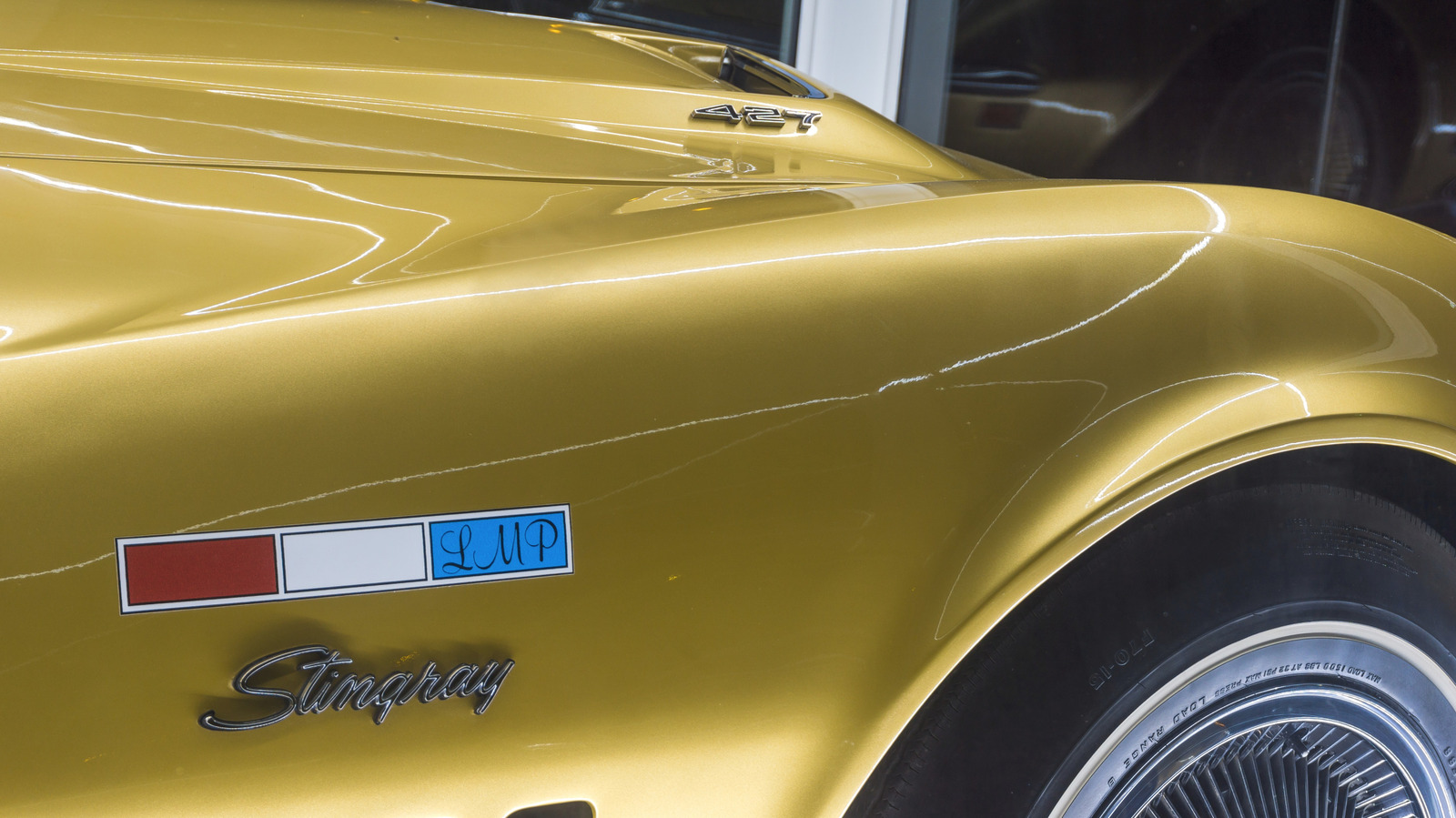
While Shepard was first, it was the Apollo 12 crew's Corvettes that really claimed the spotlight. Alan Bean, Charles Conrad, and Richard Gordon each got hold of identical '69 Stingrays, each finished with custom black-and-gold paintwork to match their lunar module spacecraft. Only one of these survives today – Bean's car — which was purchased by an enthusiast back in the early '70s for $3,230. It was then suitably restored back to as-new condition in the '90s.
It's worth noting that the astronauts who did take advantage of the dollar leasing scheme did so to its fullest, ordering big-block examples with all the options and extras. Gus Grissom, for example, opted to have his fitted with wide magnesium alloy wheels, flared fenders, and — just like every other AstroVette — a four-speed manual, too.
All good things must come to and end, though, and GM did just that in 1971. NASA now employs an ethics policy which means active astronauts could not take part in such a scheme, although GM did once jest about bringing in a similar scheme for retired astronauts.
To enthusiasts, all classic Corvettes are cool items to be treasured, but these Astrovettes achieve a status altogether much higher. Leased for a dollar, specified to the individual tastes of our first moonwalkers, and then suitably thrashed by them — it's a fascinating insight into the motoring tastes of our very first space explorers.