This Adorable Miniature Motorcycle May Just Be The Smallest Ducati Ever Made
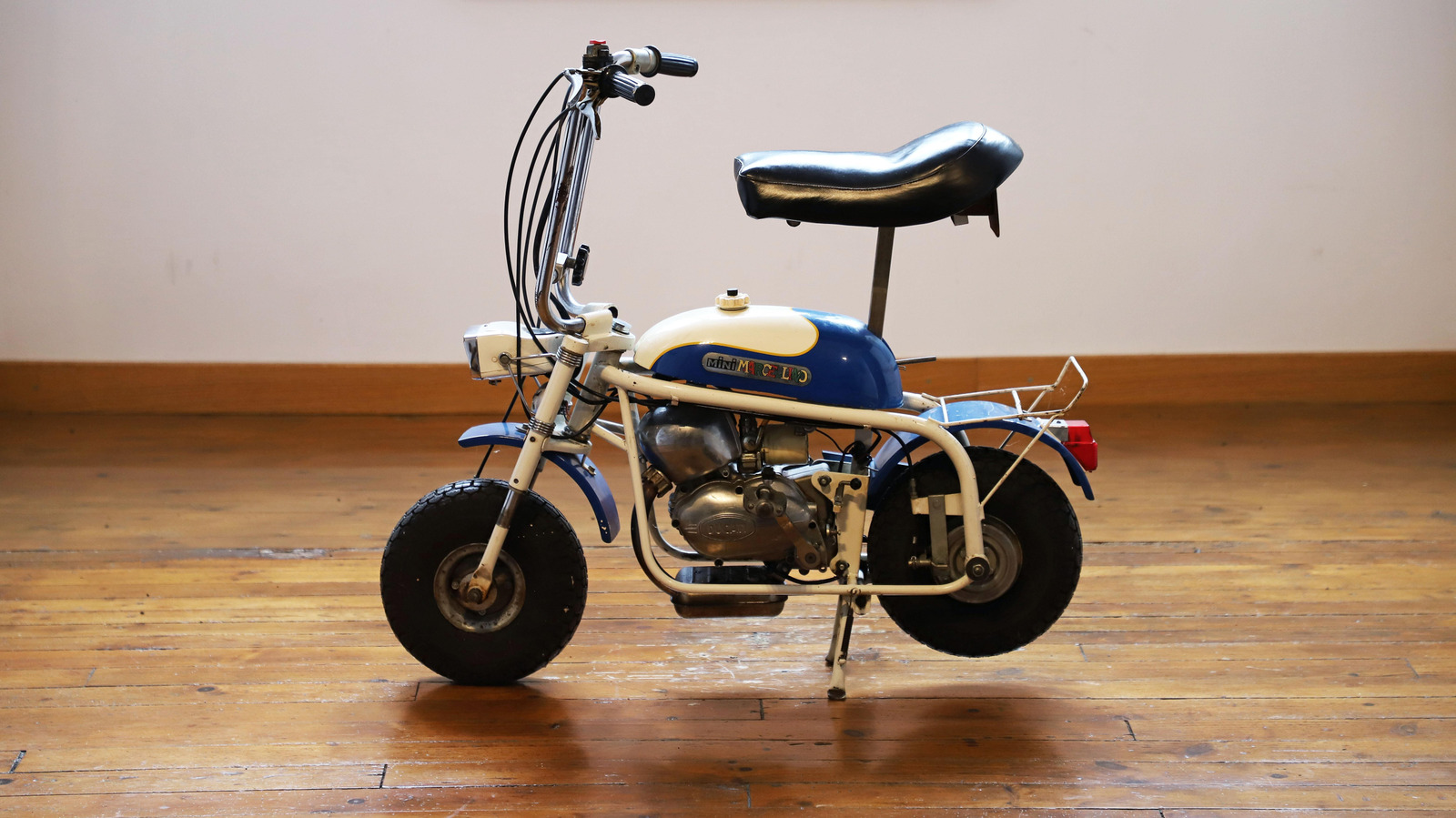
When you think of Ducati, you probably think of powerful Italian machines with screaming V4 engines and desmodromic valves. This particular Ducati is about as far away from that as you can get. Silodrome brought to our attention this itty bitty Ducati, a 1969 Mini Marcellino, currently up for auction in France.
There is some debate as to whether this minibike qualifies as a real Ducati, though not because of its diminutive size. The original design goes back to another Italian manufacturer, DMT (Dinamica Meccanica Tassinari). It wanted to cash in on Europe's minibike craze of the late 1960s, where it was fashionable to carry a small bike in your car, then ride it the last few miles to work. It's the same formula that Honda would later revive for the Motocompo and Motocompacto. However, with its Italian roots, the Mini Marcellino had style, and was not the box it came in like the Hondas.
The Ducati connection came along when Ernesto Palmieri Pirazzoli was hired by Dismave, a Spanish company, to bring a minibike there for local manufacturing. He licensed the Mini Marcellino from DMT for production in Spain. But being a former Ducati rider and mechanic, he sourced the engines not from Franco Morini as DMT did, but from Mototrans, who built Ducatis under license for Spain. While the tiny 48cc engine may be the smallest ever to have the Ducati name stamped on it, it has that name, which is good enough for us to call this bike a Ducati.
The Mini Marcellino is a pretty neat bike, even aside from its Ducati connection. Performance figures are hard to find for the Ducati version, but according to a contemporary Cycle World report, the DMT version had a top speed of about 25 mph, and sipped fuel at 71 MPG. I'd expect the Ducati pedigree to be slightly faster, maybe 26 mph. The handlebars fold down and the seat is removable to let it fit in the back of a car. It only weighs about 57 pounds, far less than a Motocompo, making it easier to heft in and out.
Though it has a rigid frame, both wheels have disc brakes. Most bikes of its time had drum brakes. Even the fastest superbike of this time, the Honda CB750, still had a drum on the rear. It's usually difficult, if not impossible, to flip yourself over the handlebars with the front brake like you can on a bicycle, but I'd be wary of doing so on this minibike.
It's unlikely that whoever buys this will be doing much riding on it, though. It's literally a museum piece in excellent original condition. We don't know if it runs, but if the Barber Museum can get its hands on it, it'll run, just like all the bikes in that museum. It'll be going up for auction through Aguttes on April 13. Its expected selling price is as small as the motorcycle itself, somewhere between $576 to $1,152. It's no Panigale V4, but you can be pretty sure it'll be the only one of its kind at your local bike night.