The 10x Challenge: How AI Factories Are Redefining Energy Infrastructure
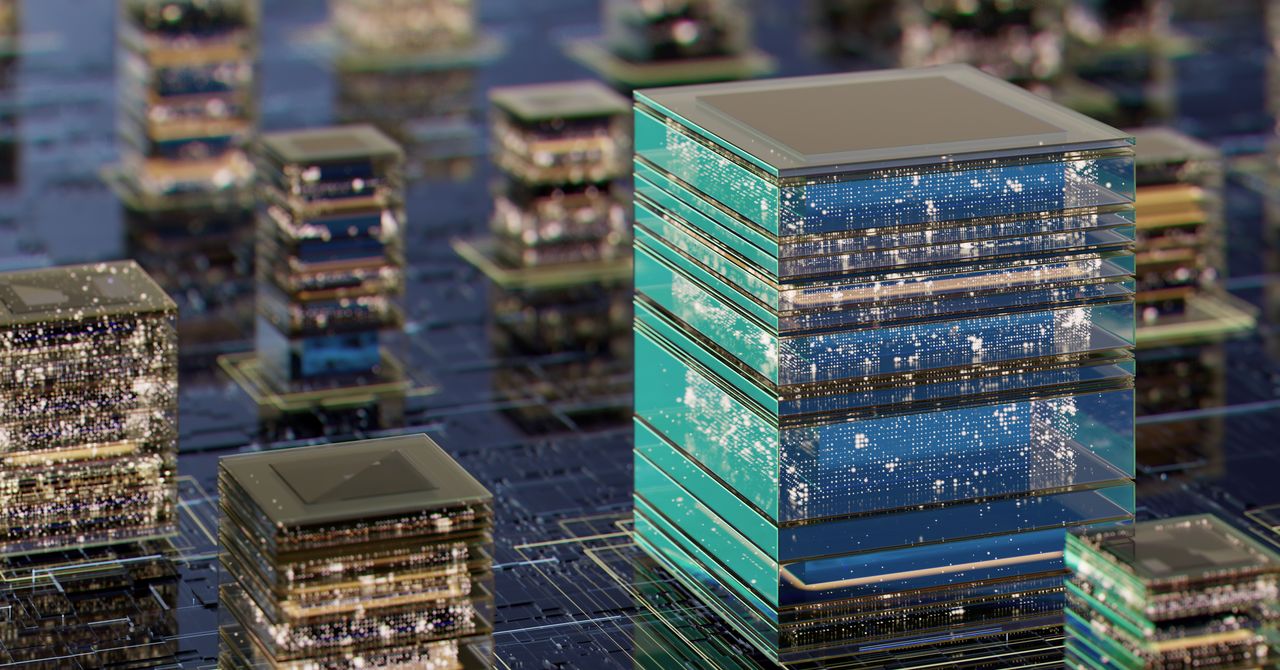
In the pre-AI days of the internet, data centers were designed and built to store, process, and serve data. Racks of CPU-based servers and storage arrays filled cavernous rooms, storing data redundantly and distributing it to multiple service providers at once. The compute workloads dedicated to this process were manageable enough that they could be virtualized, allowing many virtual machines to share a single physical server. Thanks to this, most businesses didn’t need to manage their own data centers, instead renting capacity from cloud providers scaled to their own specific needs.The AI era is changing all of that.Rather than simple data centers, today’s hyperscalers are building AI factories, facilities purpose-built to generate intelligence. While they share some structural similarities, the massive power and compute needs of AI dwarf that of data centers, fundamentally changing how they’re designed, built, and operated.The leap in energy consumption has created what’s been dubbed the 10x challenge: AI factories consume about 10 times as much energy, produce 10 times as much heat, and have 10 times the complexity of traditional data centers.Meeting the 10x challenge requires careful engineering—and it’s still just part of what hyperscalers face in standing up AI factories. From grid efficiency and liquid cooling to virtual design and uptime demands, the entire playbook on building and operating digital infrastructure facilities is being rewritten in real time.AI’s Massive Power and Cooling DemandsThe 10x demands of AI factories over traditional data centers come from their distinct purposes. Rather than just storing and processing information, AI factories generate intelligence. They do so using dense clusters of high-performance GPUs that can require over 100 kilowatts per rack, more than an order of magnitude greater than the handful of kilowatts used by a traditional data center rack.With that much energy in play, reliable power distribution is paramount. When an AI factory is built, either from the ground up or retrofitted from a traditional data center, the foundation is vital electrical equipment to power the facility and its processes. Medium- and low-voltage equipment dynamically balance energy loads with the aim of creating a robust and reliable foundation of power distribution. Meanwhile, a combination of switchgear, busway, and prefabricated modular solutions are used to meet the facility’s specific needs.All of that energy generates lots of heat; the thermal loads in AI factories can be extreme. So extreme that the default air cooling of traditional data centers isn’t an option. Instead, liquid cooling is needed to help keep temperatures down. Siemens, Nvidia, and nVent created a joint reference liquid cooling architecture specifically for AI factories that integrates a facility’s industrial-grade electrical systems directly with liquid cooling tech, keeping the power flowing and the heat in check.“From our standpoint, we’re seeing an increase in the need to redesign data center infrastructure as operators shift from CPU-based computing to GPU-intensive AI workloads, driving unprecedented rack-level power and cooling requirements,” said Ruth Gratzke, president of Siemens Smart Infrastructure U.S. “At this pivotal moment in the AI industrial revolution, technology, utility, and energy partners are coming together to build integrated ecosystems that can effectively and reliably scale power, cooling, and grid coordination to lay the foundation for AI factories of the future.”