‘Our attempt to be brave’: Will the council’s new approach to battling Dublin’s dereliction work?
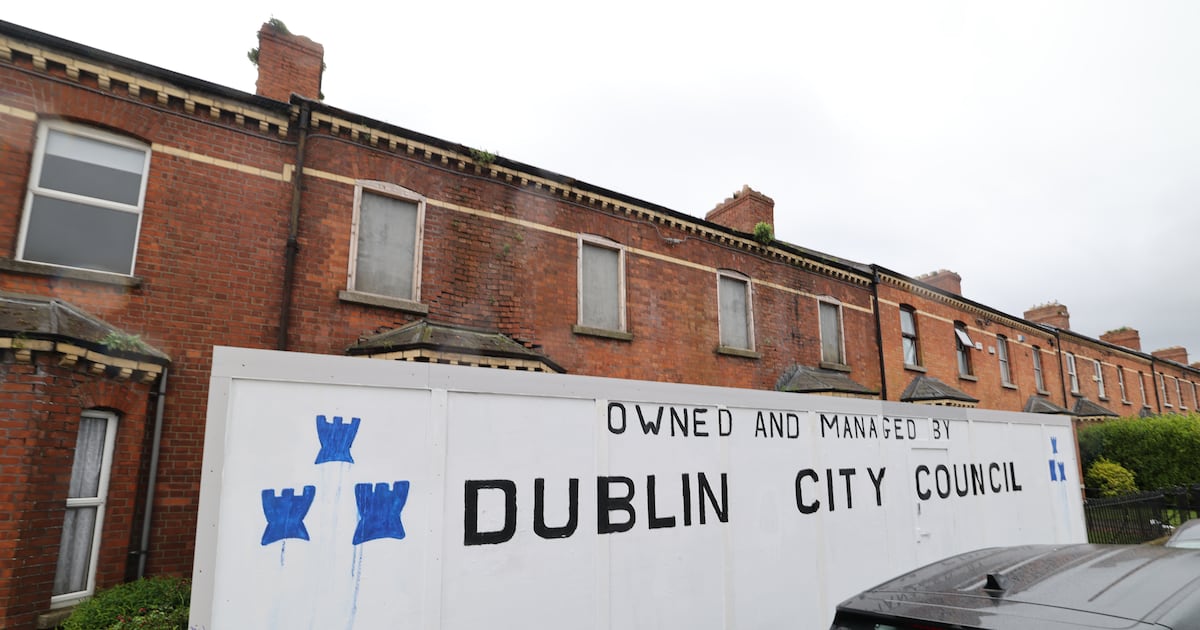
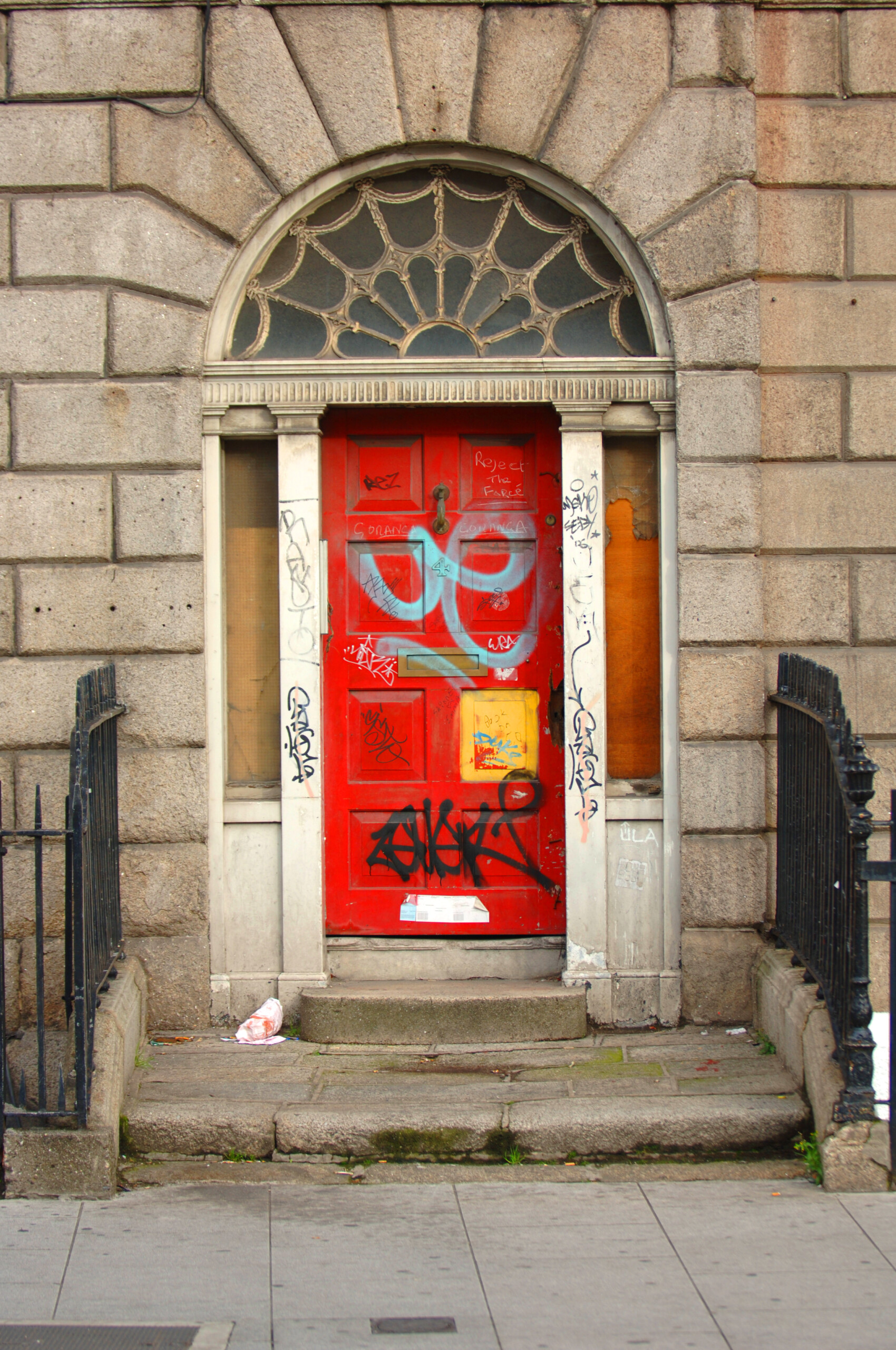
Almost two years after its purchase by Dublin City Council number 30 North Frederick Street stands as a monument to urban dereliction.The Georgian house, just north of Parnell Square, was once the home of guest house and club An Stad, a popular meeting place for the Irish nationalist and cultural movements, with James Joyce, Oliver St John Gogarty and Michael Collins recorded among its visitors. This provenance did nothing to protect it from decline and, after years of vacancy, in 2011 the house in Dublin’s north city centre was placed on the Derelict Sites Register. 30 North Frederick Street Dublin. Photo: Bryan O’Brien / The Irish Times
Entrance to 30 North Frederick Street Dublin.
Photo: Bryan O’Brien / The Irish Times
In 2015, the house began to collapse and the council had to undertake emergency stabilisation work, wrapping it in steel bands and sealing the windows and doors with metal plates. READ MORERóisín Ingle: Dublin is a different place. Sandymount a different village. I’m happiest on the other side nowTrump gives Iran 48 hours to make a deal or open the Hormuz Strait before ‘all hell’ will rain downFrench jury upholds 14-year rape sentence for Irish former rugby player Denis CoulsonManager reported 20 claims of financial and legal wrongdoing at Wilson’s Hospital SchoolEventually, in mid-2023, the council applied to An Bord Pleanála for compulsory purchase orders to acquire the house. A year later, those orders were granted, but there has yet to be any evident alteration in the fortunes of this protected structure.Its prospects may, however, be set to change. In the battle against dereliction and vacancy, the council finally appears to be arming itself.In the coming months it will establish the Dublin City Development Corporation, a special-purpose vehicle (SPV) dedicated to city regeneration. Similar to Ballymun Regeneration Ltd or Limerick 2030, it will be a council-owned company, but with an independent board of directors that will be able to borrow and invest without affecting the council’s or the State’s balance sheet.Cllr Cian Farrell (left) chair of the Urban Redevelopment Working Group Dublin City Council and Karl Mitchell Executive Manager City Co-ordination Office outside no 30 North Frederick Street Dublin. Photo: Bryan O’Brien / The Irish Times
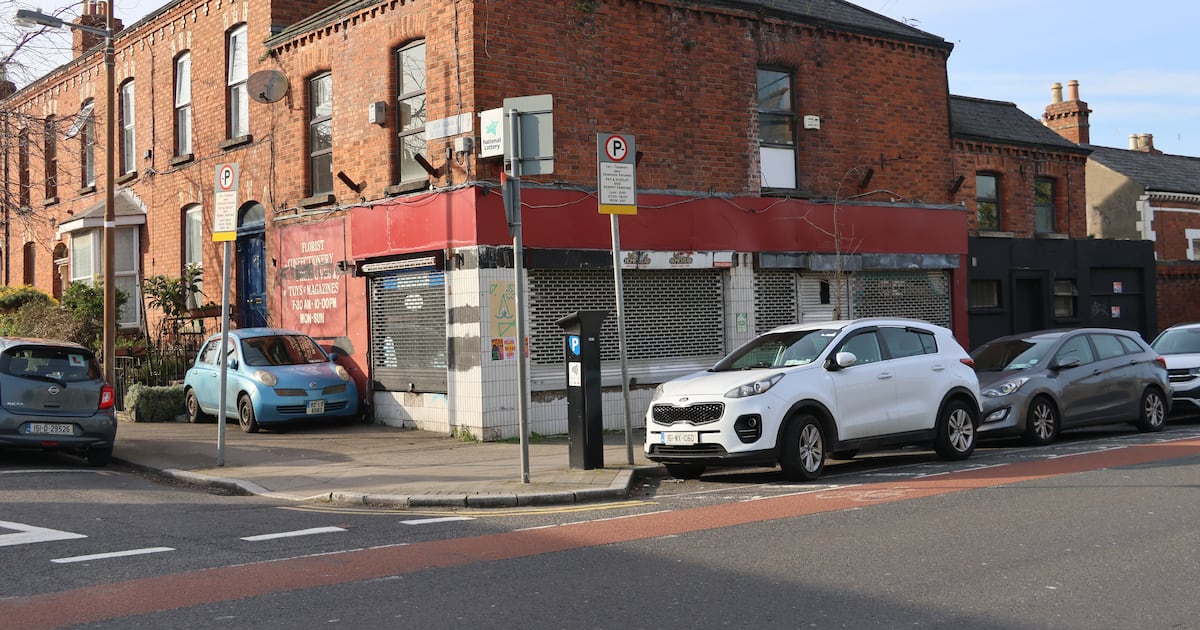
The new development company will have a five- to 10-year business plan and will take time to scale up, but in the meantime the council has selected two streets, Middle Abbey Street and North Frederick Street, for what it calls a “bold urban rejuvenation pilot”, which could potentially see the old An Stad guest house provide accommodation for the Rotunda Hospital and its staff.These streets will receive concentrated resources and attention, says Karl Mitchell, executive manager of the city co-ordination office. “Middle Abbey Street and North Frederick Street will be test beds. They will show us the opportunities and the challenges,” he says.These two streets have different characteristics but embody various aspects of city dereliction and vacancy. North Frederick Street, on a straight line to O’Connell Street, is part of Dublin’s north Georgian core. Some buildings are in active use, including a hotel, and some of the houses are clearly occupied at upper storeys, but several shops are shuttered and have been for years.Middle Abbey Street, runs west from O’Connell Street along the Luas line. The most striking example of vacancy is on its northside where the former headquarters of the Irish Independent newspaper has been vacant for more than two decades. However, six months ago new owners, British developer Summix, secured permission for a student accommodation scheme of more than 300 beds. This side of the street also has a newly built hotel, and entrances to retailers Arnotts, Penneys and Eason. [ How are buildings designated as derelict?Opens in new window ]A rendering of the proposed student housing at Independent House on Middle Abbey Street in Dublin The opposite side of the street is a different prospect, with several smaller buildings of the traditional living-above-the-shop model. Some appear entirely vacant. Others have active ground-floor business, but look underused in their upper storeys.This perception of underuse or vacancy may or may not be the reality, which is why the council has already started intelligence gathering. “We are really scraping public data,” Mitchell says. The council is using its own planning files, title searches and Residential Tenancies Board and Central Statistics Office information to create a “digital twin” that allows the council to “go in digitally” and “look at any building, its history, its current status”, he says. “We’re layering all that up at the moment. I’m sure it’ll show us deficits in data, so the next step will be boots on the ground and making contact with property owners.”Although the council is readying for battle, it is starting with diplomacy, through its invitingly titled “concierge service” as Social Democrats councillor Cian Farrell, who chairs the Urban Redevelopment Working Group, explains.[ Derelict Dublin: 10 empty southside buildings in a city with a housing crisisOpens in new window ]“This is a carrot-and-stick approach. The carrot, this concierge service, will act as a partner to help you redevelop your building,” says Farrell.This might involve planning advice, assisting with financial schemes and derogations, which, he says, is “very important” for conservation.A “project management unit” is being assembled to operate this service, Mitchell says. It will have planning, architectural and quantity surveying expertise.“They might see there’s a problem on either street and identify a fix. The fix might be within our own gift as the local authority, or it might require national legislation,” says Mitchell. Middle Abbey Street Dublin.Photo: Bryan O’Brien / The Irish Times
Former Independent House building on Middle Abbey Street Dublin. Photo: Bryan O’Brien / The Irish Times
“That’s the benefit of a test bed. It gives us the opportunity to use real live examples to say: this is where inner city living is quite complex, quite difficult and these are the changes we believe we need to make it viable for the owner.”However, the city would not have a dereliction problem if there weren’t recalcitrant owners who, regardless of the incentives available, won’t bring their buildings back into use. “The carrot has to be balanced by the stick,” Farrell says. “We will be looking at the mechanisms and tools we have as a council to force an engagement with us.”This could include applying derelict sites levies, but also looking at overdue rates, fire inspections, planning inspections and waste management. “We will use every tool in our arsenal, in tandem with the carrots,” says Farrell.“If you don’t engage, or refuse to engage, we’re going to do everything in our power to force that conversation, to bring that building back into use.”Inaction, to date, is not necessarily malevolent in its intent, but Farrell and Mitchell stress once the concentrated resources of the council are available – services that in the private sector would be costly for owners – refusal to engage won’t be tolerated. “Every single building has a story and some are more difficult than you think. We are aware that some people are nearly like accidental owners,” says Mitchell.“They have ended up with a property they are struggling with, maybe at one stage they used the retail element, but that retail is no longer viable. They are asset rich, but cash poor and we want to help those people.” Some owners may be institutional investors or pensions funds, based overseas, and this effort is to start calling out: “Why are you not actively engaged with the council?” he says.“Leaving something vacant, we believe, is not good for the social fabric of the city.”Every single building has a story and some are more difficult than you think— Karl MitchellThe ultimate stick is compulsory acquisition, which has had a chequered history for the council. Although 30 North Frederick Street’s prospects may be looking up, the council recently shelved refurbishment of two houses on Connaught Street in Phibsborough due to the excessive costs following their deterioration since they were acquired seven years ago.“In the past, we acquired properties where we didn’t have a reuse or a disposal strategy. So we inadvertently ended up becoming the landlord of vacant and derelict properties across the city,” Farrell says. He explains that when the council acquires a building, it will go through internal departments (housing or community) to assess whether they have a use for it. Then the council looks externally, to the State’s Land Development Agency, then to an approved housing body, before it would be offered to the private market for conditions.“From acquisition to disposal, there’s now a loop in place, time gated for each stage, which was a missing piece in the past,” says Farrell.Acquisition, Mitchell says, will remain a last resort. “We won’t be buying everything, that’s not our rationale here. What we’re doing is encouraging and helping,” he says.“On the wicked ones, if the State is the only option, we will consider that, but we won’t be just taking for the sake of taking, because no one else is doing it. We will have an exit plan before we start, otherwise we won’t take it. The ideal for us is the person who owns it brings it back to life, not us, to be brutally honest.”North Frederick Street Dublin. Photo: Bryan O’Brien / The Irish Times
Mitchell acknowledges the council has to get its own house in order, bringing the vacant and derelict properties it already owns, such as 30 North Frederick Street, back into use.“There is no point in us tackling other people if we can’t tackle our own issues. Some of these properties they’re extremely challenging and very costly. If you spend the capital money, you can only do that with a guarantee of a long-term rent role,” he says.The new project management unit will look to find those tenants, he says, suggesting that the North Frederick Street property might be of interest to nearby hospitals, the Rotunda or the Mater, or it could be redeveloped for an anchor tenant on a long-term lease.In some cases, selling buildings will be the most appropriate option, Mitchell says. “If you look at any really good development models across the world – in London, New York, Copenhagen – money is accrued and recycled back into the next building and the next building. The whole idea is cyclical, so you’re not always going chasing State money as well.”The concept of a revolving fund is crucial to the success of the SPV that will take over from the project management unit to take the rejuvenation project from a pilot to a citywide programme.[ Why are so many properties derelict in Dublin city centre during a housing crisis?Opens in new window ]This marks a considerable change in approach by councillors, previously adamant all council property should be retained for social housing, Farrell acknowledges.“We know we have a social housing shortage, but if we turn everything into social housing, there’s no return. Then we have to go looking for more money, for another grant,” he says.“The sustainability of this new SPV involves asking, can we turn some buildings into cost-rental, or part into retail, or affordable purchase? Should some or it be private? Middle Abbey Street Dublin.Photo: Bryan O’Brien / The Irish Times
Middle Abbey Street Dublin. Photo: Bryan O’Brien / The Irish Times
“That’s the different mix we’re looking at.”Although the SPV would ultimately be self-sustaining, setting it up and starting the pilot will require cash. The council has committed €18 million from its own budget to staff the team and has secured an additional €10 million in urban regeneration and development fund grants from the Government, with an expectation that this will increase to €114 million in State funding.“Within the next two months, we’ll have a dedicated team and a dedicated office, and we will hit the ground running,” Mitchell says. “The SPV then is our attempt to be brave and very ambitious, to work with anyone that wants work with us, whether that’s private investment, whether it’s banking. “We’re not doing business in the way we’ve always done business.”