Letter of the week: Age of Enlightenment
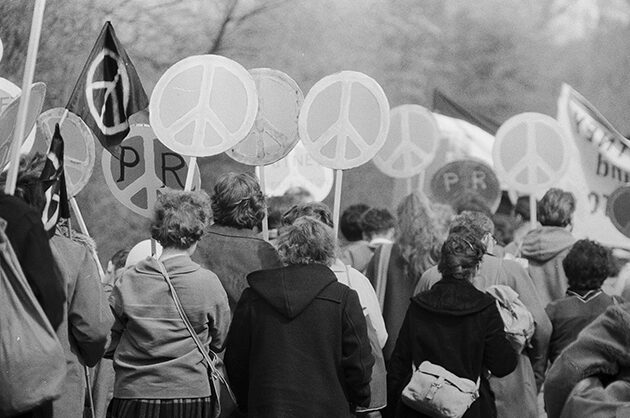
It seems the great transformation John Bew desires is a huge gain of military prowess (Cover Story, 13 March). This is the atavistic worship of slaughter that led Europe to disaster in 1914 and Germany to disaster in the 1930s. I am 88 and remember the bombing during the Second World War; others will recall much worse. The establishment of the UN, with its commitment to free mankind from the scourge of war, promised a better future. Bew makes an appeal to Enlightenment values. Immanuel Kant caused ridicule by advancing a plan for universal peace. Enlightenment values seek human thriving, the welfare of all. War is the reversal of human thriving. There are many other options for the next stage of our history. We are told that artificial intelligence will, if properly managed, greatly increase human productivity. It will add to the national income and thus to the resources on which we can call to strengthen public services. On a global level, if confidence among nations can be nurtured, the way may open to a cooperative approach to global warming and, ultimately, to a world electricity grid. A coherent vision of a better future is not difficult to glimpse.Malcolm Townsend, Oxford
From the front line
I read Will Lloyd’s superb and terrifying essay on Ukraine and its probable effects on us all (Cover Story, 20 March). It does what all good journalism should do by making careful connections between the things that matter at all scales. The constant cycles of hope, distraction and fear that this seemingly endless war produces were made recognisable on the page while I sat comfortably, eating my breakfast. These conflicts are seemingly far away but perhaps nudging closer by the day. Well done to all for this timely reminder.Kevin Adams, East Lothian
In his memorable closing sentence that could have been written by Edward Grey – who is famous for saying in August 1914 that “the lamps are going out all over Europe” – Will Lloyd describes Europe’s leaders “looking out of their windows as the street lamps begin to flicker across the continent”.
In fact, as Grey was talking, the lamps outside the Foreign Office were actually being lit that evening. Let’s hope that in the current early stages of “The New World War”, bright lamps are being lit somewhere. But where, exactly?Colin Richards, Spark Bridge, Cumbria
Subscribe to the New Statesman today and save 75%
In his cover story, Will Lloyd writes: “Historians will recognise that as the moment when the energy appeared.” How confident is he that there will be any historians?Neville Goodman, Bristol
The Wilson That Was
Tom McTague’s reflections on Harold Wilson (Editor’s Note, 20 March) are very similar to mine. I can recall precisely where I was in Manchester when I heard about his resignation on the car radio.
There was a wonderful sketch in That Was the Week That Was when Willie Rushton played Wilson speaking at a Labour conference. I think it was meant to be an answer as to why he should remain as prime minister and went as follows: “First, I am a trained mathematician and economist; second, we shall turn the corner, if only we can find it; fourth…”David Cockayne, Lymm, Cheshire
Notes on Marr
I fear that Andrew Marr might have overlooked a perfect opportunity to show off some of Glasgow’s fine offerings (At Large, 20 March). For a primer on how the city has changed, try watching early episodes of Taggart to witness the shift from shabby tenements to a city hosting the 1988 National Garden Festival, with glimpses of the leafy East End, the Citizens Theatre and numerous examples of fine industrial heritage along the way. Just don’t mention the body count…Sean Burnside, Newcastle upon Tyne
Andrew Marr notes that Neil Kinnock was in touch with him to point out that it was Dickson Mabon, not Dennis Skinner, who made the “anti-Jenkins ‘rancour’ joke”, and that Mabon became “a prominent figure on the right of the party”. Mabon was indeed the founding chairman of Labour’s Manifesto Group and later joined the targets of his joke, Roy Jenkins and David Marquand, in defecting to the SDP. Richard Briand, Leek, Staffs
This Union
I’m sure I’m not alone in being exhausted by the constant conflation of England and Britain, or England and the UK. For a publication that models itself on progressive thought and inclusion, this tired old trope is both regressive and exclusionary.
In the latest issue, the Letter of the Week in response to the “Great British Crisis” edition is titled “England can’t save herself” (Correspondence, 20 March). But what of Scotland, Wales, Northern Ireland? And surely your placing This England at the forefront of each edition would have been the perfect opportunity to change the title, dragging the magazine out of the 14th century and into a more holistic 21st century. The other countries in our Union get little enough representation in parliament. It would be good to see some more measured recognition within the pages of your magazine.Sheila Scott, Glasgow
All that jazz
Kate Mossman’s thoughts about Keith Jarrett’s openness to both technical complexity and “mainstream” beauty (The New Society, 20 March) reminded me of Oscar Peterson’s similar trait – he was sometimes castigated for his prettiness (whatever that meant). I had the honour of conducting Peterson’s final interview after his stroke. He spoke movingly about trying to “get back” his left hand, but also of the joy he was still able to take in simple, unadorned playing. It remains one of the great mysteries of music that supreme players can still move us even when their technique has gone – like Jarrett himself, when he was suffering from chronic fatigue, or the great Bud Powell after his unsuccessful brain electrode treatment.
By the way, when André Previn heard about Peterson’s stroke, he rang him up and said: “Oscar, you’ve always turned down my offer of playing jazz duets with you. Would you reconsider?” A sublimely judged offer of sympathy.David Perry, Cambridge
War and Pete
I am surprised to read that Pete Hegseth has “written three books about the US military” (The Sketch, 20 March). His knowledge of history doesn’t seem to cover the 20th century, let alone the 19th. Hegseth should study the Texas Revolution of 1835-36. Following the Mexican army’s massacres at Goliad and the Alamo, General Sam Houston took a number of prisoners at the battle of San Jacinto, where he ignored his soldiers’ wish to hang the Mexican general in reprisal, forcing him instead to sign a peace treaty. Hegseth, with his exhortation of “no quarter, no mercy” – as short on intelligence as it was on verbs – might do well to take note.Tom Stubbs, Surbiton, Greater London
A crescendo of pedantry
I wish to ignore the perilous international situation and instead engage in more pedantry: to complain about the two examples in recent issues of the phrase “reached a crescendo”. A crescendo is when a passage of music gets louder, so to reach one implies that the music at that point is relatively quiet. The authors (no names, no pack drill) clearly meant the opposite: reaching a climax, or a fortissimo, perhaps.Michael Rodgers, Wigan
The Lezards are multiplying
Nicholas Lezard is a must-read for me every week, but I’m beginning to feel worried: I, too, live in a Hove-l. I, too, use the same branch of Waitrose. And now it appears that he has signed up to the same dental practice I’ve been using for more than 30 years (Down and Out, 20 March). Do I now have to refer to myself as “down and out”?Colin Cubie, Hove
Write to letters@newstatesman.co.uk. We reserve the right to edit letters
[Further reading: Will Keir Starmer survive the May elections?]
Content from our partners
Related
This article appears in the 25 Mar 2026 issue of the New Statesman, Easter Special