The World’s Largest Acidic Geyser Just Woke Up in Yellowstone National Park
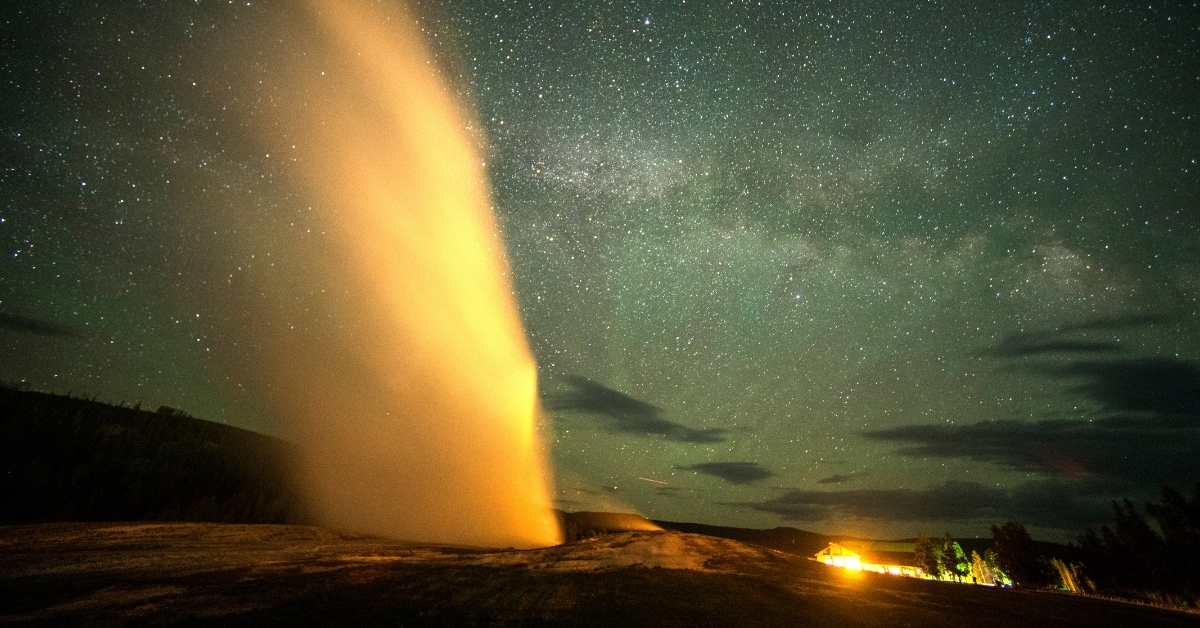
The geysers at Yellowstone National Park are still very much alive, and one of them just reminded us. The Echinus Geyser is the largest acidic geyser on earth, and it just started erupting again for the first time in years, reports ABC News.
Found in the Norris Geyser Basin, Echinus had been dormant since 2020. But starting on February 7, scientists from the United States Geological Survey observed the first eruption in years. It began as a few isolated bursts, which soon turned into a full-on eruption. Within days, the geyser erupted every 2 to 5 hours, shooting water 20 to 30 feet into the air for several minutes at a time.
Geysers are unpredictable. Water trapped deep in a tube-shaped system is heated by nearby magma until it boils and blasts upward. After the eruption, the system slowly refills, and the cycle starts again. How long that cycle takes is up to the geyser.
Echinus is a bit of a weird one among geysers. Acidic water usually destroys the mineral “plumbing” that allows geysers to function, which is why acidic geysers are rare. But Echinus survives thanks to its unique chemical composition: acidic gases mix with neutral groundwater, producing water that’s only as acidic as vinegar or orange juice.
While that chemical mix is responsible for the geyser’s distinctive red rim and spiny silica-covered rocks that look like sea urchins (hence, its name), it isn’t acidic enough to destroy itself.
The geyser wasn’t always this unpredictable. During the late 20th century, Echinus erupted with near-clockwork reliability, sometimes every 40 to 80 minutes. Some eruptions in the 1980s and 1990s lasted up to 90 minutes and launched water as high as 75 feet, turning it into a reliable attraction for visitors.
By the early 2000s, the activity started to die down. That may have been due to changes in an underground water source. Since then, eruptions have been sporadic, with only brief bursts in 2017 and a handful between 2018 and 2020.
How long this resurgence will last is anyone’s guess. Yellowstone’s geysers have developed a reputation for suddenly waking up in a violent fit before settling back down into dormancy after a few weeks or months.
One thing’s for sure: if you’re going to be in Yellowstone anytime soon, stop in to check it out if you can, because there’s no telling if you’re ever going to get the chance to see it again.