Exedy acquires Protean Electric
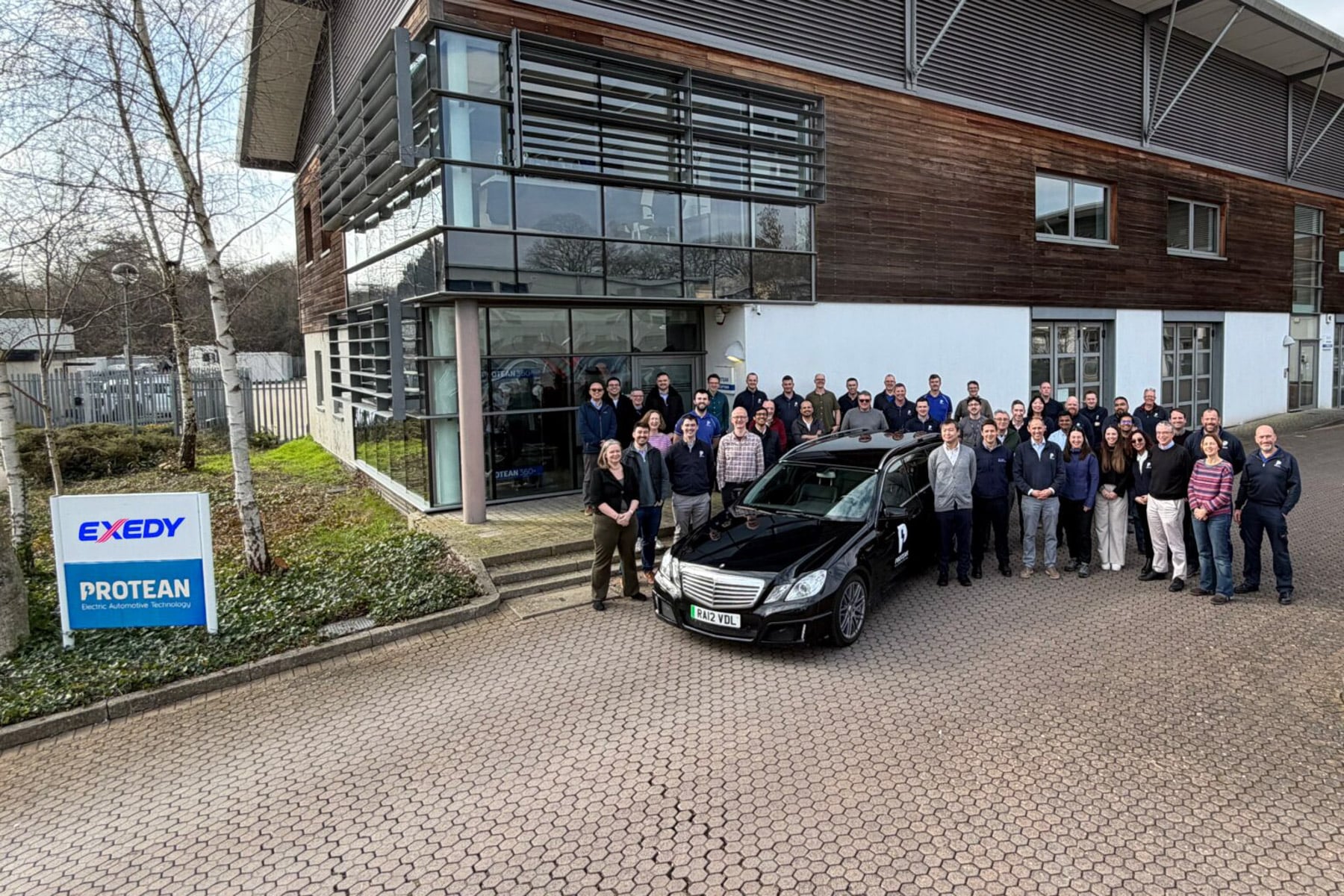
Under new ownership, Protean Electric aims to ‘meet the market demand for its in-wheel motors at industrial scale and competitive cost,’ according to its own statements. “As the automotive industry evolves and shifts towards electrification and software-defined platforms, the backing of an established Tier 1 supplier enables the further development and market expansion of Protean’s products,” the British company states.Protean Electric has not disclosed the financial details of the acquisition. However, in a document published by the buyer, Exedy, Protean’s share capital is stated to be just over nine million pounds—though it remains unclear whether Exedy paid this amount or a premium to Bedeo.For Protean Electric, this is not the first change of ownership. The company was founded in 2008 and acquired by the Saab successor firm NEVS (National Electric Vehicle Sweden) in 2019. NEVS was a subsidiary of Evergrande. Amid the turbulence surrounding the Chinese property group, which also had ambitious plans in the electric vehicle sector, European projects were scaled back, and the planned use of wheel hub motors was abandoned. In November 2021, Bedeo, a London-based supplier specialising in electric vehicle solutions, took over.In its latest announcement, the Protean team also thanked Bedeo ‘for its stewardship during which time Protean has delivered many industry firsts.’ These include a production nomination by an established OEM, the industrialisation of the Pd18 product in accordance with IATF 16949, and the homologation of the first battery-electric passenger car with wheel hub motors.According to its own statements, Protean Electric ‘is looking forward to a bright future as part of the Exedy Group as it continues to advance the state-of-the-art in-wheel motors to enable its customers to offer differentiated and cost-competitive vehicles to market.’“Through the acquisition Exedy intends to combine the technological strengths of both companies to continue providing competitive products and services,” the new Japanese owner said in its announcement.However, Exedy tempers expectations of a rapid breakthrough: “To fully realize benefits of Protean Electric’s technology, adoption of in-wheel motors is generally required from the vehicle manufacturer’s platform design stage, and therefore it may take time before broader vehicle installation is achieved.”Nevertheless, the Japanese company also highlights another potential application for wheel hub motors, which German startup DeepDrive is reportedly pursuing as well: “At the same time, the technology may offer advantages suchas enabling a two-wheel-drive platform to be converted to four-wheel drive more quickly and at lower cost, which has attracted interest from multiple automakers.”proteanelectric.com, exedy.com (PDF)